
Table of Contents
Don't have the time to read the entire post? Our human writers will be sad, but we understand. Summarize the post with your preferred LLM here instead.
Choosing the right authentication system is now a key part of building modern apps. Teams need to deliver secure login, signup, MFA, SSO, user management, and authorization, all without slowing down development or requiring engineers to manage complex identity code.
The best authentication platforms for developers offer more than just APIs. They help teams work faster, customize user experiences, support new authentication methods, and grow from early prototypes to enterprise launches. A good platform should make setup easier for developers while staying flexible as products, users, and security needs change.
This guide compares six developer-friendly authentication platforms: Descope, Auth0, Clerk, Firebase, Supabase, and Stytch. We’ll look at what developers should think about, how the platforms stack up, and which teams each one fits best.
Main points:
The best developer-friendly auth platforms go beyond APIs — they reduce the ongoing engineering burden of maintaining identity infrastructure as apps scale.
Platform fit matters more than feature lists: React-first teams, Postgres builders, and enterprise SaaS apps each have meaningfully different needs.
Workflow-driven platforms like Descope give teams more control over auth journeys without requiring backend rewrites every time requirements change.
Picking the wrong platform mid-build is costly; 46% of CIAM projects are already delayed due to competing priorities.
What to consider when choosing a developer-friendly auth setup
Choosing an authentication platform depends on your application architecture, user base, security requirements, and long-term product roadmap. Some platforms are optimized for fast frontend implementation, while others focus on enterprise identity, open-source development, passwordless UX, or full-stack app infrastructure.
A strong developer-friendly authentication platform balances speed, flexibility, and security. It should help teams ship quickly while giving them enough control to support real-world identity requirements as the application grows.
Core implementation requirements
On a foundational level, authentication platforms must help developers implement secure user identity flows without slowing down product development:
Implementation speed – Enable teams to add login, signup, session management, and user management quickly without building core auth infrastructure from scratch.
Authentication methods – Support modern authentication options such as passwords, passkeys, magic links, OTP, social login, SSO, MFA, and step-up authentication.
Customization and control – Allow developers to customize authentication journeys, UI, branding, MFA logic, and routing without excessive backend orchestration.
Developer experience – Provide SDKs, APIs, docs, quickstarts, sample apps, and abstractions that simplify implementation and long-term maintenance.
Enterprise and scalability requirements
As products scale, platforms must integrate cleanly with enterprise identity requirements and evolving application architectures:
B2B and enterprise readiness – Support SAML SSO, OIDC, SCIM, multi-tenancy, role management, and delegated administration for enterprise and partner use cases.
Authorization and access control – Enable RBAC, fine-grained authorization, tenant-aware permissions, and secure session management across applications and APIs.
Extensibility and integrations – Connect with identity providers, fraud detection tools, analytics platforms, compliance systems, and broader developer ecosystems.
Operational security and scalability also become increasingly important as applications grow across users, teams, and environments:
Security and risk controls – Support adaptive MFA, bot protection, session protection, audit logs, and integrations with fraud and risk providers.
Scalability and ecosystem readiness – Scale from MVP to enterprise production workloads without introducing vendor lock-in, pricing surprises, or major migration challenges.
Observability and auditing – Maintain visibility into authentication events, user activity, permissions, and security workflows through centralized logging and audit trails.
Developer-friendly authentication platforms at a glance
Top developer-friendly authentication platforms offer robust security and privacy protections, with options for scaling smoothly as projects grow. The differentiating factors between them are platform fit, specific configurations, and logistics, like pricing and support.
Here’s how the top developer-friendly authentication platforms stack up at a glance:
Features | Strengths | Best for | Pricing model | |
|---|---|---|---|---|
Descope | Visual auth workflows, SDKs, APIs, passkeys, OTP, magic links, SSO, SCIM, MFA, step-up, RBAC/FGA, widgets | Workflow-led customization, passwordless UX, enterprise readiness, adaptive security, fast iteration | Teams that want flexible, secure auth journeys without heavy custom code | Free forever; tiered premium options (Pro, Growth, and Enterprise) |
Auth0 | OAuth/OIDC, SSO, MFA, Actions, Universal Login, SDKs, API auth, enterprise integrations | Mature platform, broad ecosystem, enterprise identity depth | Teams needing a proven enterprise auth platform with strong extensibility | Free to start, with Essentials, Professional, and Enterprise options |
Clerk | React/Next.js auth, prebuilt UI, user management, sessions, orgs, MFA, social login | Excellent frontend DX, fast setup, polished components | React and Next.js teams that want beautiful auth quickly | Free Hobby tier, with Pro, Business, and Enterprise options |
Firebase Authentication | Email/password, phone auth, social login, anonymous auth, Google ecosystem integration | Simple setup, generous ecosystem, strong mobile support | Mobile and web apps already using Firebase or Google Cloud | No cost for many users, with flexible pay-as-you-go options |
Supabase Auth | Auth tied to Postgres, Row Level Security, social login, magic links, JWTs, open-source stack | Open-source-friendly, database-native, great for full-stack builders | Teams building with Postgres and Supabase’s backend platform | Free to start, with Pro, Team, and Enterprise options |
Stytch | Passwordless auth, passkeys, magic links, OTP, biometrics, sessions, fraud tools | Strong passwordless UX, clean APIs, consumer auth focus | Teams prioritizing passwordless login and low-friction user experiences | Free to start; pay-as-you-go kicks in at 10K monthly users |
Below, we’ll look more closely at what makes each one unique.
Descope
Descope is a modern customer identity platform built to help developers implement secure, customizable authentication without rebuilding identity infrastructure from scratch. It supports login, signup, MFA, SSO, passwordless authentication, authorization, user management, and identity federation through a unified platform of workflows, SDKs, APIs, and embeddable UI components—all accessible through low- and no-code visual workflows.
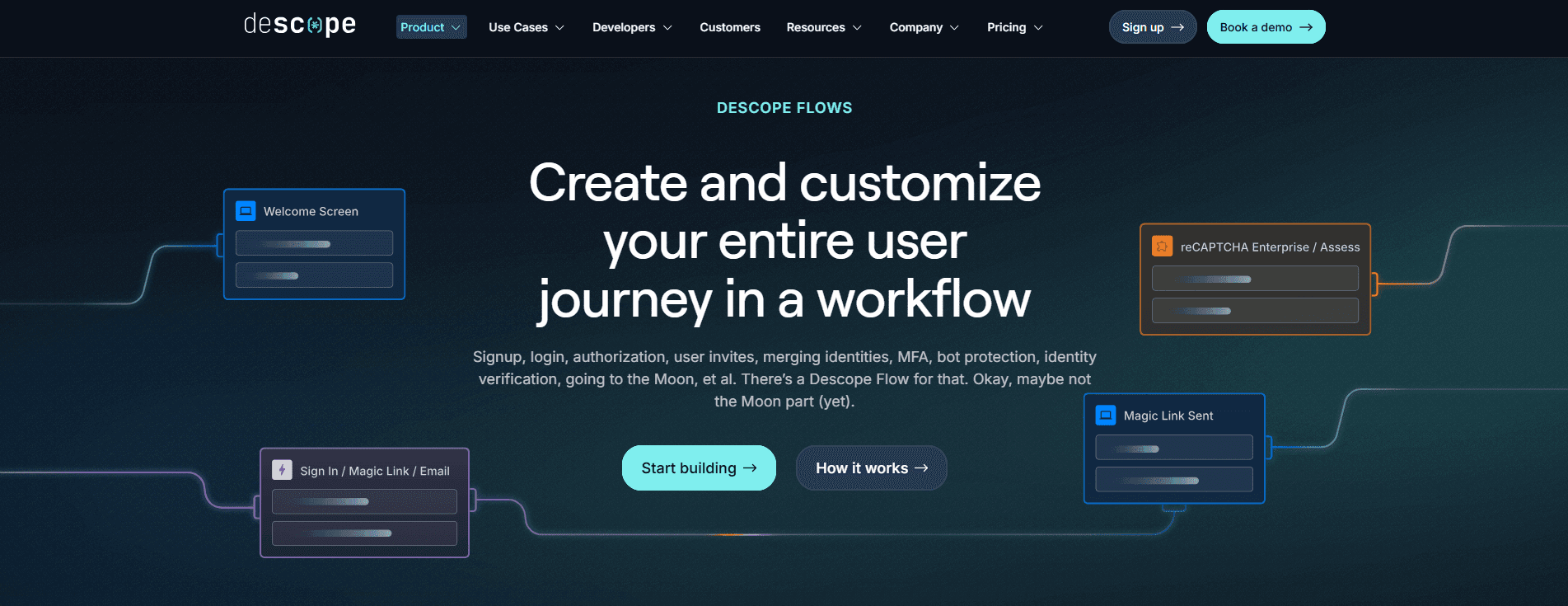
Descope is particularly well-suited for teams that need more flexibility than traditional frontend-first authentication tools provide. Its core differentiator is Descope Flows, a visual no-code and low-code orchestration layer that allows developers to design and modify login, MFA, onboarding, enterprise SSO, and step-up authentication journeys without rewriting backend logic. This enables teams to iterate quickly while maintaining centralized control over authentication, authorization, and user experience.
Key capabilities
Powerful, flexible developer tooling
Visual workflow editor for login, signup, MFA, SSO, onboarding, and recovery journeys without rebuilding application logic
15+ SDKs and APIs for frontend, backend, web, and mobile applications across modern architectures
API-first approach designed to support distributed systems, microservices, and hybrid frontend/backend implementations
Advanced authentication and security features
Support for passkeys, OTP, magic links, social login, and password-based authentication, enabling modern passwordless and hybrid authentication experiences
Adaptive MFA, session protection, and bot detection using built-in and third-party risk signals, allowing dynamic authentication decisions directly within identity workflows
Step-up authentication and contextual security policies that can be enforced without custom backend orchestration
Streamlined B2B and enterprise identity
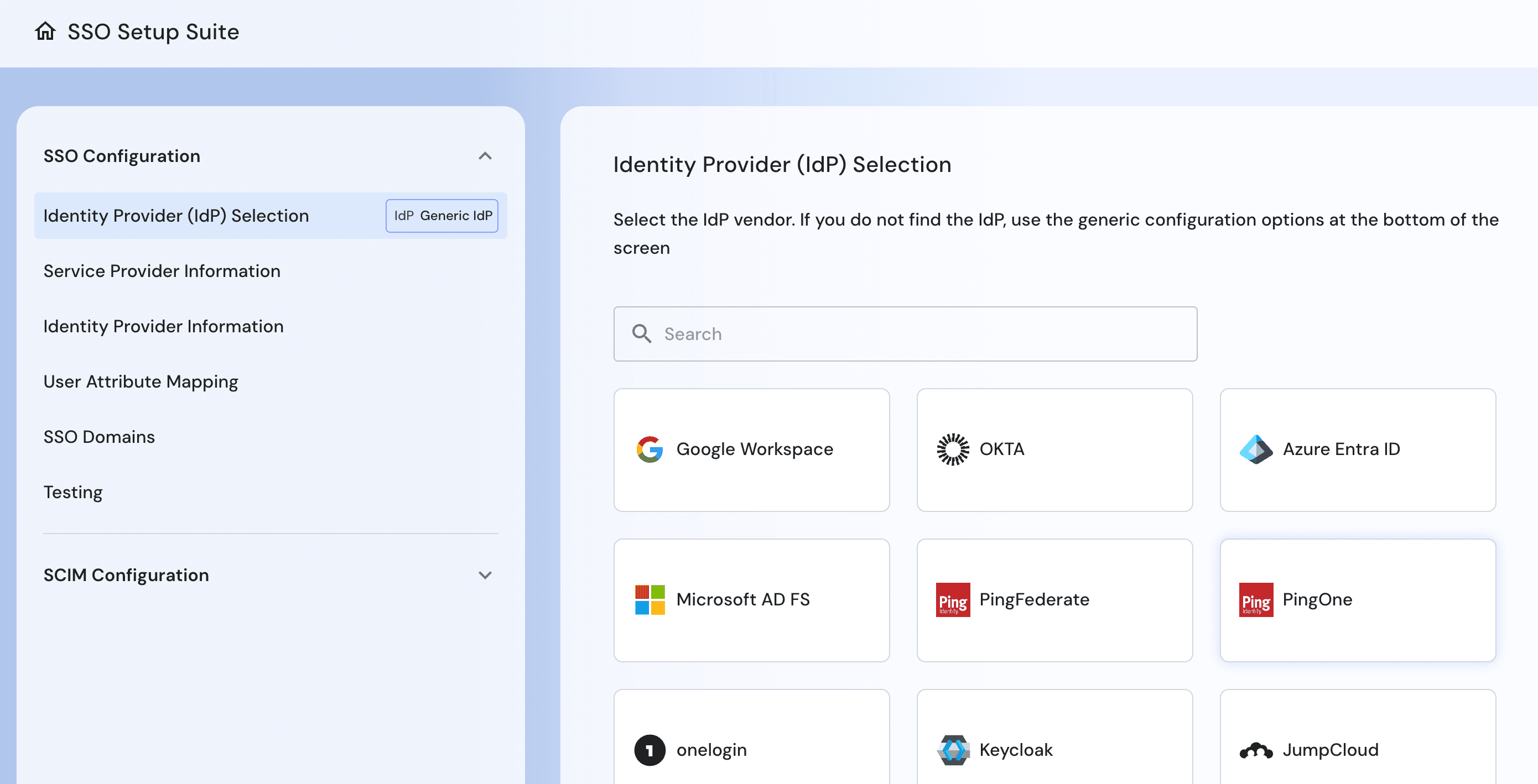
Self-service enterprise SSO with guided SAML, OIDC, and SCIM setup, reducing manual configuration and onboarding friction compared to Clerk’s more limited B2B capabilities
Native multi-tenant identity with tenant-aware RBAC and FGA, designed for SaaS use cases without relying on workarounds or external systems
Unified orchestration across authentication, authorization, MFA, onboarding, and risk evaluation within a single platform
Agentic identity support for AI agents and MCP-based ecosystems, extending identity infrastructure beyond human users
Integration and extensibility support
Extensible integrations ecosystem for fraud detection, analytics, compliance, and identity enrichment within authentication workflows
Flexible UI options with embeddable widgets, hosted flows, and fully customizable frontend experiences
Strengths
Flexible identity orchestration instead of rigid auth flows – Authentication logic is managed through workflows rather than hard-coded frontend abstractions or fragmented backend orchestration
Faster enterprise onboarding – Self-service SSO and SCIM reduce manual setup effort and simplify onboarding enterprise customers
Unified identity platform – Authentication, authorization, MFA, risk evaluation, and onboarding workflows are managed within one system instead of stitching together multiple tools
Native multi-tenant architecture – Tenant-aware users, permissions, and enterprise identity are built into the platform for SaaS and B2B environments, allowing for unified user journeys across a wide array of apps with zero engineering lift
Also read: How Databricks unified user journeys with Descope
Adaptive and risk-based MFA built into workflows – Dynamic security decisions can be enforced directly within authentication journeys
Strong passwordless authentication support – Passkeys, magic links, OTP, and social login are first-class capabilities for modern user experiences
Reduced long-term engineering complexity – Identity flows can evolve without requiring major architectural rewrites as requirements grow
Broad SDK and API coverage – Integrates cleanly across frontend and backend services while supporting API-first and microservices architectures
Future-ready identity platform – Supports B2B, B2C, partner, and agentic identity use cases within a unified identity layer
Ideal for
Descope is a strong fit for teams that want a developer-friendly auth setup with flexibility and control over authentication without maintaining a fragmented identity infrastructure. It works especially well for organizations that need to move beyond rigid frontend-first authentication models and adopt a more configurable, workflow-driven approach to identity.
The platform is well suited for SaaS companies, digital platforms, and enterprise applications that require tenant-aware authentication, self-service enterprise onboarding, adaptive MFA, passwordless authentication, and customizable user journeys that can evolve over time.
Descope is also ideal for multi-tenant SaaS platforms, consumer applications, and hybrid environments that need unified authentication across customers, partners, administrators, APIs, and AI agents.
Auth0
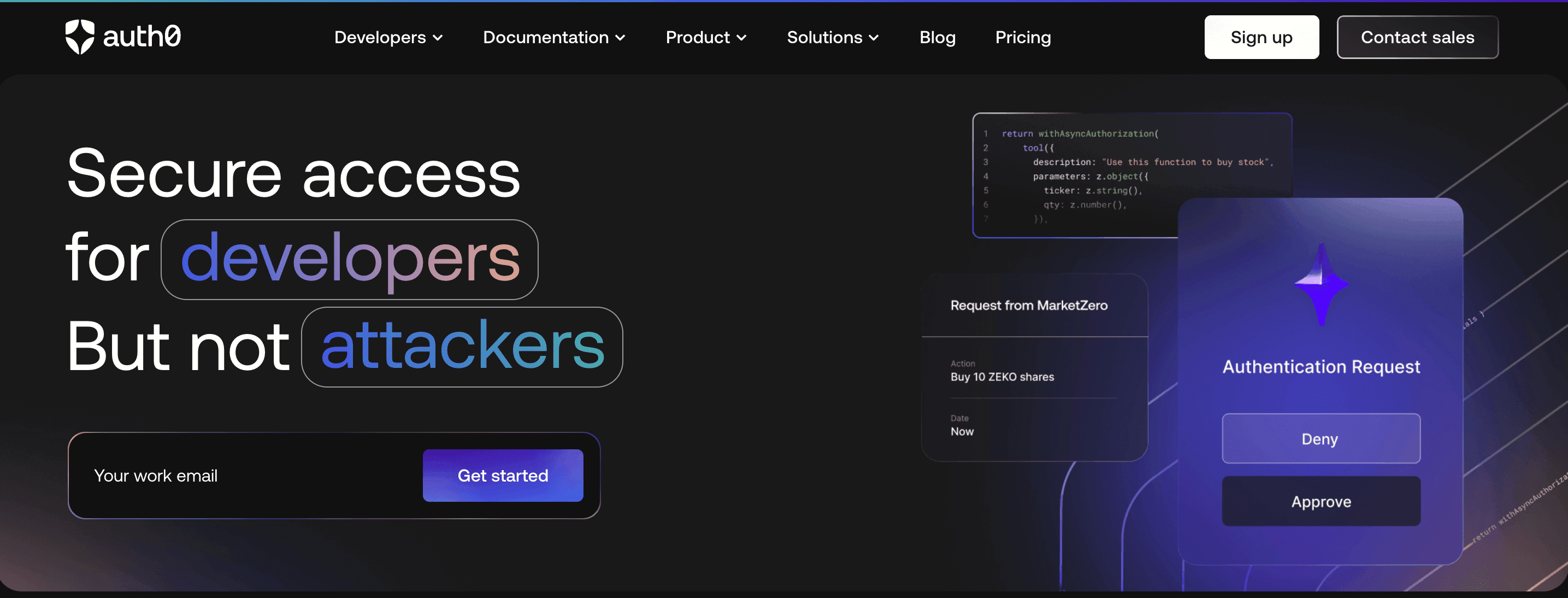
Auth0, part of Okta, is one of the most established authentication platforms for developers. It supports OAuth, OIDC, SSO, MFA, APIs, SDKs, and extensibility through Actions. Auth0’s developer center provides quickstarts and learning resources for adding authentication across common application stacks
Auth0 is developer-friendly because it offers broad protocol support, extensive documentation, and a large ecosystem. However, teams with complex user journeys may need to rely on Actions and custom logic to adapt flows to their exact product requirements.
Key capabilities
Enterprise SSO with SAML, OIDC, and OAuth 2.0
Built-in MFA support including WebAuthn, TOTP, SMS, email, push notifications, and adaptive authentication capabilities
Extensible authentication logic using Actions, Rules, and Hooks to customize authentication and authorization flows
Hosted Universal Login and embedded authentication options with support for branded and application-specific user experiences
Strengths
Mature and proven platform – Auth0 has broad adoption and a long production track record.
Strong protocol coverage – OAuth, OIDC, SAML, and API auth support make it suitable for many identity scenarios.
Large ecosystem – Auth0 offers integrations, SDKs, and documentation across many languages and frameworks.
Ideal for
Auth0 is ideal for teams that want a mature, enterprise-grade identity platform with broad ecosystem support. It works well for organizations with dedicated engineering resources that can manage configuration, extensibility, and customization as identity needs become more complex.
Clerk
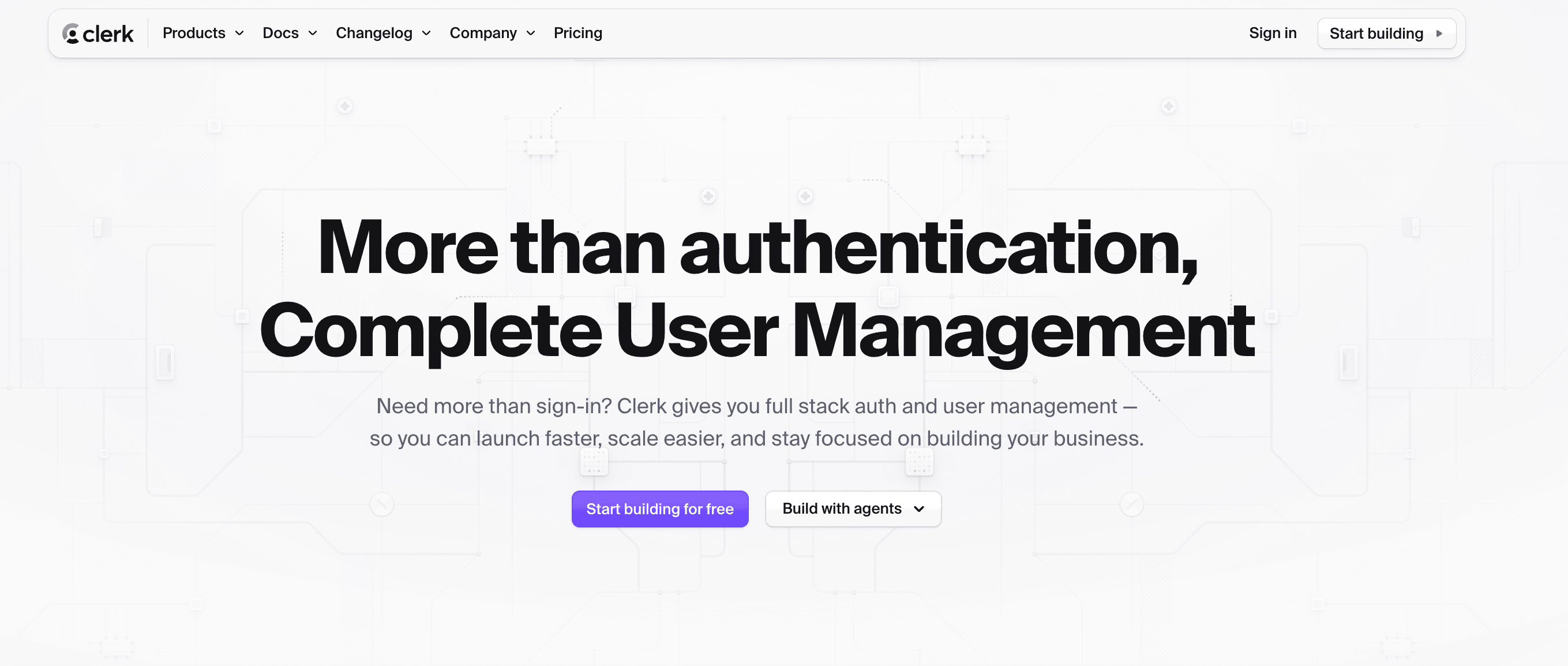
Clerk is a developer-focused authentication and user management platform known for its strong React and Next.js experience. It provides prebuilt UI components, session management, social login, MFA, organization support, and user profile tools. Clerk’s docs emphasize fast integration and frontend-friendly implementation patterns.
Clerk is especially appealing to modern frontend teams that want to add polished authentication quickly without building screens, user profiles, or account management from scratch. However, some teams find it can be costly and brittle to scale as projects grow.
Key capabilities
Prebuilt authentication components for React, Next.js, and modern JavaScript applications
Support for social login, password authentication, passkeys, MFA, and passwordless authentication flows through hosted and embeddable UI
Developer-friendly APIs, SDKs, webhooks, and session management tooling designed for modern frontend and server-rendered architectures
Strengths
Polished prebuilt components – Developers can ship attractive auth flows quickly.
Fast implementation – Clerk reduces the amount of custom UI and account management work needed.
Good fit for startups – Teams can get user auth, sessions, and profiles running quickly.
Ideal for
Clerk is ideal for startups and frontend-heavy teams building React or Next.js applications that want a polished authentication experience with minimal setup. It is best suited for teams that value prebuilt UI and fast implementation over deep identity orchestration.
Firebase Authentication
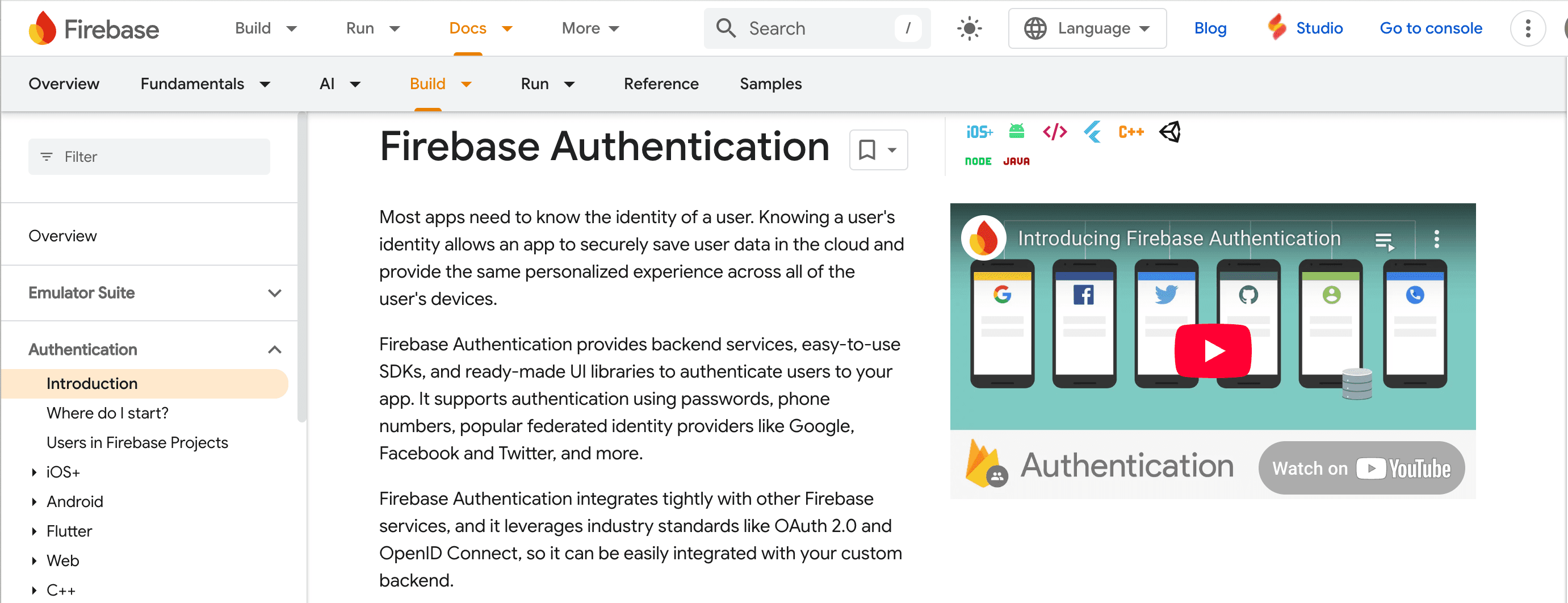
Firebase Authentication is Google’s authentication service for web and mobile apps. It supports email/password login, phone authentication, anonymous auth, social providers, and integration with the broader Firebase ecosystem. Firebase documentation positions it as a way to authenticate users with backend services, SDKs, and ready-made UI options.
Firebase Authentication is developer-friendly for teams already building with Firebase, Google Cloud, or mobile-first architectures. It is simple to start with and works especially well when paired with other Firebase services like Firestore, Cloud Functions, and Hosting. Teams that aren’t already within a Google ecosystem might not find it as appealing, however.
Key capabilities
Support for email/password, social login, phone authentication, and passwordless flows
Client and server SDKs for web, mobile, and backend environments
Integration with Firebase services such as Firestore, Functions, and Analytics
Token-based authentication for securing APIs and backend services
Strengths
Ease of implementation – Simple SDKs make it fast to add authentication without relying on pre-built UI components
Strong mobile and frontend support – Designed for mobile-first and real-time applications
Tight ecosystem integration – Works seamlessly with Firebase and Google Cloud services
Flexible UI approach – Allows teams to build custom authentication experiences instead of relying on predefined components
Ideal for
Firebase Authentication is ideal for mobile and web teams already building on Firebase. It is especially useful for MVPs, consumer apps, and teams that want authentication tightly connected to Google’s app development ecosystem.
Supabase
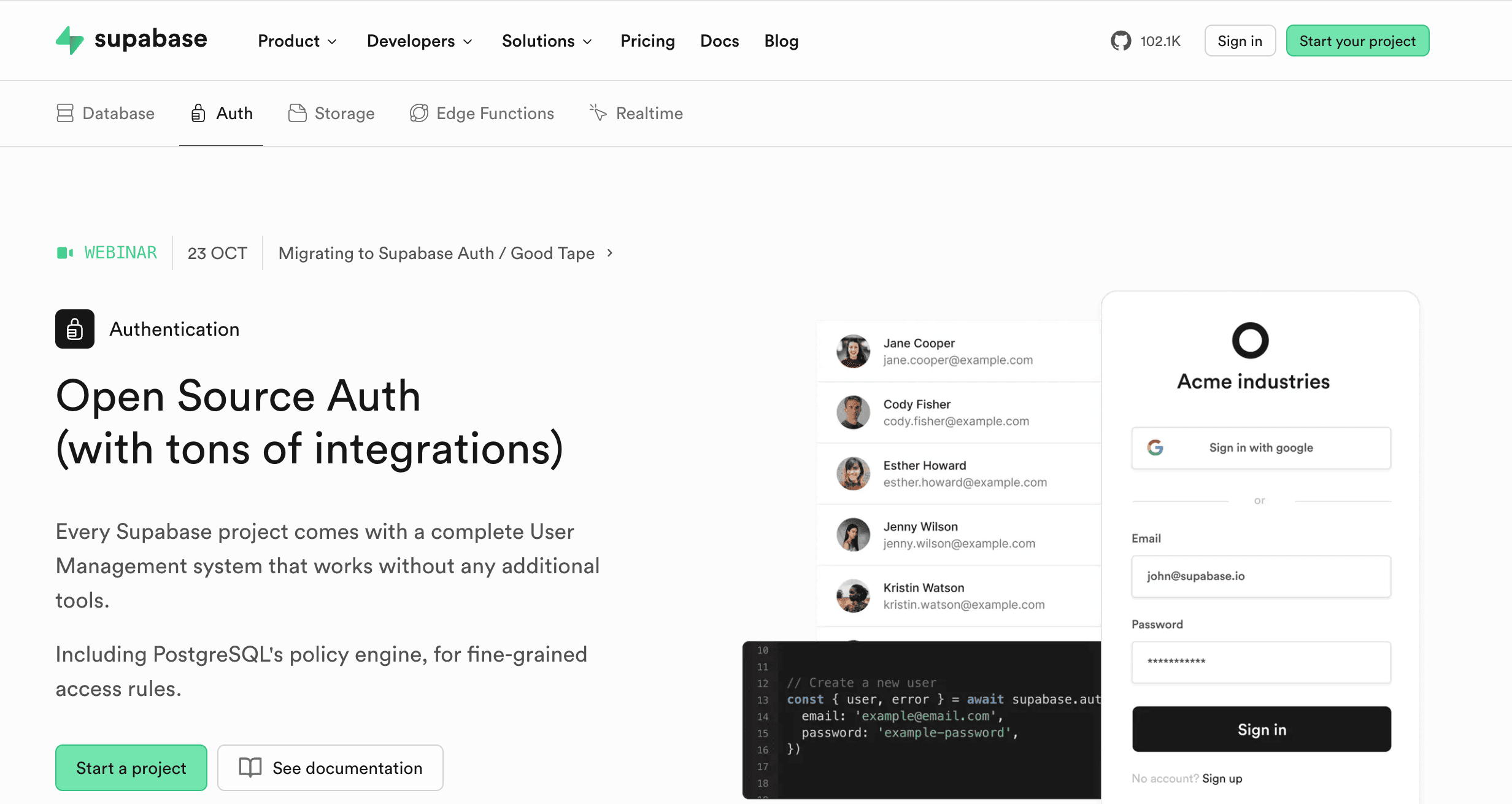
Supabase is an open-source Postgres development platform that includes authentication, database, storage, edge functions, and real-time capabilities. Supabase Auth integrates closely with Postgres and supports email login, magic links, social providers, JWTs, and authorization patterns using Row Level Security.
Supabase is developer-friendly for full-stack teams that want authentication connected directly to the database layer. Its open-source positioning and Postgres foundation make it attractive to developers who want more transparency and control than closed identity platforms typically provide. However, that same flexibility can come with complexity, and some dev teams may prefer a managed solution that streamlines processes and is easier to maintain at scale.
Key capabilities
Email/password, magic link, and third-party OAuth providers.
Postgres-based authentication with row-level security (RLS).
Serverless functions (Edge Functions) for backend logic.
SDKs for JavaScript, Flutter, and other platforms.
Flexible deployment options: self-hosted or fully managed.
Strengths
Database-native auth – Supabase Auth works naturally with Postgres and Row Level Security.
Open-source-friendly – Developers can inspect, self-host, or build with a more transparent backend stack.
Strong full-stack experience – Auth, database, storage, and functions live in one developer platform.
Great for builders – Supabase is popular with developers who want to move quickly without managing infrastructure.
Ideal for
Supabase is ideal for developers building full-stack applications on Postgres. It is a strong fit for teams that want authentication, database, and backend services in one platform, especially when open-source flexibility and SQL-based control matter.
Stytch
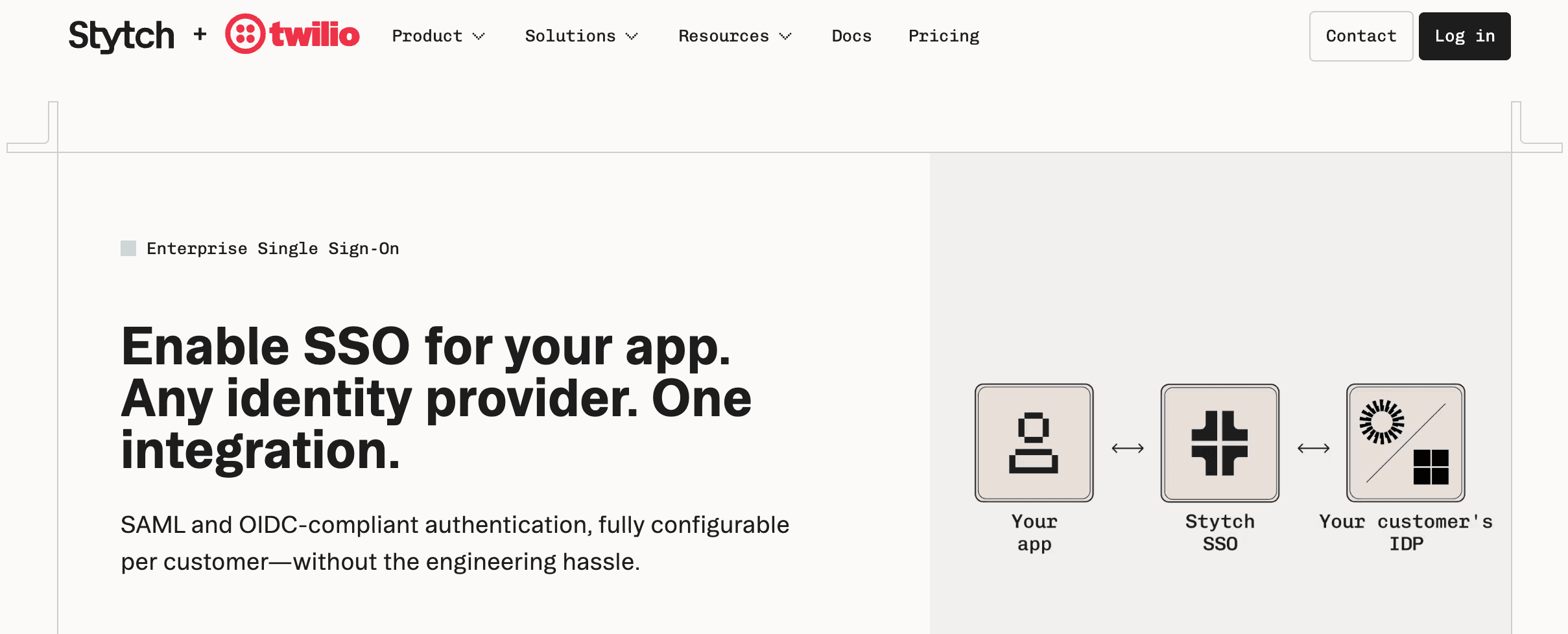
Stytch is a modern authentication platform focused on passwordless experiences. It provides APIs and SDKs for passkeys, magic links, OTP, biometrics, sessions, and fraud prevention. Stytch’s documentation is built around helping developers quickly integrate authentication methods into web and mobile applications.
Stytch is developer-friendly for teams that prioritize low-friction user login and modern authentication methods. It is especially strong for consumer-facing products that want to reduce password reliance and improve conversion. However, some dev teams find Stytch challenging to set up and maintain, and it can be costly to scale beyond the generous free tier.
Key capabilities
Passwordless authentication support including passkeys, magic links, OTP, biometrics, and device-based authentication flows
Built-in fraud prevention and risk signals with bot detection, device fingerprinting, and adaptive authentication capabilities
Flexible APIs and SDKs for implementing authentication, session management, and identity flows across web and mobile applications
Strengths
Clean APIs – Developers can integrate modern auth methods without building primitives from scratch.
Fraud prevention support – Risk and fraud features help teams protect authentication flows.
Modern auth methods – Passkeys, OTP, magic links, and biometrics give teams multiple UX options.
Ideal for
Stytch is ideal for teams that want to build low-friction passwordless authentication into consumer or product-led applications. It is a good fit when user experience and modern auth methods are the primary requirements.
How to choose the right developer-friendly auth platform
When comparing top developer-friendly authentication platforms, features and scalability are important considerations. But, in many cases, the deciding factor is organizational fit with current and future ecosystems.
If you're a React/Next.js startup, Clerk or Descope probably make the most sense
If you need enterprise SSO and multi-tenancy in addition to user auth, consider Descope or Auth0
If you're on Postgres, Supabase is probably best, but Descope can also work
Migration complexity is another major factor when picking an auth solution. Switching auth platforms mid-product is painful; it's worth choosing carefully upfront to avoid headaches later on. Per the Descope 2025 State of Customer Identity survey, 46% of CIAM projects are delayed due to competing priorities. Choosing the wrong platform will only compound this problem.
Conclusion
Modern applications demand more from authentication than a login form. Teams need auth that supports enterprise SSO, adaptive MFA, passwordless flows, and multi-tenant authorization — without those requirements consuming engineering cycles that belong to the product. The right platform should simplify implementation, support modern auth methods, integrate with the broader application stack, and adapt as product requirements become more complex.
Descope stands out for teams that want developer-friendly authentication with deeper journey orchestration. By combining visual workflows, SDKs, APIs, passwordless authentication, MFA, SSO, SCIM, authorization, and adaptive security, Descope helps teams build and evolve complete identity journeys without stitching together custom logic across the application.
To learn more, explore Descope’s docs, book a demo, or sign up for a Free Forever account to start building secure, developer-friendly authentication flows today!