
Table of Contents
Don't have the time to read the entire post? Our human writers will be sad, but we understand. Summarize the post with your preferred LLM here instead.
I can't stand shopping on a normal day. The idea of shopping in person during the holiday rush sounds horrendous. No deal could possibly sway me to head out to the malls. The crowded parking lots. The lines out the door. The hordes of people. Hard pass. I will admit, online shopping is much better but also has its challenges. The dozen or more browser tabs I end up opening just to figure out whether a "deal" is actually a deal still feels like homework and too much screentime.
That's exactly why personal AI agents caught my attention. The idea of telling an agent "find gifts for my list under $100 each and check with me before you buy" and then getting on with my day sounds like the version of holiday shopping I've always wanted. I don't think I'm alone, either. There are a lot of people like me who would happily hand the gruntwork out to an agent.
Meta Muse has already reportedly passed 5 million downloads just 22 days after launch. AI agents are projected to power $3–5 trillion in commerce transactions by 2030. These early numbers suggest plenty of people agree. But when you talk with retail and eCommerce teams, you keep hearing the same question: "What do we do when these agents show up at our login page?"
Here’s what I’ve come to realize, and why I believe this holiday season is when retailers need to stop seeing this as a problem for the future.
Two bad options at the door
To meet the oncoming increase in agentic usage, retail teams are quickly doing one of two things today. I understand why. Neither is ideal; they're just the most expedient and frictionless for the retailer when a sign-in page built for humans meets a shopper that isn't one.
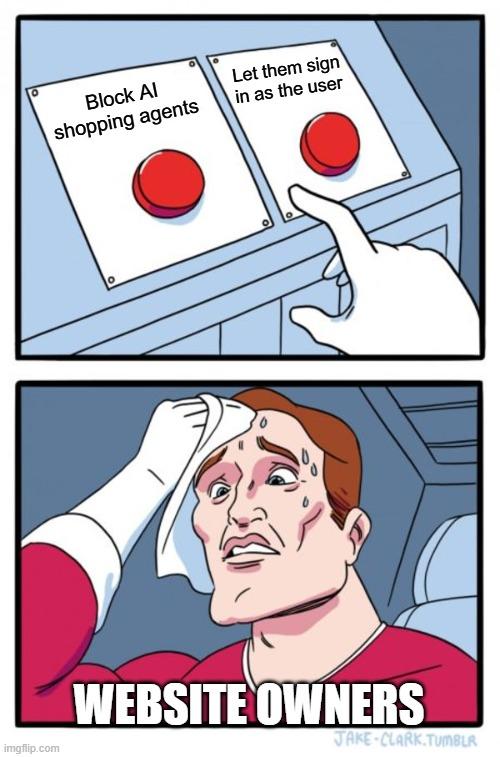
Option one: block the agent. It might seem like the safe choice. But the customer won’t stop shopping just because their agent can’t get in. The agent will just go to a competitor that allows it, and you lose the sale during your busiest season. Even worse, you’ve shown that customer’s agent your store isn’t worth trying again.
Option two: let the agent sign in as the customer. This might feel like a win because the order goes through. But now your systems can’t tell the difference between the agent and the person. Every search, cart, and checkout looks like it came from the customer. That works until something goes wrong.
The January hangover: "I didn't order that"
Picture the second week of January. Returns are piling up, credit card statements have arrived, and a customer calls your support line: "I didn't order that."
Maybe the customer didn’t place the order. Maybe their agent did exactly what it was told, and the customer forgot. Or maybe the agent misunderstood the request. Or maybe it wasn’t their agent at all. The problem is your logs can’t tell which is which, because the agent signed in as the customer. To your systems, they look the same.
Letting agents sign in as users doesn't just create one bad support call. It creates chargebacks you can't contest, frustrating support conversations, and stresses fraud models trained on inaccurate signals. Every agent order that looks human makes it more difficult to spot the orders that aren't legitimate.
The solution is to record delegation clearly. Every token and log entry should show the customer and the agent as separate identities. When that January call comes in, your team can see exactly who did what and who approved it. The support conversation then changes from "we'll look into it" to "here's what happened."
A better front door for agent shoppers
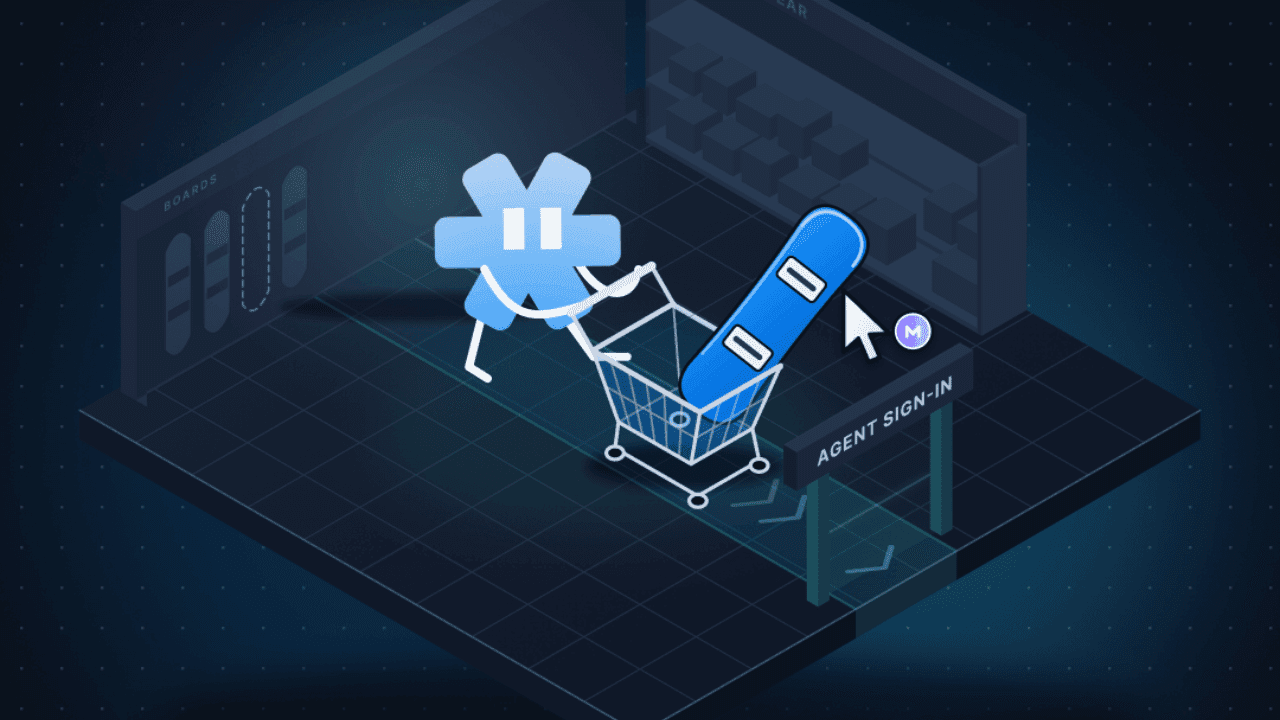
Choosing between blocking agents or pretending they're human is not the answer. The best option is to let agents in as themselves but on behalf of humans. When it comes to retailers being prepared and secure for agent-ready sign-in needs, here are are four pillars:
Identify. Every agent names itself, so you know which agent is at the door before you give it a session.
Consent. The customer has consented to each agent that acts on their behalf.
Scope. A shopping agent can browse the catalog and place orders, while payment methods and account settings may be off limits.
Governance. You can block any agent or revoke its access without signing the customer out or locking up their account.
Imagine it’s the holiday shopping season. It's 11 p.m. in mid-December, the last shipping cutoff before Christmas is tomorrow, and a customer's agent finds the gift sold out for weeks back in stock. Instead of checking out on its own, the agent holds the item and sends the product, price, and delivery date to the customer's phone. The customer taps “approve” on their own device, outside the agent's session, and goes to bed knowing the gift will arrive on time.
Take the scenario further. If the order ships and the customer later questions it, you have a clean record of who asked, who approved, and who checked out. That's the scenario every retailer should get ready for this season: the agent finds the gift, the customer stays in control, and the retailer keeps both the sale and the paper trail.
Keep the sale and the audit trail
This is why I'm excited about what we’ve built with Descope Envoy. It gives personal agents their own front door without asking you to rip out your existing auth stack. It's built on standards the industry already trusts (OAuth 2.1, CIBA, Device Code, and RAR), and it supports Poppy, the new Personal Agent Protocol that gives agents a standard way to discover your site and start a session. In other words, you're not betting on a proprietary approach. You're getting ahead of where the whole industry is heading.
The retailers who come out ahead won't be the ones that block agents, and they won't be the ones that look the other way either. They'll be the ones that can answer three questions about every agentic order: which agent placed it, who it was acting for, and what permission it had.
If you're not sure your store can answer those yet, we at Descope would love to talk. There's still time before the January hangover.