
Table of Contents
Don't have the time to read the entire post? Our human writers will be sad, but we understand. Summarize the post with your preferred LLM here instead.
Authentication gets more complex when a SaaS product shifts from serving individual users to business customers. B2B apps must support companies, teams, tenants, admins, roles, permissions, enterprise SSO, SCIM provisioning, auditability, and customer-specific security needs, all without making developers rebuild identity logic for each new account.
In multi-tenant SaaS, every new enterprise customer brings its own identity provider, role requirements, and admin expectations. Authentication has to handle all of it without a custom build for each account. Common pain points in B2B authentication include tenant isolation, too many roles, enterprise SSO, sudden price increases, and finding a platform that can grow beyond a basic user table.
This guide compares eight authentication solutions for multi-tenant SaaS and B2B apps: Descope, Auth0, WorkOS, Frontegg, Ory, Keycloak, Amazon Cognito, and Firebase Authentication / Google Identity Platform.
Main points:
Multi-tenant SaaS auth goes well beyond login. Tenant isolation, enterprise SSO, SCIM provisioning, delegated admin, and role management all need to work out of the box, without rebuilding logic for every new customer.
Platform model matters as much as features: full-stack managed, enterprise feature layers, open-source self-hosted, and cloud-native options serve very different teams.
Descope is the strongest fit for B2B SaaS teams that need workflow-driven, tenant-aware identity without accumulating custom auth code as enterprise requirements grow.
Switching auth platforms mid-product is expensive. Choosing the right foundation early is one of the highest-leverage identity decisions a team can make.
What to consider when choosing authentication for multi-tenant SaaS and B2B applications
Choosing an authentication solution for a B2B SaaS application depends on your architecture, customer base, enterprise readiness goals, and long-term identity roadmap. Some platforms are optimized for fast implementation, while others focus on enterprise federation, open-source control, authorization, or infrastructure-native deployment.
Below, we’ll discuss four major categories of auth platforms:
Full-stack managed identity, with the most robust and flexible support
Enterprise feature layers, focused on getting startups enterprise-ready
Open-source self-hosted, with extra flexibility at the cost of complexity
Cloud-ecosystem-native, specifically designed for cloud-heavy ecosystems
The best way to find a perfect match for your team is to look within a particular category rather than across all of them. Trying to compare full-stack managed identity platforms to open-source self-hosted options is like comparing apples and oranges.
On a foundational level, multi-tenant SaaS authentication platforms must help teams securely manage users, organizations, and access policies across customers and partner ecosystems:
Tenant-aware identity – Support users, sessions, roles, and policies that are scoped to the correct customer, workspace, organization, or partner environment.
Enterprise SSO – Support standards such as SAML and OIDC so enterprise customers can connect their existing identity providers without custom integrations.
SCIM provisioning – Automate user and group onboarding and offboarding through directory synchronization and lifecycle management.
Authentication methods – Support passwords, passkeys, magic links, OTP, social login, MFA, and step-up authentication to meet both usability and security requirements.
Customization and orchestration – Allow teams to customize authentication journeys, onboarding flows, MFA logic, branding, and tenant-specific routing without excessive backend engineering.
It’s also worth considering migration costs, as switching from one auth setup to another can be expensive. Making the right decision early on can help you avoid painful migration experiences down the line.
As B2B applications scale, platforms must integrate cleanly with enterprise customer requirements and evolving SaaS architectures:
Role and permission management – Enable tenant-aware RBAC, fine-grained authorization, delegated administration, and secure session management without creating unmanageable role sprawl.
Self-service identity management – Allow customer admins to configure SSO, SCIM, domains, and user management independently, reducing support overhead and onboarding friction.
Developer experience – Provide SDKs, APIs, documentation, quickstarts, widgets, and workflow tooling that simplify implementation and long-term maintenance.
Extensibility and integrations – Connect with enterprise identity providers, fraud and risk tools, analytics platforms, compliance systems, and broader application ecosystems.
Operational security and scalability also become increasingly important as SaaS platforms grow across tenants, teams, and enterprise customers:
Adaptive security and risk controls – Support adaptive MFA, bot protection, session security, contextual access policies, and integrations with fraud and risk providers.
Scalability and cost predictability – Scale from early-stage SaaS products to enterprise production environments without introducing pricing surprises, operational bottlenecks, or architectural rewrites.
Auditability and compliance – Maintain visibility into authentication events, user activity, permissions, provisioning workflows, and administrative actions through centralized logs and audit trails.
A strong authentication platform for multi-tenant SaaS should balance flexibility, security, and developer velocity. It should help teams onboard enterprise customers quickly while giving them enough control to support complex identity requirements as the application grows.
Best auth solutions for multi-tenant SaaS and B2B apps at a glance
The best authentication solutions for multi-tenant B2B SaaS offer robust support for security, compliance, and UX needs. The biggest differentiators between them are the overall model (e.g., full-stack managed vs. open-source self-hosted), specific configurations, and points of focus. These factors, along with pricing, determine optimal fit.
Here’s how the top authentication providers for B2B software stack up:
Platform type | Features | Strengths | Best for | |
|---|---|---|---|---|
Descope | Full-stack managed identity | Visual workflows, SSO, SCIM, tenant-aware RBAC/FGA, passkeys, MFA, step-up auth, widgets, APIs, SDKs | Workflow-led identity orchestration, self-service SSO, native multi-tenancy, adaptive security | B2B SaaS teams that need flexible, tenant-aware auth, SSO, and delegated admin without writing custom code |
Auth0 | Full-stack managed identity | Organizations, Universal Login, SAML, OIDC, MFA, Actions, RBAC, APIs, SDKs | Mature ecosystem, broad protocol support, enterprise extensibility | Teams needing a proven identity platform with strong customization resources |
WorkOS | Enterprise feature layers | SSO, SCIM, RBAC, organizations, admin portal, directory sync, audit logs | Strong enterprise-readiness features for B2B SaaS | Teams adding enterprise SSO, SCIM, and RBAC quickly |
Frontegg | Full-stack managed identity | Authentication, user management, SSO, SCIM, roles, permissions, admin portal | SaaS-focused identity platform with prebuilt admin experiences | B2B SaaS teams seeking packaged user management and enterprise features |
Ory | Open-source self-hosted | Open-source identity, OAuth2/OIDC, login flows, permissions, zero-trust components | API-first, open-source control, flexible deployment | Teams that want composable identity infrastructure and engineering control |
Keycloak | Open-source self-hosted | Open-source IAM, realms, organizations, SAML, OIDC, LDAP, RBAC | Full control, standards support, self-hosting flexibility | Teams with DevOps resources that want open-source IAM |
Amazon Cognito | Cloud ecosystem native | User pools, identity pools, SAML, OIDC, managed login, MFA, passkeys, AWS integrations | AWS-native scalability and service integration | AWS-first teams building SaaS, APIs, or mobile apps |
Firebase / Google Identity Platform | Cloud ecosystem native | Firebase Auth, GCIP multi-tenancy, social login, phone auth, MFA, SDKs | Fast setup, mobile-friendly, Google Cloud integration | Mobile and web teams already building on Firebase or Google Cloud |
Below, we’ll look more closely at what makes each one unique.
Descope
Descope is a modern customer identity platform built for B2B SaaS, B2C, and hybrid applications.
For multi-tenant SaaS, Descope is designed around tenant-aware identity. Teams can manage users, roles, permissions, SSO connections, SCIM provisioning, delegated administration, and authentication journeys across many customers or partners from a single identity layer. It’s all managed through visual workflows rather than custom code written separately for each customer.
Descope is ideal for teams that need secure, customizable authentication without having to rebuild their identity infrastructure from scratch. It supports login, signup, MFA, SSO, SCIM, passwordless authentication, authorization, user management, and identity federation through a unified platform of visual workflows, SDKs, APIs, and embeddable widgets.
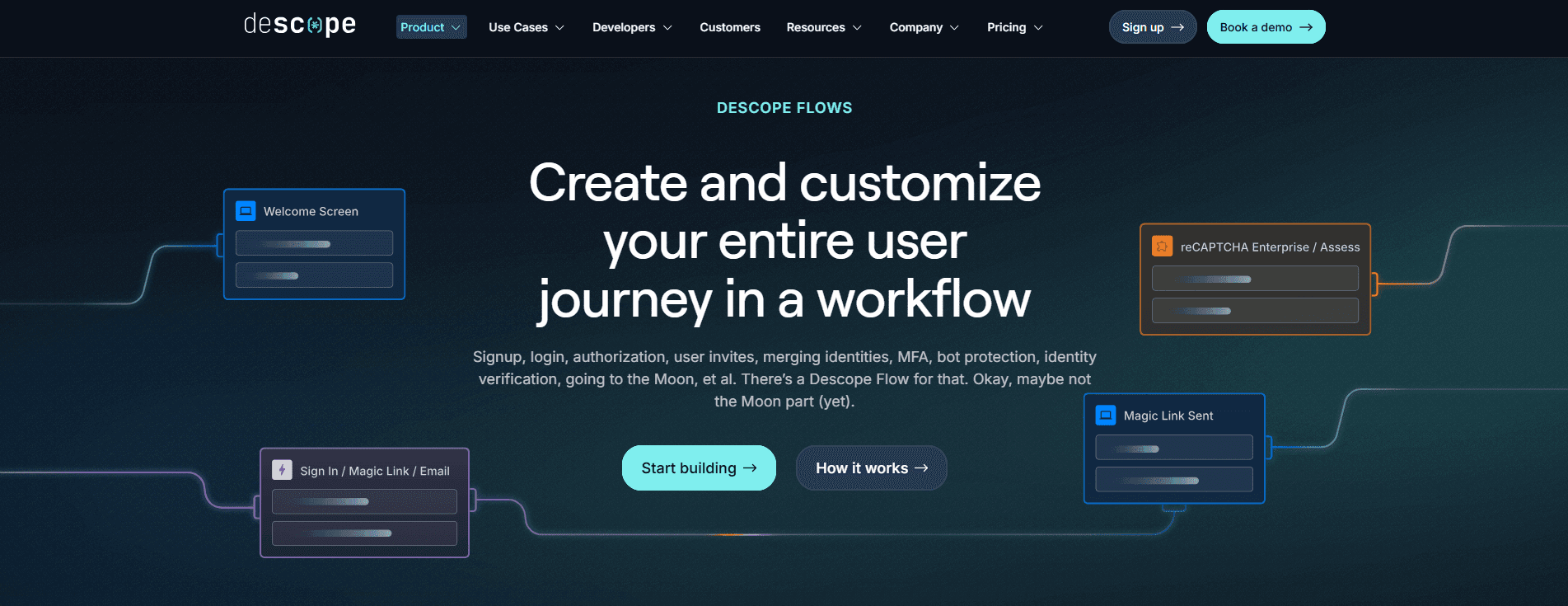
Descope’s core differentiator is its workflow-led approach. Instead of hardcoding identity logic or stitching together multiple tools, teams can use Descope Flows to visually design and modify authentication, MFA, onboarding, SSO, and step-up journeys.
Key capabilities
Multi-tenant SaaS and B2B Identity
Native multi-tenant architecture with tenant-aware users, organizations, RBAC, and FGA designed for B2B SaaS applications without relying on custom workarounds
Self-service enterprise SSO with guided SAML, OIDC, and SCIM setup, allowing customer admins to configure and manage their own identity integrations
Unified orchestration across authentication, authorization, MFA, onboarding, provisioning, and risk evaluation within a single platform
Support for delegated administration via embeddable widgets and a hosted Admin Portal, customer-specific branding, and flexible tenant-level authentication policies across B2B and partner environments
Powerful, flexible developer tooling
Visual workflow editor for login, signup, MFA, SSO, onboarding, and recovery journeys without rebuilding application logic
15+ SDKs and APIs for frontend, backend, web, and mobile applications across modern architectures
Advanced authentication and security features
Support for passkeys, OTP, magic links, and social login, and password-based authentication, enabling modern passwordless and hybrid authentication experiences
Adaptive MFA, session protection, and bot detection using built-in and third-party risk signals, allowing dynamic authentication decisions directly within identity workflows
Step-up authentication and contextual security policies that can be enforced without custom backend orchestration
Integration and extensibility support
Extensible integrations ecosystem for fraud detection, analytics, compliance, directory sync, and identity enrichment within authentication workflows
Flexible UI options with embeddable widgets, hosted flows, and fully customizable frontend experiences
Agentic identity support for AI agents and MCP-based ecosystems, extending identity infrastructure beyond human users and applications
Secure, AI-ready infrastructure for B2B CIAM and SSO use cases
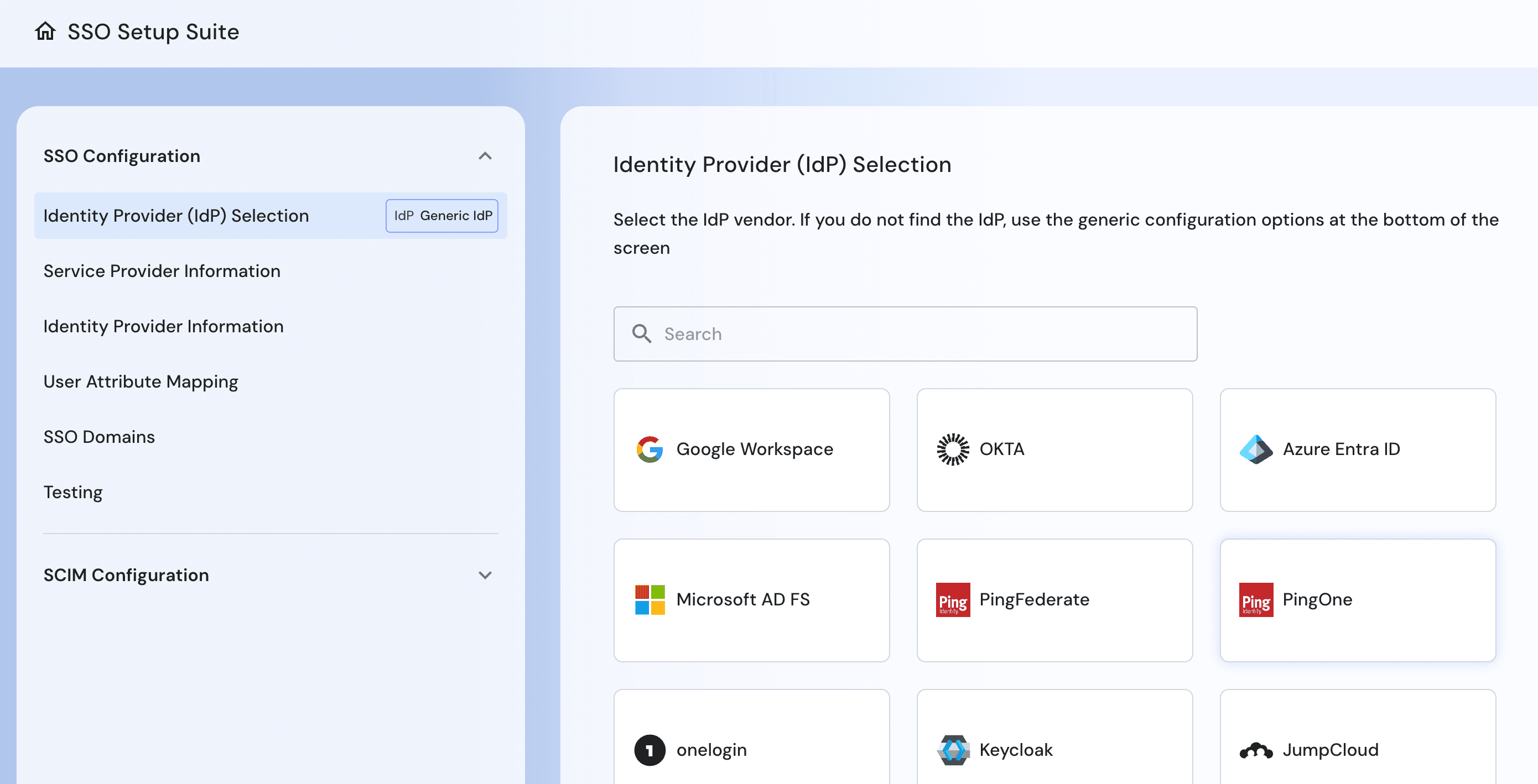
Strengths
Flexible identity orchestration instead of rigid auth flows – Authentication, onboarding, MFA, SSO, and provisioning logic are managed through workflows rather than fragmented custom code or hard-coded frontend abstractions
Faster enterprise onboarding – Self-service SSO and SCIM setup reduce manual configuration effort and simplify onboarding for enterprise customers, partners, and multi-tenant environments
Unified identity platform – Authentication, authorization, MFA, tenant management, risk evaluation, and onboarding workflows are managed within one system instead of stitching together multiple tools
Native multi-tenant architecture – Tenant-aware users, organizations, permissions, RBAC, and FGA are built into the platform for B2B SaaS and partner ecosystems
Adaptive and risk-based MFA built into workflows – Dynamic security decisions, step-up authentication, and contextual access policies can be enforced directly within authentication journeys
Strong enterprise federation support – Built-in SAML, OIDC, and SCIM support enables secure identity federation across customers, partners, and external organizations
Reduced long-term engineering complexity – Identity flows and tenant-specific requirements can evolve without major architectural rewrites as SaaS applications scale
Broad SDK and API coverage – Integrates cleanly across frontend and backend services while supporting API-first, microservices, and hybrid application architectures
Future-ready identity platform – Supports B2B, B2C, partner, machine-to-machine, and agentic identity use cases within a unified identity layer
Ideal for
Descope is a strong fit for organizations building multi-tenant SaaS and B2B applications that need flexible, tenant-aware authentication without maintaining fragmented identity infrastructure across customers, organizations, and partner ecosystems. It works especially well for teams that want to move beyond rigid authentication implementations and adopt a more configurable, workflow-driven approach to identity as enterprise requirements grow.
The platform also supports hybrid environments that need unified authentication and authorization across tenants, enterprise customers, administrators, APIs, machine identities, and AI agents — within a single developer-friendly identity platform built for modern SaaS.
Auth0
Auth0, part of Okta, is one of the most established authentication platforms for developers and enterprise applications. It supports OAuth, OIDC, SAML, enterprise SSO, MFA, APIs, SDKs, and extensibility through Actions. Auth0 also provides Organizations, which help teams model B2B customers, tenants, and partner environments within multi-tenant SaaS applications.
Auth0 is widely used for B2B SaaS because it offers broad protocol support, extensive documentation, and a large ecosystem of integrations and developer tooling. However, organizations with complex multi-tenant requirements, highly customized user journeys, or advanced authorization models may need to rely on Actions, custom logic, and additional configuration to adapt identity flows to their exact product requirements.
Key capabilities
Enterprise SSO with SAML, OIDC, OAuth 2.0, and support for customer and partner identity providers
Organizations and tenant management capabilities for modeling B2B customers, business accounts, and multi-tenant SaaS environments
Built-in MFA support, including WebAuthn, TOTP, SMS, email, push notifications, and adaptive authentication capabilities
Strengths
Mature and proven platform – Auth0 has broad enterprise adoption and a track record across SaaS and customer identity use cases
Protocol coverage – OAuth, OIDC, SAML, SCIM, and API authorization support make it suitable for many B2B and multi-tenant identity scenarios
Large ecosystem – Auth0 offers integrations, SDKs, marketplace extensions, and documentation across many languages and frameworks
Ideal for
Auth0 is ideal for teams that want a mature, enterprise-grade identity platform with broad ecosystem support and strong federation capabilities for multi-tenant SaaS and B2B applications. It works well for organizations with dedicated engineering resources that can manage configuration, extensibility, and customization as tenant management, enterprise onboarding, and authorization requirements become more complex.
WorkOS
WorkOS is a developer platform focused on helping SaaS companies become enterprise-ready. It provides APIs and developer tooling for enterprise SSO, SCIM provisioning, directory sync, RBAC, audit logs, and user management features commonly required in B2B and multi-tenant SaaS applications.
WorkOS is popular with SaaS teams because it simplifies the process of adding enterprise identity features without requiring developers to build complex federation and directory integrations from scratch. Its APIs are designed to help companies support enterprise customer onboarding more quickly. However, teams may still need additional application logic and orchestration to manage highly customized authentication journeys, onboarding flows, and tenant-specific identity experiences.
Key capabilities
Enterprise SSO integrations via SAML and OIDC for customer and partner identity providers in multi-tenant SaaS environments
SCIM provisioning and directory sync for automated user, group, and tenant lifecycle management
Organizations, RBAC, and audit logs for managing enterprise customers, permissions, and compliance requirements
Developer-first APIs and SDKs for integrating enterprise identity and onboarding workflows into B2B applications
Strengths
Strong enterprise readiness focus – WorkOS is purpose-built around the enterprise identity requirements common in B2B SaaS applications
Simplified SSO and SCIM integration – APIs and prebuilt tooling help reduce the complexity of enterprise customer onboarding
Developer-friendly implementation – SDKs, APIs, and documentation help teams add enterprise identity capabilities without building every integration from scratch
Good fit for SaaS growth – Organizations, RBAC, and audit log capabilities align well with the operational needs of multi-tenant SaaS platforms
Ideal for
WorkOS is ideal for SaaS companies that want to add enterprise-ready identity features such as SSO, SCIM, RBAC, audit logs, and directory sync to multi-tenant B2B applications. It works especially well for teams that already have a core authentication system in place but need developer-friendly APIs and tooling to support enterprise customer onboarding and compliance requirements as they scale.
Frontegg
Frontegg is a SaaS-focused authentication and user management platform designed to help B2B companies add enterprise identity capabilities to multi-tenant applications. It provides authentication, enterprise SSO, SCIM provisioning, MFA, authorization, and admin portal functionality through a combination of APIs, SDKs, and prebuilt UI components.
Frontegg is popular with B2B SaaS teams because it packages many common enterprise identity requirements into a single platform, reducing the need to build user management and admin experiences from scratch. Its approach is especially appealing to teams looking to accelerate enterprise onboarding and customer management. However, organizations with highly customized authentication journeys or complex authorization requirements may still require additional engineering and workflow customization as identity needs evolve.
Key capabilities
Enterprise SSO integrations via SAML and OIDC for customer and partner identity providers in multi-tenant SaaS environments
SCIM provisioning, user management, and directory sync
Multi-tenant organizations, RBAC, permissions, and admin portal capabilities
APIs, SDKs, and prebuilt UI components
Strengths
SaaS-focused identity platform – Frontegg is designed around common B2B SaaS authentication and user management requirements
Prebuilt admin experiences – Customer-facing admin portals and user management tooling can reduce implementation time
Enterprise onboarding support – SSO, SCIM, and tenant management capabilities help teams support enterprise customers more quickly
Ideal for
Frontegg is ideal for SaaS companies that want packaged authentication, user management, enterprise SSO, SCIM, and admin portal capabilities for multi-tenant B2B applications. It works especially well for teams looking to accelerate enterprise readiness and reduce the amount of custom code needed to support customer onboarding and tenant management.
Ory Kratos
Ory is an open-source, API-first identity platform designed for developers building modern cloud-native applications and distributed systems. Its modular architecture includes services for authentication, OAuth2 and OpenID Connect, user management, and authorization, giving teams flexibility to compose identity infrastructure around their own application requirements.
Ory is popular with engineering-led organizations that want greater control over authentication and authorization in multi-tenant SaaS and B2B applications. Its API-first approach works well for teams building custom identity architectures across microservices and hybrid environments. However, compared to more packaged SaaS identity platforms, Ory typically requires more engineering ownership and operational management to implement and maintain enterprise-ready customer identity experiences.
Key capabilities
OAuth2, OIDC, and API-based authentication services for multi-tenant SaaS and B2B applications
Identity, user management, and self-service login flows for customer and partner authentication
Fine-grained authorization and permission management through modular authorization services
Strengths
Strong developer control – Ory provides flexible, composable identity infrastructure for teams that want to own their authentication architecture
API-first design – Works well across distributed systems, microservices, and modern SaaS application environments
Open-source flexibility – Teams can self-host, customize, and extend identity services based on their own requirements
Ideal for
Ory is ideal for engineering-driven organizations building multi-tenant SaaS and B2B applications that require flexible, API-first authentication and authorization infrastructure. It works especially well for teams with strong platform engineering or DevOps resources that want open-source control, cloud-native deployment flexibility, and the ability to compose identity services around complex application architectures.
Also Read: Why BalkanID Moved From Ory Kratos to Descope
Keycloak
Keycloak is an open-source identity and access management platform that supports authentication, authorization, enterprise SSO, and federation for modern applications. It provides support for SAML, OIDC, OAuth 2.0, LDAP, Active Directory integration, and customizable login experiences through a self-hosted architecture.
Keycloak’s open-source model and standards-based federation make it attractive for teams building custom enterprise authentication environments. However, compared to managed SaaS identity platforms, Keycloak typically requires more operational ownership, DevOps resources, and engineering effort to scale and maintain customer-facing identity systems.
Key capabilities
Multi-tenant identity management through realms, organizations, groups, and role-based access controls
LDAP and Active Directory federation for enterprise customer and workforce identity integration
Open-source, self-hosted architecture with customizable authentication flows, login experiences, and APIs
Strengths
Full infrastructure control – Keycloak allows organizations to self-host and customize identity infrastructure based on their own requirements
Strong standards support – Broad support for SAML, OIDC, OAuth 2.0, LDAP, and enterprise federation scenarios
Open-source flexibility – Teams can extend, customize, and integrate Keycloak into existing application and infrastructure environments
Ideal for
Keycloak is ideal for organizations building multi-tenant SaaS and B2B applications that want open-source control over authentication and authorization infrastructure. It works well for teams with strong DevOps or platform engineering resources that need flexible deployment options.
Amazon Cognito
Amazon Cognito is AWS’s managed authentication and authorization service for web, mobile, and API-driven applications. It supports user authentication, enterprise federation, MFA, social login, passkeys, and secure access management through AWS-native infrastructure and integrations.
Amazon Cognito is commonly used by organizations building multi-tenant SaaS and B2B applications on AWS because it integrates closely with services such as API Gateway, Lambda, IAM, and AppSync. Its managed infrastructure and scalability make it attractive for teams already invested in AWS. However, organizations with more advanced tenant management, enterprise onboarding, and identity orchestration requirements may need additional custom development and AWS-specific configuration as complexity grows.
Key capabilities
Enterprise SSO integrations via SAML, OIDC, and social identity providers for customer and partner authentication
User pools, identity pools, and token-based authentication for managing users, sessions, and API access across multi-tenant applications
MFA, passkeys, adaptive authentication, and AWS Lambda triggers for custom authentication workflows and security controls
AWS-native APIs and integrations for connecting authentication with API Gateway, IAM, Lambda, AppSync, and other AWS services
Strengths
Deep AWS integration – Cognito works seamlessly with AWS infrastructure, developer services, and security tooling
Managed scalability – AWS-managed infrastructure helps teams scale authentication across users, tenants, and applications without managing core auth infrastructure
Strong federation support – Supports SAML, OIDC, and social providers for enterprise customer and partner identity integration
Ideal for
Amazon Cognito is ideal for organizations building multi-tenant SaaS and B2B applications within the AWS ecosystem that want managed authentication tightly integrated with their existing cloud infrastructure. It works especially well for teams building APIs, mobile applications, and cloud-native SaaS platforms that can leverage AWS services and infrastructure to support authentication and identity management at scale.
Firebase Authentication / Google Identity Platform (GIP)
Firebase Authentication is Google’s authentication service for web and mobile applications. It supports email and password login, social authentication, phone authentication, MFA, anonymous login, and SDK-based identity integration across modern application stacks.
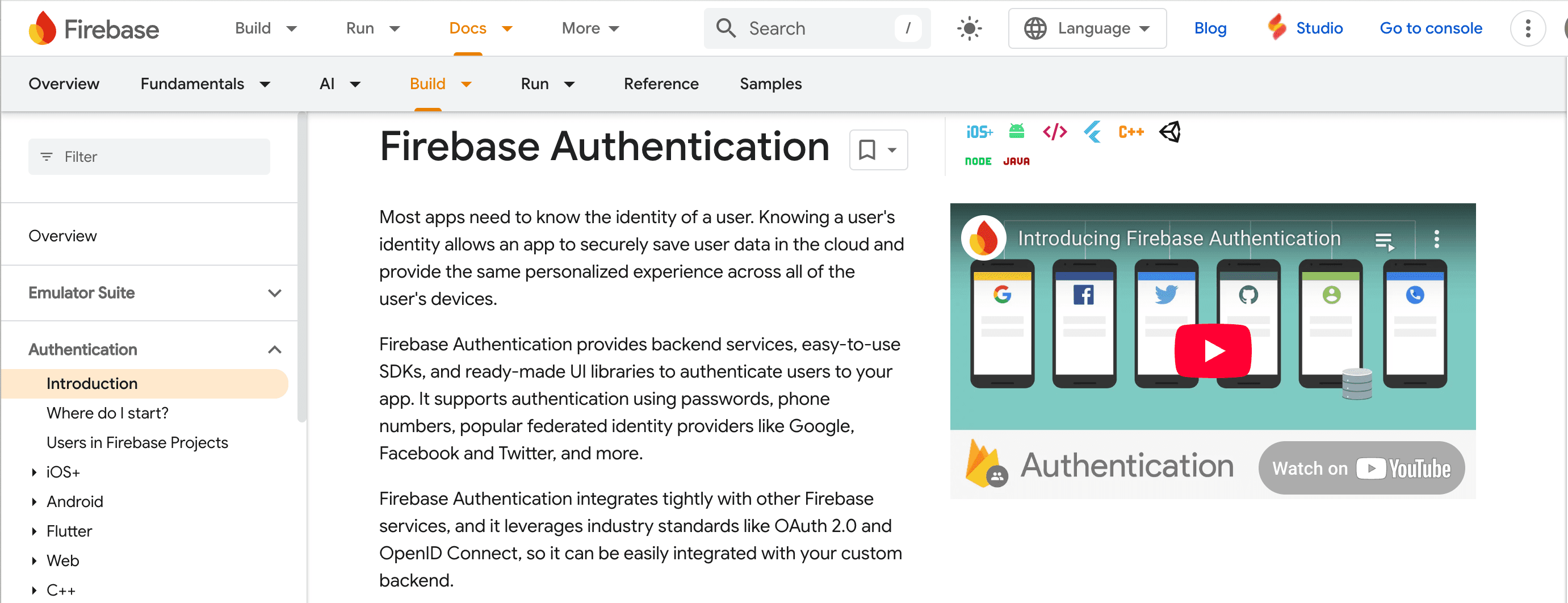
For organizations building more advanced multi-tenant SaaS and B2B applications, Google also offers Google Cloud Identity Platform, an enterprise-focused extension of Firebase Authentication. Google Identity Platform builds on Firebase Auth by adding capabilities such as multi-tenancy, enterprise federation through SAML and OIDC, tenant-specific identity providers, SLAs, and enhanced security and compliance controls for customer-facing applications. However, teams that aren’t already building within a Google/Firebase-heavy ecosystem likely won’t get as much value from this seamless integration.
Key capabilities
Enterprise SSO integrations via SAML and OIDC through Google Identity Platform for customer and partner identity providers
Multi-tenant identity management and tenant-specific authentication configuration through Google Identity Platform
Firebase and Google Cloud SDKs, APIs, and integrations for authentication, session management, and application development workflows
Strengths
Fast developer implementation – Firebase Authentication is easy to integrate across web, mobile, and frontend-focused applications
Strong Google ecosystem integration – Works seamlessly with Firebase, Google Cloud, Firestore, Cloud Functions, and analytics tooling
Flexible upgrade path – Teams can start with Firebase Authentication and adopt Google Identity Platform as enterprise and multi-tenant requirements grow
Ideal for
Firebase Authentication and Google Identity Platform are ideal for organizations building multi-tenant SaaS and B2B applications within the Google Cloud ecosystem that want fast authentication implementation with a path toward enterprise-ready identity capabilities.
Which authentication platform is right for your B2B SaaS application?
There’s no one-size-fits-all authentication platform for B2B SaaS applications. The right choice depends on what aligns best with your team’s needs and infrastructure, both now and in the future.
One of the most important considerations is model type:
If you need a full-stack managed identity, consider Descope or Auth0
If you’re primarily looking for enterprise feature layers, consider WorkOS
If you want an open-source self-hosted option, consider Ory or Keycloak
If you need a cloud-ecosystem-native platform, consider Cognito or GIP
While there’s no true universal fit, Descope is well-suited to a wide range of use cases, especially startup and growth-stage B2B SaaS companies and established B2B enterprises looking to modernize their approach to customer identity and access management (CIAM).
Conclusion
Before an enterprise deal closes, the checklist is long: tenant isolation, self-service SSO, SCIM provisioning, delegated admin, fine-grained authorization. The right platform handles all of it without turning auth into a second product to maintain. The best platform depends on your architecture and maturity. Auth0 offers a mature and extensible enterprise identity platform. WorkOS is strong for adding enterprise readiness features like SSO, SCIM, and RBAC. Frontegg provides packaged SaaS identity and admin portal capabilities. Ory and Keycloak give engineering teams open-source control. Cognito and Firebase are strong choices for teams already building deeply in AWS or Google Cloud.
Descope stands out for teams that want a tenant-aware, workflow-led identity platform for B2B SaaS and modern applications. By combining visual workflows, SSO, SCIM, RBAC, FGA, adaptive MFA, passwordless authentication, widgets, APIs, and SDKs, Descope helps teams build flexible identity journeys without stitching together custom logic across the application.
To learn more, explore Descope’s docs, book a demo, or sign up for a Free Forever account to start building secure, multi-tenant authentication flows today.