


Table of Contents
Don't have the time to read the entire post? Our human writers will be sad, but we understand. Summarize the post with your preferred LLM here instead.
Community Health Centers (CHCs) are working to improve digital access as they expand healthcare services, now reaching over 31 million patients in underserved communities across the United States. With the adoption of patient portals, telehealth, online scheduling, and digital intake, identity and authentication systems have become key to how patients get care. CHC IT leaders are focused on making these services simple for patients and keeping their data safe.
At the same time, CHCs serve patients who have very different levels of digital access.
Limited or unreliable internet connectivity
Shared or public devices across households
Lower familiarity with digital tools
Authentication systems that assume consistent access and personal devices
Increased risk of patients failing to complete login or abandoning digital services
These challenges make it hard for traditional authentication methods to work well in CHC settings. Because of this, CHCs need to find new ways to balance security and accessibility so patients can get the care they need.
Below are some of the most common digital access challenges that CHCs face:
CHC authentication challenges
Patients
Identity systems aim to keep patient information safe, but in CHCs, they can sometimes make it harder for people to get care. Most authentication models are made for consumer apps, where users have their own devices, steady internet, and are comfortable with technology. Many CHC patients face a different situation.
For many CHCs, the challenges often look like:
Shared devices: Multiple family members may use the same device, creating confusion around account access and raising potential privacy concerns.
Password fatigue: Patients may forget credentials or struggle with frequent resets, leading to frustration and account lockouts.
Low digital literacy: Complex login flows and multi-step authentication can make it difficult for some patients to successfully sign in.
Connectivity issues: Unreliable internet or limited data can interrupt login processes before patients complete authentication.
As a result, some patients become frustrated with digital healthcare services before they even reach the appointment page, patient portal, or telehealth session they wanted to use. For CHCs trying to improve digital access, authentication needs to be secure but also fit the real needs of their communities.
Also Read: Healthcare Identity and Access Management Best Practices
IT teams
Authentication challenges impact not only patients but also the internal teams responsible for keeping digital systems running. Community Health Centers often operate with small IT departments that must support multiple systems across clinics, telehealth services, and patient-facing applications. When authentication is fragmented or difficult to manage, IT teams can spend disproportionate time troubleshooting login issues rather than advancing digital health initiatives.
This complexity grows as CHCs expand system integrations. Many use SMART on FHIR to connect EHR platforms with patient apps, telehealth, and other digital tools. Although these integrations enhance care delivery, they also create additional identity and authorization challenges that are difficult to manage with limited resources.
Key challenges IT teams must manage include:
High volume of login issues: Frequent password resets and account recovery requests create an ongoing support burden.
Fragmented identity systems: Separate authentication management across portals, telehealth, and other applications adds complexity.
Complex integrations: IT teams must support OAuth flows, token exchanges, and authorization controls across EHR-connected applications.
Inconsistent identity management: Ensuring reliable authentication across multiple systems, users, and external applications is time-consuming and prone to errors.
The result is growing operational overhead for IT teams that are already resource-constrained. CHCs must simplify identity management so teams can focus less on authentication and more on supporting care delivery and expanding digital services.
Identity best practices for CHCs
CHCs need to keep patient information safe and also make it simple for patients to get care online. As CHCs add more patient portals, telehealth, and digital tools, authentication is where security and easy access have to work hand in hand.
Effective identity approaches focus on:
Keeping strong security controls in place, such as following HIPAA rules, using granular access control, and protecting against unauthorized access.
Making things easier for patients by relying less on passwords and making logins simpler, so fewer people give up trying to access care.
Using risk-based MFA and security controls, so extra verification is only needed for sensitive actions or when something unusual happens.
Designing systems for real-world use, like making sure they work well on phones, can be used on shared devices, and are easy for people with different levels of digital skills.
Making sure patients, staff, and partners across different clinics and programs can all access systems securely.
To put these ideas into action, CHCs should give clear setup instructions, help people use digital services, and check their authentication steps often to keep them secure and user-friendly.
When CHCs balance strong security with easy-to-use design, they can grow their digital care options and keep trust, meet rules, and work efficiently.
Also Read: How Collabrios Health Implemented Tenant-Aware Auth & SSO With Descope
Where Descope can help
CHCs often need to modernize authentication without adding more complexity for already stretched IT teams. Implementing stronger security controls, improving patient access, and integrating identity across healthcare systems can quickly become difficult to manage with limited resources. Platforms designed for modern identity orchestration can help CHCs introduce secure authentication while simplifying operations.
Descope helps healthcare organizations implement modern authentication in a way that improves access for patients while maintaining strong security and compliance.

With Descope, healthcare organizations can leverage:
Passwordless authentication: Supporting one-time codes, TOTP (which works without Internet access), magic links, and passkeys to reduce password friction and make it easier for patients to sign in.
Adaptive MFA: Adding additional verification only when risk is detected, helping protect sensitive systems without introducing unnecessary login steps.
Visual authentication workflows: Allowing teams to build and modify patient, staff, and partner login journeys without complex custom development.
Enterprise SSO and role-based access management: Providing secure access controls for clinicians, administrators, and other healthcare staff across systems.
SMART on FHIR support: Handling user authentication, consent, and token issuance to enable healthcare applications to securely connect to EHR systems.
Flexible integrations: Orchestrating data and actions from third-party products like CRMs, fraud tools, audit platforms, and email / SMS solutions with plug & play connectors.
Tenant-aware B2B2X identity: Supporting secure collaboration across partner clinics, community organizations, and healthcare applications while isolating access by organization or program.
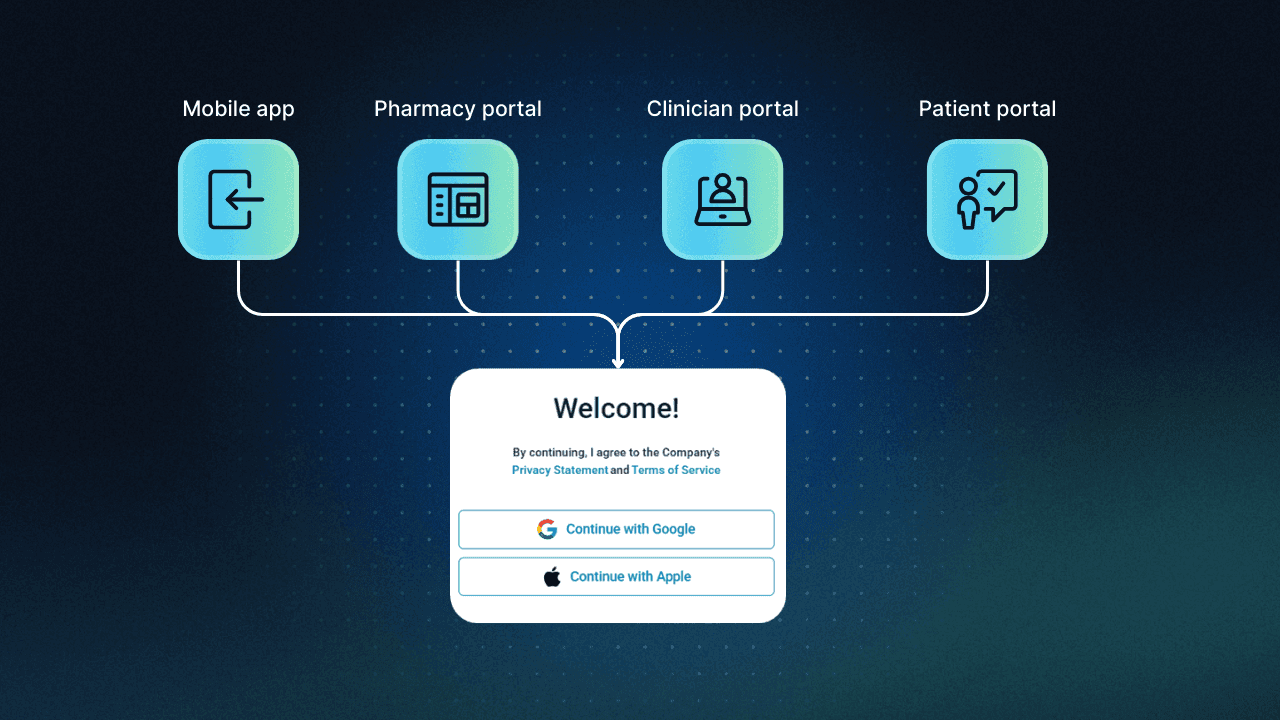
These capabilities help CHCs deliver secure and accessible authentication experiences that reduce barriers to digital healthcare while easing operational burden for internal teams.
Accessible identity helps close the digital divide
As healthcare moves online, authentication must reflect the realities CHCs serve, including shared devices, limited connectivity, and varying digital literacy. Traditional login systems often create barriers instead of access.
Modern authentication helps CHCs improve access while maintaining strong security. Flexible, user-friendly identity reduces friction for patients, strengthens protection, and eases IT burden.
Descope’s drag & drop CIAM platform supports passwordless auth, mobile-first flows, and federated access across systems. Teams like Collabrios Health, GoodRx, SmithRx, and Owens & Minor use Descope to improve onboarding, security, and reduce engineering effort.
If you're evaluating healthcare-focused customer IAM platforms, check out our docs. If you'd like a demo, meet with our auth experts. Also, if you want to try Descope yourself, sign up for a Free Forever Account and start dragging & dropping your auth today!