
Table of Contents
Don't have the time to read the entire post? Our human writers will be sad, but we understand. Summarize the post with your preferred LLM here instead.
As applications grow from early traction to millions of users, enterprise clients, and global markets, authentication becomes a crucial part of the business. At scale, authentication is more than just signing users in. It impacts conversion rates, uptime, latency, security, compliance, customer experience, and how quickly developers can work.
Large-scale applications need identity systems that offer fast signup, reliable login, flexible authentication options, adaptive security, the ability to handle traffic spikes, enterprise federation, and long-term support. For consumer apps, slow or unreliable login can reduce conversion and engagement. For B2B and enterprise apps, identity systems also need to support tenants, roles, SSO, SCIM, audit logs, delegated administration, and customer-specific security needs.
This guide looks at seven authentication platforms for large-scale applications: Descope, Auth0, Microsoft Entra External ID, Amazon Cognito, Firebase Authentication or Google Identity Platform, Keycloak, and Ory.
What to consider when choosing authentication for high-scale applications
When picking an authentication solution for a high-scale app, consider your system’s architecture, how quickly you expect your user base to grow, your performance needs, and your long-term plans for identity management. Some platforms are built for quick setup, while others are better for enterprise integration, cloud scalability, open-source flexibility, or advanced customization.
At the core, authentication platforms for high-scale apps should let teams securely manage users, sessions, and authentication processes, all while keeping performance and reliability strong even during heavy use:
Performance and low-latency authentication: Make sure signup, login, token refresh, and session validation are fast for web, mobile, and API-based apps, so users don’t experience delays.
Scalability for large user populations: Handle millions of users and high authentication traffic without making your team manage the authentication infrastructure.
Traffic spike resilience: Be able to manage sudden jumps in authentication requests from launches, events, campaigns, or viral growth, so real users aren’t affected.
Authentication methods: Offer options like passwords, passkeys, magic links, one-time passwords, social logins, multi-factor authentication, and step-up authentication to balance security and user experience.
Customization and orchestration: Let teams adjust authentication steps, onboarding, MFA rules, risk policies, and user experiences without needing a lot of backend work.
As your app grows, your authentication platform should work smoothly with new product needs, enterprise clients, and distributed systems:
Enterprise federation: Support standards like SAML and OIDC, so enterprise customers can connect their existing identity providers without extra custom work.
Developer experience: Offer SDKs, APIs, clear documentation, quickstart guides, widgets, and AI tools to make setup and ongoing maintenance easier.
Extensibility and integrations: Make it easy to connect with fraud detection, analytics, compliance systems, identity providers, and other parts of your app ecosystem.
Migration and modernization support: Help organizations move from old authentication systems or custom setups without disrupting users or forcing everyone to reset their passwords.
Multi-region deployment and data residency: Support regional deployments and data residency requirements while maintaining low-latency authentication as applications expand globally.
Operational security and reliability matter more as your app grows across different users, regions, and customer groups:
Adaptive security and risk controls: Include features like adaptive MFA, bot protection, session security, contextual access rules, and connections to fraud and risk tools.
Reliability and availability: Ensure high uptime, redundancy, disaster recovery, and strong SLAs to reduce authentication outages.
Scalability and cost predictability: Grow from a startup to a global app without unexpected costs, bottlenecks, or needing to redo your architecture.
Auditability and compliance: Keep track of authentication events, user actions, security policies, and admin changes with centralized logs and audit trails.
A good authentication platform for high-scale apps should balance performance, reliability, security, and developer speed. It should help your team handle fast growth, traffic spikes, and changing identity needs, while keeping things fast and secure for both users and admins.
Best authentication platforms for high-scale applications at a glance
Features | Strengths | Best for | |
|---|---|---|---|
Descope | Visual workflows, passkeys, MFA, SSO, SCIM, tenant-aware RBAC/FGA, risk-based auth, SDKs, APIs, widgets | Workflow-led identity orchestration, flexible authentication journeys, enterprise readiness, adaptive security, migration support | High-scale B2C, B2B, and hybrid applications that need flexible authentication without heavy custom code |
Auth0 | Universal Login, OAuth, OIDC, SAML, MFA, Organizations, Actions, SDKs, APIs | Mature ecosystem, broad protocol support, enterprise extensibility, large developer community | Teams looking for a proven identity platform with strong customization and enterprise federation capabilities |
Microsoft Entra External ID | Customer identity, external tenants, social login, MFA, federation, Microsoft ecosystem integration | Azure-native identity, enterprise security, compliance, Microsoft ecosystem alignment | Organizations invested in Azure and Microsoft security platforms |
Amazon Cognito | User pools, identity pools, managed login, MFA, passkeys, social login, AWS integrations | AWS-native scalability, managed infrastructure, deep cloud integration | AWS-first teams building high-scale web, mobile, API, and machine identity applications |
Firebase Authentication | Social login, phone auth, MFA, SDKs, tenant support, enterprise federation | Fast implementation, mobile-first developer experience, Google Cloud integration | Consumer applications, mobile apps, and teams already building on Firebase or Google Cloud |
Keycloak | Open-source IAM, SAML, OIDC, OAuth, LDAP, RBAC, customizable login flows | Full infrastructure control, standards support, self-hosting flexibility | Organizations with DevOps resources that want open-source identity management |
Ory | API-first identity, OAuth2/OIDC, authentication services, permissions, self-hosting options | Composable architecture, developer control, cloud-native flexibility | Engineering-led teams building custom identity infrastructure and distributed systems |
The platforms below take different approaches to scalability, performance, enterprise readiness, and developer flexibility.
Descope
Overview
Descope is a modern customer identity platform built for high-scale B2C, B2B, and hybrid applications that need secure, customizable authentication without rebuilding identity infrastructure from scratch. It supports signup, login, MFA, passkeys, social login, SSO, SCIM, passwordless authentication, authorization, user management, and identity federation through visual workflows, SDKs, APIs, and embeddable widgets.
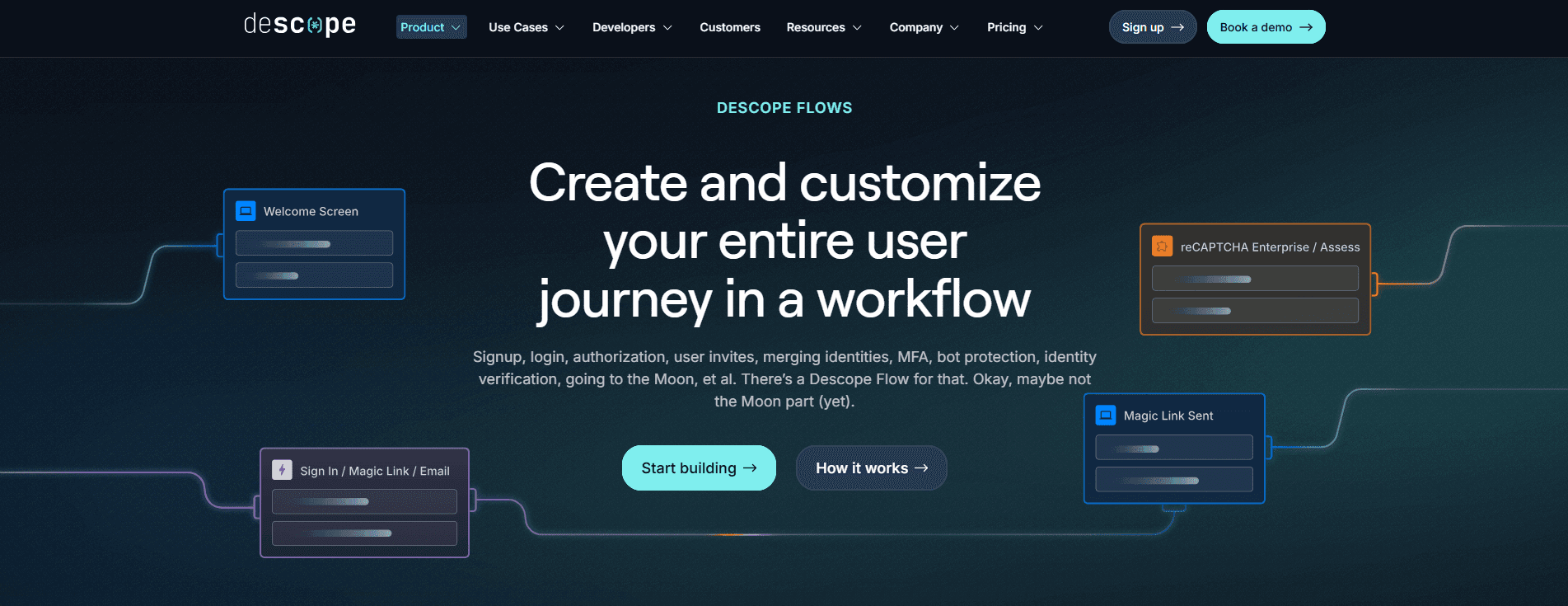
For high-scale applications, Descope is designed to help teams move quickly while keeping authentication flexible and reliable as traffic, users, and identity requirements grow. Teams can orchestrate authentication journeys visually with Descope Flows instead of hardcoding login logic across frontend and backend services.
Descope is especially relevant for companies that need to support both consumer-scale authentication and enterprise-ready identity. This includes high-volume apps that later add B2B customers, marketplaces with partners and admins, healthcare or fintech platforms with compliance needs, and SaaS products that need tenant-aware authentication and authorization.
Key capabilities
High-scale authentication and user migration
Passwordless authentication, passkeys, OTP, magic links, and social login, and password-based auth
Adaptive MFA, session protection, and bot detection using built-in and third-party risk signals, allowing dynamic authentication decisions directly within identity workflows
Step-up authentication and contextual security policies that can be enforced without custom backend orchestration
Support for large-scale user migrations from homegrown auth or legacy identity providers
AI agent skills to migrate users from incumbent auth providers to Descope
Session migration patterns that help teams modernize identity without forcing users through disruptive resets
Native mobile authentication experiences for consumer mobile apps without needing browser redirects
Multi-tenant SaaS and B2B identity
Native multi-tenant architecture with tenant-aware users, organizations, RBAC, and FGA designed for B2B SaaS applications without relying on custom workarounds
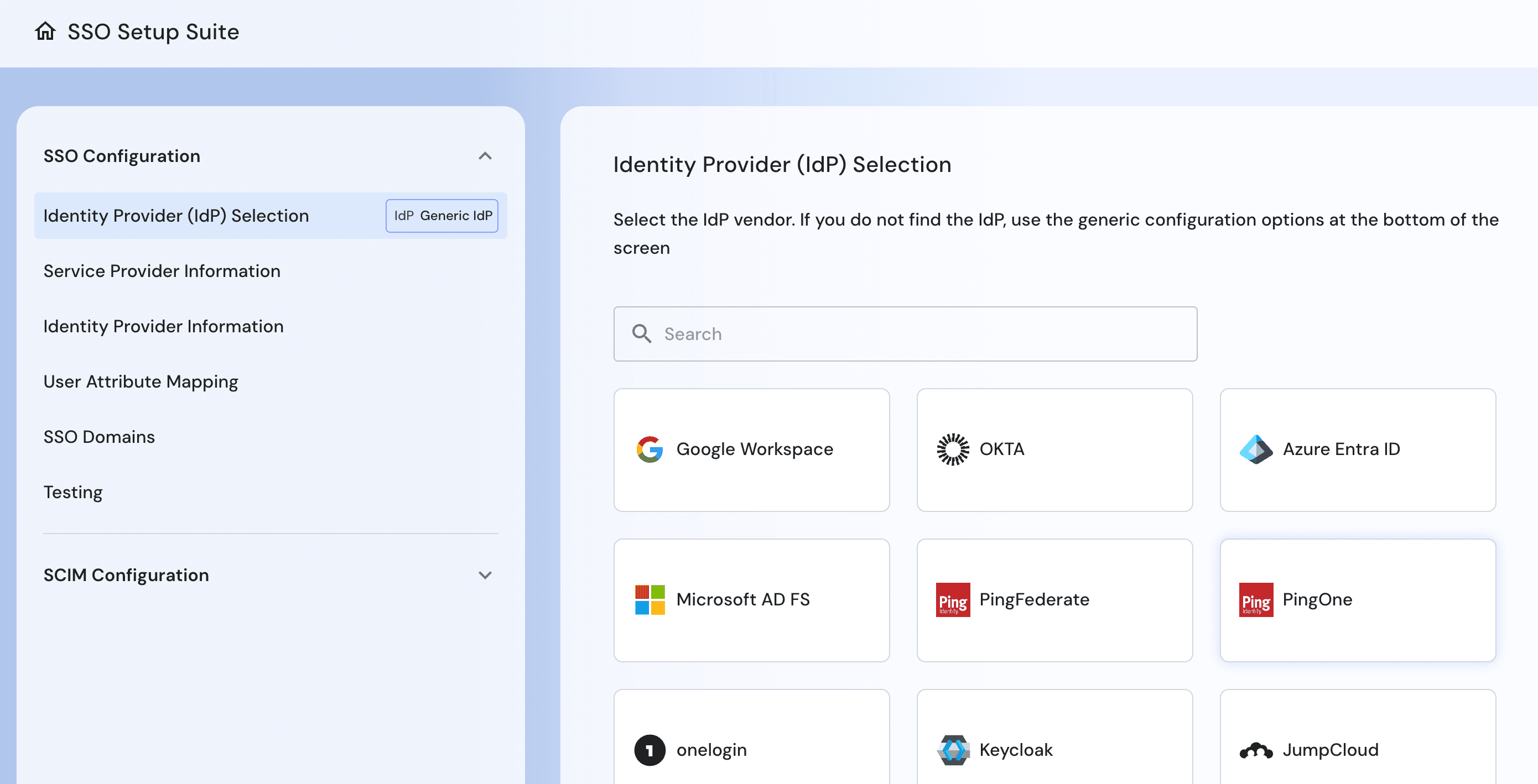
Self-service enterprise SSO with guided SAML, OIDC, and SCIM setup, allowing customer admins to configure and manage their own identity integrations
Unified orchestration across authentication, authorization, MFA, onboarding, provisioning, and risk evaluation within a single platform
Support for delegated administration with customer-specific branding and flexible tenant-level identity management across B2B and partner environments
Powerful, flexible developer tooling
Visual workflow editor for login, signup, MFA, SSO, onboarding, A/B testing, and recovery journeys without rebuilding application logic
15+ SDKs and APIs for web, mobile, and backend services
Scalable, microservices-based architecture with high availability to support resilient operations
Integration and extensibility support
Extensible integrations ecosystem for fraud detection, analytics, compliance, directory sync, and identity enrichment within authentication workflows
Agentic identity support for AI agents and MCP-based ecosystems, extending identity infrastructure beyond human users and applications
Multi-region data residency support, enabling regional deployments and compliance with local data residency requirements while maintaining low-latency authentication experiences globally.
Strengths
Built for high-scale authentication workloads: Supports millions of users, high authentication volumes, and rapid growth without requiring teams to manage authentication infrastructure themselves
Flexible identity orchestration instead of rigid auth flows: Signup, login, MFA, onboarding, recovery, and security policies are managed through workflows rather than fragmented custom code or hard-coded frontend abstractions
Experimentation-friendly: Create A/B tests to randomize traffic between different onboarding paths and auth methods for data-driven and phased rollouts.
Fast authentication experiences: Passkeys, passwordless authentication, social login, and optimized authentication flows help reduce friction and improve signup and login conversion rates
Resilience during traffic spikes: Authentication workflows can scale to support seasonal demand, product launches, viral growth, and other high-volume events without requiring architectural changes
Unified identity platform: Authentication, authorization, MFA, risk evaluation, user management, enterprise federation, and onboarding workflows are managed within one system instead of stitching together multiple tools
Adaptive and risk-based security built into workflows: Dynamic security decisions, step-up authentication, bot protection, and contextual access policies can be enforced directly within authentication journeys
Strong enterprise federation support: Built-in SAML, OIDC, and SCIM support enables organizations to add enterprise customers and workforce identity requirements without introducing separate identity systems
Reduced long-term engineering complexity: Identity flows, authentication methods, and security requirements can evolve without major architectural rewrites as applications scale across users, regions, and customer segments
Broad SDK and API coverage: Integrates cleanly across frontend and backend services while supporting web, mobile, API-first, microservices, and hybrid application architectures
Future-ready identity platform: Supports B2C, B2B, partner, machine-to-machine, and agentic identity use cases within a unified identity layer designed for long-term growth and scale
Ideal for
Descope is a good choice for organizations building large-scale consumer, SaaS, marketplace, or hybrid apps that need flexible authentication as their user base and traffic grow. It is especially helpful for teams looking for a more configurable, workflow-based approach to identity, rather than sticking with rigid authentication systems, as their security, performance, and business needs change.
The platform works well for consumer apps, e-commerce sites, marketplaces, digital services, SaaS products, and enterprise apps that need fast authentication, passkeys, passwordless login, adaptive MFA, social login, enterprise SSO, and customizable signup and onboarding for millions of users.
Descope is also a good fit for organizations that want unified authentication and authorization for consumers, enterprise customers, admins, APIs, machine identities, and AI agents. It supports both frontend and backend-driven setups in one developer-friendly platform designed for modern, large-scale apps.
Also Read: GoFundMe: Frictionless Fundraising for Millions
Auth0
Overview
Auth0, part of Okta, is one of the most established authentication platforms for developers and enterprise applications. It supports OAuth, OIDC, SAML, enterprise SSO, MFA, Universal Login, Organizations, APIs, SDKs, and extensibility through Actions. It can support both B2C and B2B use cases, making it a common option for applications that need customer login, enterprise federation, and developer extensibility.
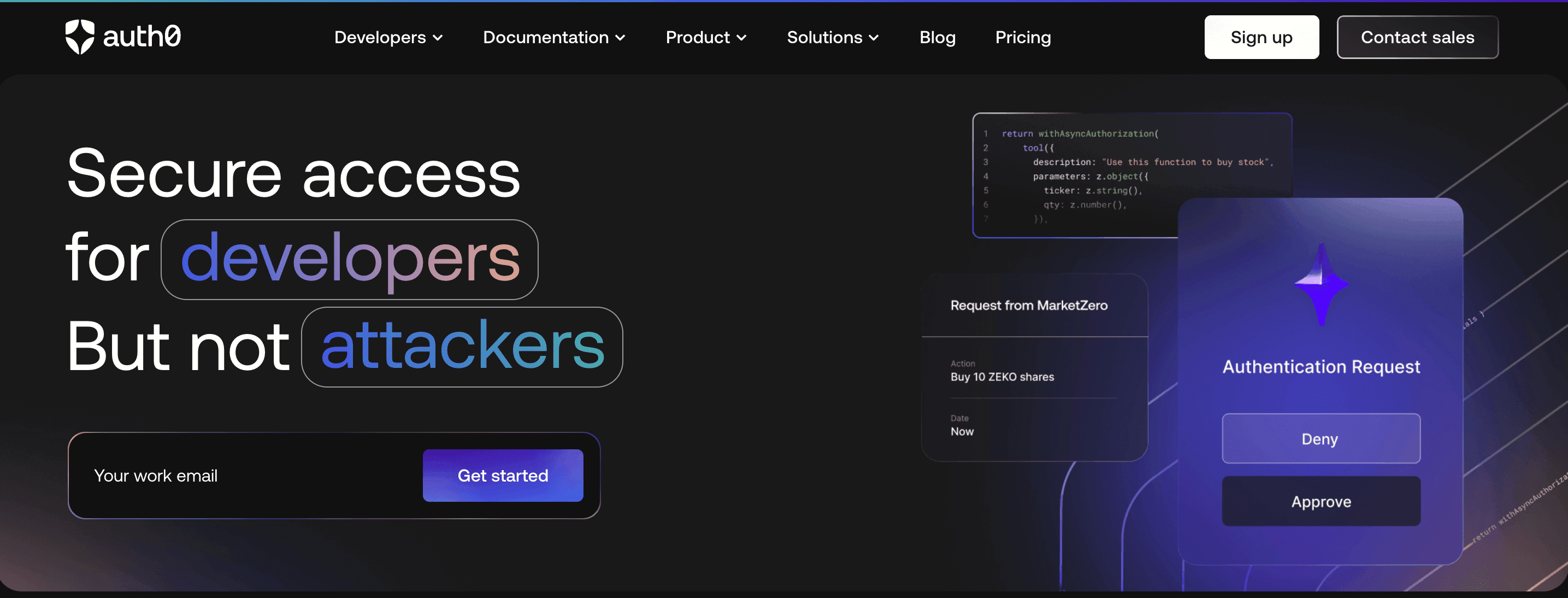
For high-scale applications, Auth0 offers a proven managed identity foundation. However, teams with complex authentication journeys, advanced authorization requirements, or strict cost predictability needs should evaluate how much custom logic, configuration, and pricing complexity they may take on as usage grows.
Key capabilities
Universal Login for hosted authentication experiences
OAuth, OIDC, SAML, and enterprise SSO support
MFA, adaptive authentication, and passwordless options
Organizations for B2B and multi-tenant use cases
Strengths
Mature and proven platform: Auth0 has broad enterprise adoption and a long track record supporting customer identity and large-scale application authentication.
Strong protocol coverage: OAuth, OIDC, SAML, SCIM, and API authorization support make it suitable for a wide range of consumer and enterprise identity scenarios.
Large ecosystem: Auth0 offers extensive integrations, SDKs, documentation, and marketplace extensions across many languages, frameworks, and cloud environments.
Ideal for
Auth0 is ideal for teams that want a mature, enterprise-grade identity platform with broad ecosystem support and strong federation capabilities. It works well for organizations with dedicated engineering resources that can manage customization, extensibility, and configuration as authentication requirements grow.
Also Read: How GoodRx Migrated Tens of Millions of Users From Auth0 to Descope
Microsoft Entra External ID
Overview
Microsoft Entra External ID is Microsoft's customer and external identity platform for applications serving consumers, business customers, partners, and external collaborators. It supports customer authentication, social login, enterprise federation, MFA, conditional access policies, and integration with the broader Microsoft security and identity ecosystem.
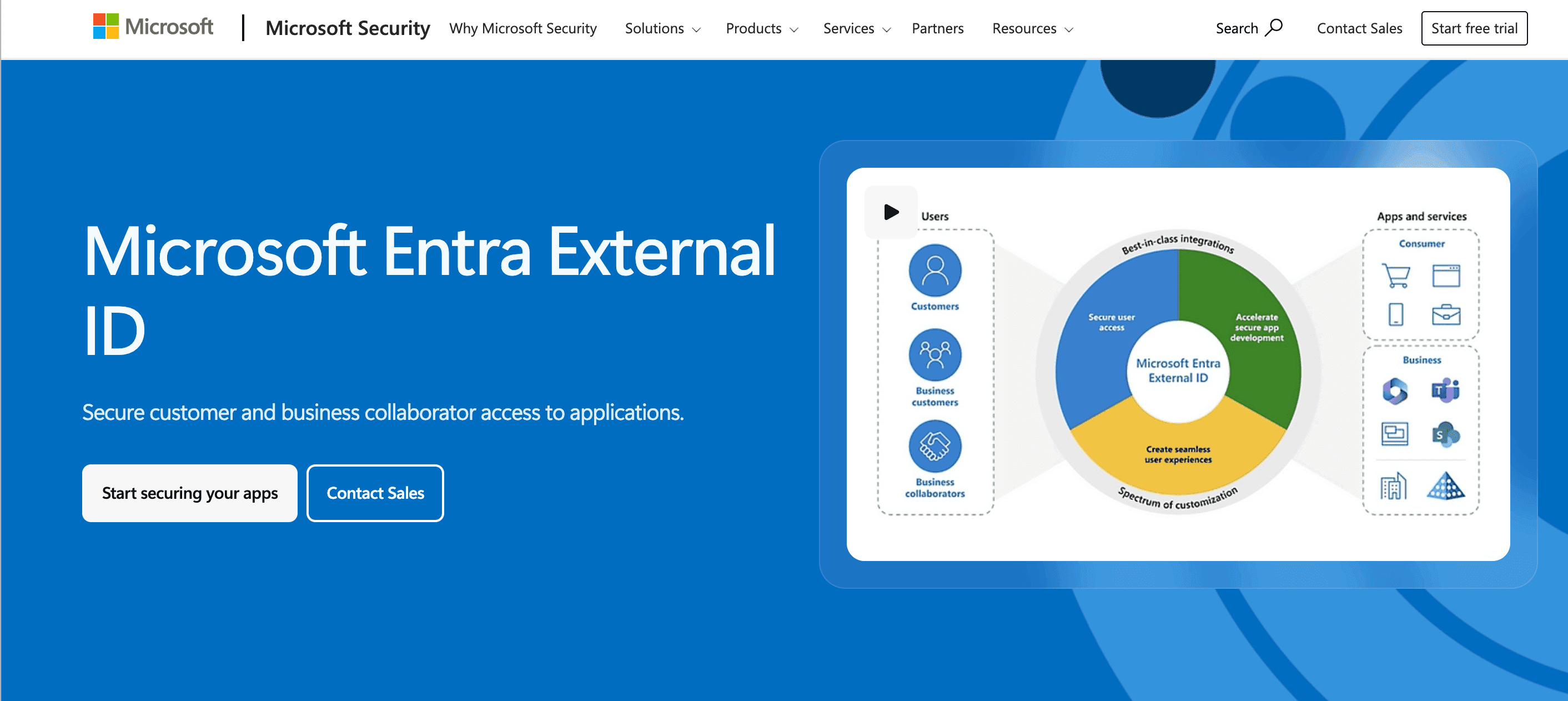
For high-scale applications, Entra External ID provides a managed identity foundation backed by Microsoft's global cloud infrastructure and enterprise security capabilities. However, teams building highly customized authentication journeys or consumer-focused user experiences may find that implementation and customization often require deeper Azure expertise and configuration compared to platforms designed specifically for customer identity use cases.
Key capabilities
Customer authentication and user management
Enterprise federation with SAML and OIDC identity providers
Social login and passwordless authentication options
MFA, conditional access, and Microsoft security integrations
Strengths
Microsoft ecosystem integration: Connects seamlessly with Azure, Microsoft Entra ID, Microsoft security services, and broader enterprise infrastructure.
Enterprise-grade security and compliance: Leverages Microsoft's global identity platform, security controls, compliance certifications, and governance capabilities.
Strong federation support: Supports enterprise identity providers, external users, partners, and business customers through industry-standard federation protocols.
Ideal for
Microsoft Entra External ID is ideal for organizations already invested in Azure and the Microsoft ecosystem that want a managed identity platform for customer, partner, and external user authentication. It works especially well for enterprises that prioritize Microsoft-native security, compliance, governance, and integration with existing identity infrastructure.
Amazon Cognito
Overview
Amazon Cognito is AWS’s managed service for authentication and authorization. It works with web, mobile, API, and machine-to-machine apps. Cognito supports user authentication, social logins, passkeys, MFA, enterprise federation, and secure access management using AWS’s infrastructure and integrations.
Cognito works well for high-scale applications because it runs on AWS’s global cloud infrastructure. It can handle large numbers of users and high authentication traffic, so teams do not need to manage their own authentication servers. Still, if your organization has complex authentication flows, advanced authorization needs, or detailed customer identity requirements, you might need to add custom development with AWS services and Lambda integrations.
Key capabilities
User pools for authentication, user management, and session handling
Enterprise federation through SAML, OIDC, and social identity providers
MFA, passkeys, adaptive authentication, and custom authentication flows
Deep integration with AWS services including API Gateway, Lambda, IAM, and AppSync
Strengths
AWS-native scalability: Built on AWS infrastructure and designed to support high authentication volumes, large user populations, and rapidly growing applications.
Strong cloud integration: Connects seamlessly with AWS services, security controls, analytics tools, and application infrastructure.
Managed authentication service: Removes much of the operational burden of running authentication systems while providing built-in security, availability, and global scale.
Ideal for
Amazon Cognito is ideal for organizations building high-scale applications on AWS that want managed authentication tightly integrated with their cloud infrastructure. It works especially well for teams building consumer applications, mobile apps, APIs, and digital services that expect significant user growth and want to leverage AWS-native services to support authentication at scale.
Also Read: How Branch Insurance Augmented Cognito With Descope Passkeys
Firebase Authentication
Overview
Firebase Authentication is Google’s service for handling authentication in web and mobile apps. It lets you use email and password login, social and phone authentication, multi-factor authentication, anonymous login, and SDK-based identity integration with today’s app frameworks.
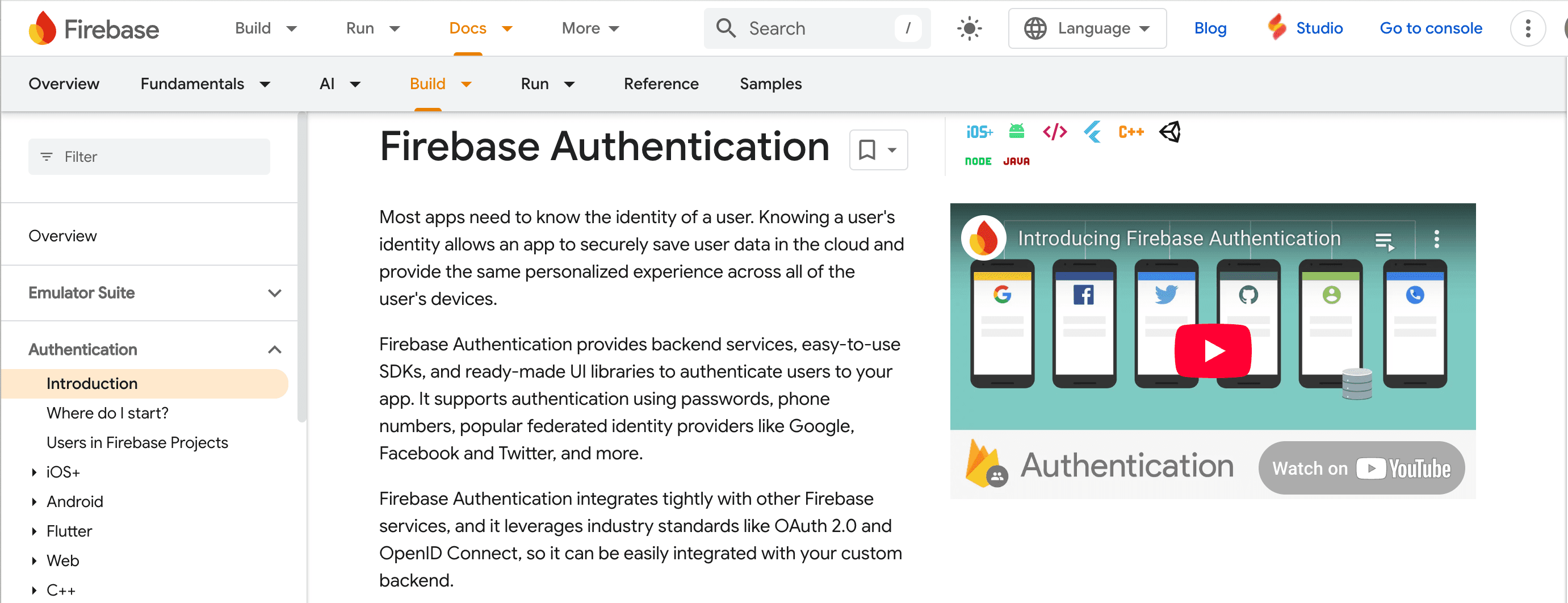
Firebase Authentication makes it easy to add authentication to large-scale apps, using Google’s global infrastructure and developer tools. If your organization needs more advanced features, you can use Google Identity Platform to add things like enterprise federation, multi-tenancy, SLAs, and stronger security. As your app grows, you might need extra customization or other services for complex onboarding, authorization, or identity management.
Key capabilities
Email/password, social login, phone authentication, and anonymous authentication
MFA and passwordless authentication options
Google Identity Platform support for enterprise federation and multi-tenancy
SDKs and integrations across web, mobile, and Google Cloud environments
Strengths
Fast implementation and developer experience: Simple SDKs and APIs help teams add authentication quickly across web and mobile applications.
Google-scale infrastructure: Leverages Google’s global cloud platform to support large user populations and high authentication volumes.
Strong mobile and cloud integration: Works seamlessly with Firebase, Google Cloud, analytics, databases, and application services.
Ideal for
Firebase Authentication and Google Identity Platform are ideal for organizations building high-scale consumer and mobile applications that prioritize rapid development and tight integration with Google Cloud services. They work especially well for teams already invested in Firebase that need authentication capable of growing alongside their user base and application traffic.
Also Read: How Owens & Minor Augmented Firebase With Descope User Journeys
Keycloak
Overview
Keycloak is an open-source platform for identity and access management. It handles authentication, authorization, single sign-on, and federation for modern apps. It works with OAuth 2.0, OpenID Connect, SAML, LDAP, and Active Directory, and lets you customize authentication in a self-hosted setup.
Keycloak gives you full control over identity systems, deployment, and authentication for large-scale apps. You can adjust the platform to fit your needs and run it in your own environment. Unlike managed services, your team must handle setup, scaling, monitoring, security, and maintenance.
Key capabilities
OAuth 2.0, OpenID Connect, and SAML authentication
LDAP and Active Directory federation
Role-based access control and user management
Customizable authentication flows and self-hosted deployment options
Strengths
Full infrastructure control: Organizations can self-host, customize, and scale authentication infrastructure according to their own requirements.
Strong standards support: Broad support for modern identity protocols, enterprise federation, and authentication standards.
Open-source flexibility: Teams can extend and customize authentication workflows without vendor lock-in.
Ideal for
Keycloak is ideal for organizations building high-scale applications that require complete control over identity infrastructure and deployment environments. It works especially well for enterprises and platform teams with strong DevOps resources that want open-source flexibility and the ability to customize authentication at every layer.
Ory
Overview
Ory is an identity platform built with an API-first approach for developers working on cloud-native, distributed, or large-scale apps. Its modular design covers authentication, user management, OAuth2, OpenID Connect, and detailed authorization features that can be combined to suit different application needs.
Ory offers a flexible identity system for high-scale apps that can grow with modern microservices and cloud-native setups. Its modular approach lets engineering teams shape authentication and authorization to fit their needs. Unlike more packaged platforms, Ory usually needs more hands-on engineering and operational know-how to set up and manage.
Key capabilities
API-first authentication and identity management
OAuth2 and OpenID Connect support
Fine-grained authorization and permission management
Flexible deployment across cloud-native and self-hosted environments
Strengths
Composable identity architecture: Authentication and authorization services can be tailored to fit complex application and infrastructure requirements.
Cloud-native scalability: Designed to integrate with microservices, distributed systems, and modern platform architectures.
Developer control and flexibility: Provides API-first building blocks that allow teams to customize identity infrastructure around their own needs.
Ideal for
Ory is ideal for engineering-led organizations building high-scale applications that require flexible, cloud-native identity infrastructure. It works especially well for teams with strong platform engineering resources that want to own authentication architecture while supporting large user populations, distributed systems, and modern application environments.
Also Read: Why BalkanID Moved From Ory Kratos to Descope
Conclusion
High-scale authentication is no longer just about letting users sign in. Modern applications need to support millions of users, traffic spikes, fast login experiences, adaptive security, enterprise federation, and evolving identity requirements without introducing operational complexity.
The best platform depends on your architecture and cloud strategy. Auth0 offers a mature identity platform, Entra External ID fits Microsoft-centric organizations, Cognito and Firebase work well within AWS and Google Cloud ecosystems, and Ory and Keycloak provide open-source control.
Descope stands out for organizations that need both scale and flexibility. By combining visual workflows, passkeys, passwordless authentication, adaptive MFA, SSO, SCIM, authorization, APIs, and SDKs in a single platform, Descope helps teams deliver fast, secure authentication experiences while reducing long-term engineering complexity as applications grow.
To learn more, explore Descope’s docs, book a demo, or sign up for a Free Forever account to start building authentication designed for scale.