

Table of Contents
Don't have the time to read the entire post? Our human writers will be sad, but we understand. Summarize the post with your preferred LLM here instead.
Welcome to Meet a Descoper! This interview series shines a spotlight on app builders, whether they are Descope employees, community members, or users of our service.
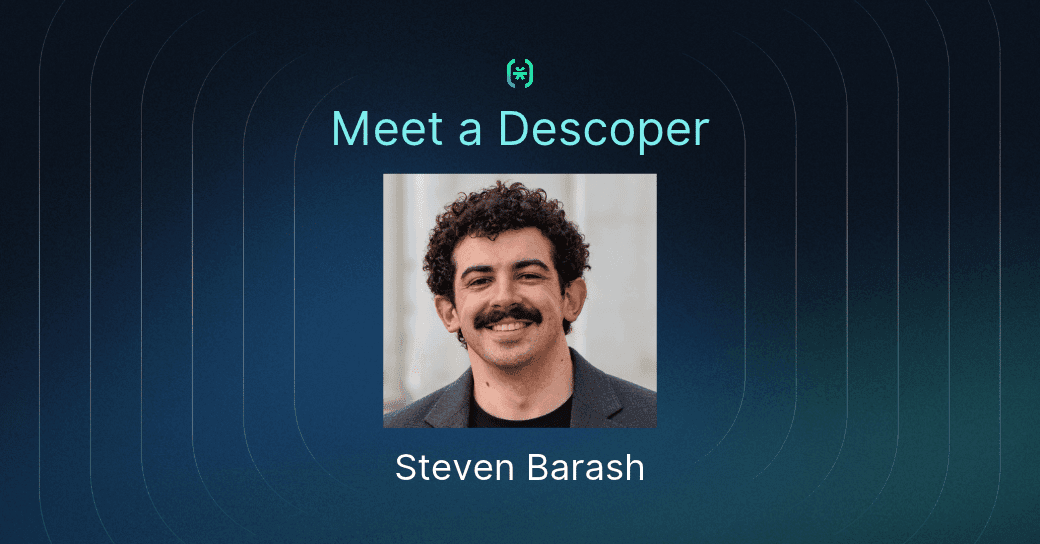
Steven Barash is a Senior Solutions Engineer (SE) at Descope, where he builds the proofs of concept (POCs) that show what Descope can do. According to Steven, he got into the role almost “by accident,” and he’s been building thoughtful identity demos ever since.
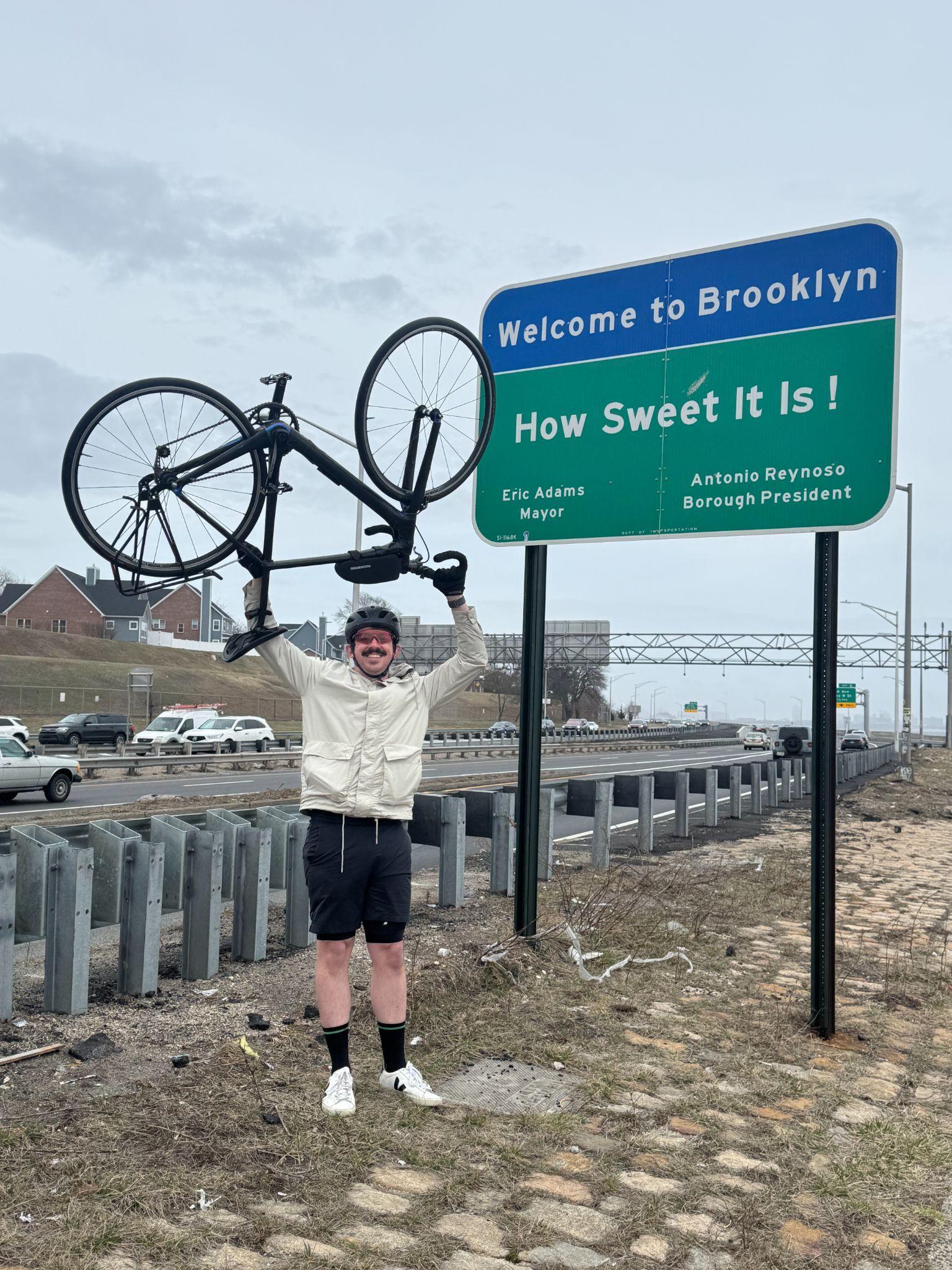
When he’s off the clock, Steven bikes between cities, shoots photos (while planning to edit his backlog, eventually), and builds tools as a way of learning new things. Take it away, Steven!
How I got here
Q. You grew up in Pittsburgh and stayed for Pitt. What did you study?
Information science, with minors in Korean and Russian. So, programming languages and spoken languages, basically. I grew up speaking Russian, but my friends joke that I speak it like a boomer. Studying Korean was more driven by curiosity.
I was the only guy in the Korean classes who wasn’t watching K-dramas (Steven laughs). It’s a really hard language, so I didn’t get far. The written form is really elegantly designed, though.
Q. You started at Okta as a Level 1 SE. How did you end up in sales engineering?
Kind of by accident. I was interviewing for software engineering roles when Okta reached out. My understanding of an SE was basically “a consultant who codes.” I didn’t know anything about the sales part.
I think I got as far as I did in the interviews because I built a mobile app to demo Okta login. But Microsoft’s login was the one I knew from university, so I styled the whole thing after it, without realizing Microsoft was their main competitor.
My soon-to-be manager asked if I was interviewing at Microsoft at the same time, which came as a surprise. Once I was hired, a bunch of people messaged me about what a bold move it was. But despite working in my favor, it was very much unintentional.
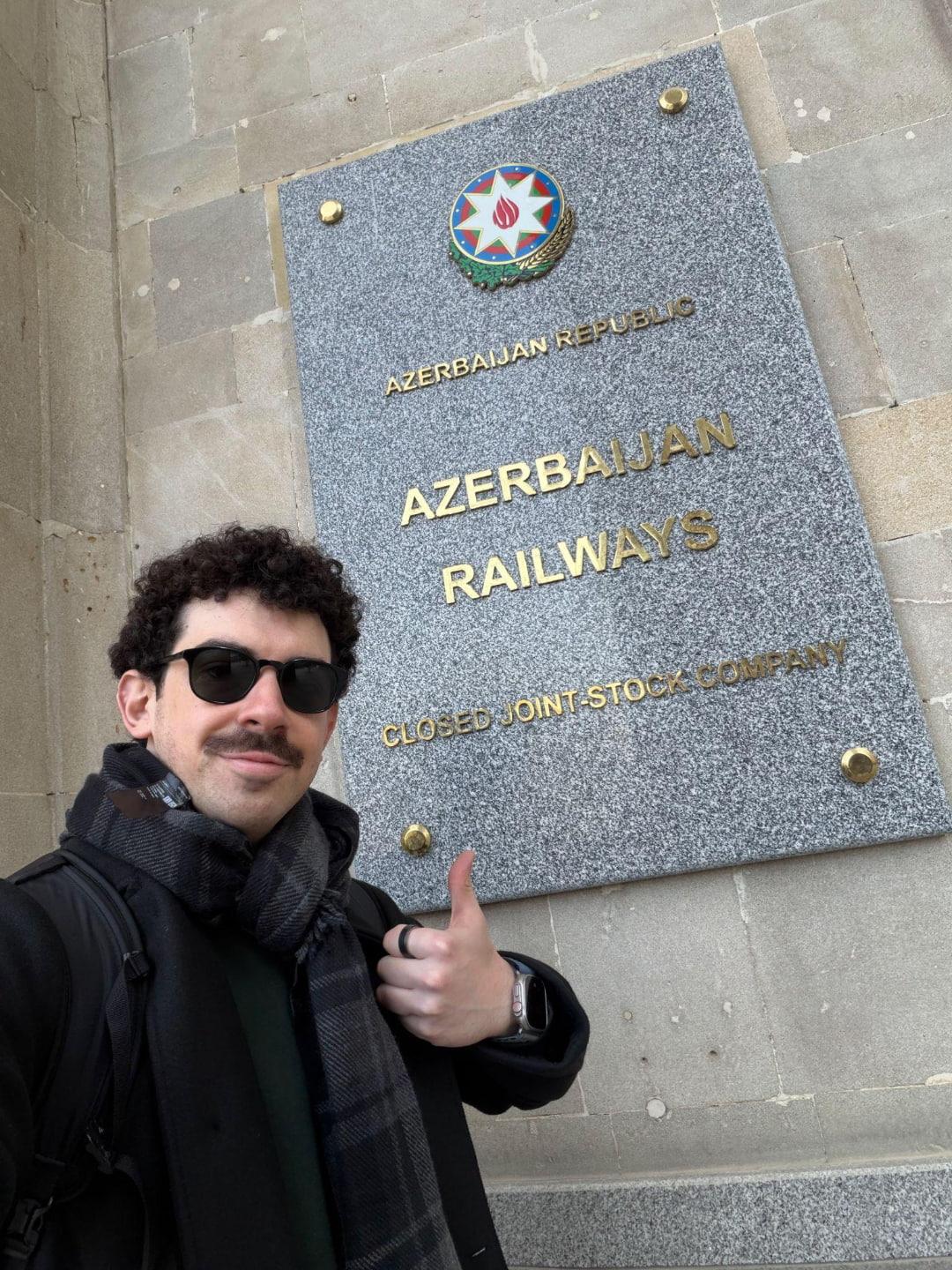
After almost four years, a former manager I really enjoyed working with moved to ID.me and reached out about joining the team. It was a great opportunity to try something different, so I made the move into the public sector as an SE, working primarily with state and local governments.
Q. What drew you to Descope after Okta and ID.me?
Working at ID.me, a lot of the customers weren’t developers, so I put more effort into explaining things. I saw how much an easy-to-integrate, low-code platform would help teams without many dedicated engineers. Descope had been on my radar, but I hadn’t gotten a chance to sit down with it until I started interviewing.
I finally played with the Flow Builder, and it was a big light bulb moment. Things that would have been a lot more complex in my previous work were just drag and drop. And with Descope, I knew I’d get to be more product-facing, taking feedback from customers and actually shaping the product.

Day in the life
Q. What’s your favorite thing to show in a Descope demo?
It starts with discovery: what are their pains, and why are they even taking this call? That usually brings up a couple of use cases. For example, a retailer I sat down with had bots hijacking customer accounts and spending their points on gift cards.
So I built a demo where, before a user reaches the gift card page, they have to prove they’re human with a CAPTCHA and a magic link. Then I send over the sample code. Maybe they integrate it, maybe they don’t, but they get to see the art of the possible. That’s the solutions side of solutions engineering.
Q. Is there a project you’d call your big moment at Descope?
One large enterprise customer, where a lot of very involved workshops helped me hone my POC style.
Instead of throwing homework at them and waiting for emails, we build together on a call. They bring a sandbox or dev version of their app, we build Descope on top of it, and with agentic coding it goes really quick. It’s cool to see Descope come to life on the actual app. Your work kind of appears before you.
Q. You’ve had a hand in the product, too. Can you give us an example of a time you helped shape Descope?
A hidden part of the SE role is being the voice of the customer back to product. Prospects are very unfiltered about blockers and gaps when they’re on a call with an SE.
One example is that I would see customers manually tidying a messy flow, not realizing there’s a button in the bottom right of the editor that organizes it for them. Nothing told customers it was there, so I mocked up a modal suggesting they try it. I brought that to the product team, and it’s being added now. Getting to help customers succeed by carrying their voice internally is pretty cool.
Looking back
Q. Your portfolio has some really cool side projects. What drives you to build in your free time?
If something interests me, I can hyperfocus on it, so I take advantage of that. Localizr was my first vibe-coded project, to see how far I could build an entire app without touching a line of code, with my language interest to keep me going. I even used Descope to make sure login was super secure. The idea came when I traveled to Mexico and wanted to hone my Mexican Spanish skills. Google Translate was too formal, so I kept asking ChatGPT how to say things in Mexican Spanish and figured it would be cool to build an app based on this.
Mostly I build stuff I want for myself, like a cycling CLI so my agents can check if it’s raining and suggest routes, or my own remote app for my smart TV, because the official one was annoying. Then I stripped out the ads, too. It’s night and day.
Q. Say you hit the apex of your career and take a sabbatical. More cycling, languages, photography?
A mix of all of the above, honestly. I want to do a proper long-distance bike trip, maybe from the westernmost part of Europe to China. I recently biked from Amsterdam to Brussels, and I’ve done a New York, Boston, and Albany triangle.
Biking, eating good food, photography, learning some languages along the way. The downside is a huge backlog of photos to edit. Maybe I can get my agents to figure that out. Or maybe the sabbatical is just downloading Lightroom and opening it.

Q. What would you tell someone looking at an SE role, especially if they fall into it like you did?
You’re probably pretty technical, but you’re also comfortable talking to people, so mix the two. Try building something, then explain why you built it the way you did, in a way anybody can understand, and why it’s useful.
It’s also a really good role to branch out from. I’ve seen former colleagues become product managers, software engineers, and account executives, and some have even founded their own companies. You get perspective on both the dollars and cents of a product and how it actually gets built. It opens a lot of doors, even those outside of being an SE.
We hope you enjoyed getting to know Steven a little better. For more Descoper chats, authentication concept overviews, and developer tutorials, subscribe to our blog or follow us on LinkedIn. Interested in exploring open roles at Descope? Check out our careers page.


