
Table of Contents
Don't have the time to read the entire post? Our human writers will be sad, but we understand. Summarize the post with your preferred LLM here instead.
Ping Identity is a long-established name in identity and access management. Large enterprises have relied on PingFederate, PingOne, and PingAccess to secure workforce and customer access, and the 2023 merger with ForgeRock expanded its footprint across regulated industries like banking, healthcare, and government.
That enterprise heritage is a strength but can burden teams building modern customer-facing applications. Ping's broad product portfolio requires specialized expertise, professional services, and long implementation timelines to assemble the right combination of federation, orchestration, and cloud services. For product and engineering teams needing to ship new login experiences quickly, this overhead can slow everything down.
CIAM platforms built for developers offer a different approach. They consolidate authentication, authorization, and user management into one service, simplify enterprise onboarding for B2B customers, and make it easier to evolve user journeys as the product grows.
In this guide, we explore why developers are looking for Ping Identity alternatives and compare six customer identity platforms by features, flexibility, pricing, and fit for B2C, B2B, and agentic AI use cases.
Quick answer: What are the best Ping Identity alternatives?
Here are some top alternatives to Ping Identity for teams looking for a customer identity platform:
Descope: Customer and agentic identity with visual workflows, native multi-tenancy, self-service SSO/SCIM, and fast implementation.
Auth0: Mature developer-focused identity platform with extensive integrations and code-based extensibility.
Amazon Cognito: AWS-native authentication with deep cloud service integrations.
Microsoft Entra External ID: Managed customer identity with Microsoft ecosystem integration and enterprise security controls.
Keycloak: Open-source identity and access management for teams that want full control and self-hosting.
FusionAuth: Full-featured, developer-focused CIAM with flexible self-hosted and cloud deployment options.
Why developers seek Ping Identity alternatives
Ping Identity is a well-known provider for enterprise IAM and CIAM. However, many teams look for alternatives that are easier to set up, more flexible, and have clearer pricing.
Complex setup and learning curve: Setting up Ping's enterprise identity products often requires special expertise, extensive configuration, and sometimes outside help.
Fragmented products and integration overhead: Combining PingFederate, PingOne, DaVinci, and other capabilities increases implementation complexity and maintenance effort.
Fragmented mobile SDKs: Ping’s mobile SDKs are split across MFA, verification, and journey use cases. Apps must render their own UI for every authentication step, causing developer busywork.
B2B multi-tenancy and delegated administration: Implementing tenant-specific permissions, self-service SSO onboarding, and delegated administration requires significant customization.
Developer experience and documentation gaps: Complex documentation and limited quick-start resources slow down integration, increase troubleshooting, and delay time to value.
Opaque pricing and higher total cost: Enterprise-focused licensing, additional products, and implementation services make costs difficult to predict.
ForgeRock merger and migration uncertainty: Ongoing product consolidation after the ForgeRock merger raises questions about platform roadmaps, integration requirements, and future migration efforts.
Each option below is a popular Ping Identity alternative, but they differ in strengths, deployment models, and how much configuration and infrastructure your team has to manage.
At a glance: Ping Identity alternatives compared
Alternative | Best for | Differentiator |
|---|---|---|
Descope | B2C and B2B SaaS teams that want a flexible customer and agentic identity platform with fast implementation | Visual workflows, built-in multi-tenancy, self-service SSO and SCIM, and an MCP server for agentic AI |
Auth0 | Teams that want a mature, managed platform with broad ecosystem coverage | Large integration catalog and Actions for code-based extensibility |
Amazon Cognito | Teams already committed to AWS | Deep integration with API Gateway, IAM, and Lambda |
Microsoft Entra External ID | Organizations standardized on Microsoft and Azure | Conditional Access, Entra MFA, and a managed successor to Azure AD B2C |
Keycloak | Teams that want open-source IAM and full infrastructure control | Free, standards-based identity server with a large community |
FusionAuth | Developers who want a full-featured CIAM they can self-host or run in the cloud | Flexible deployment options and deep configuration control |
Descope
Overview
Descope is a modern customer and agentic identity platform built for developers who want flexible, secure authentication without combining multiple identity products. Instead of separate federation, orchestration, and authentication services, Descope delivers authentication, authorization, user management, and risk-based security in one fully managed platform.
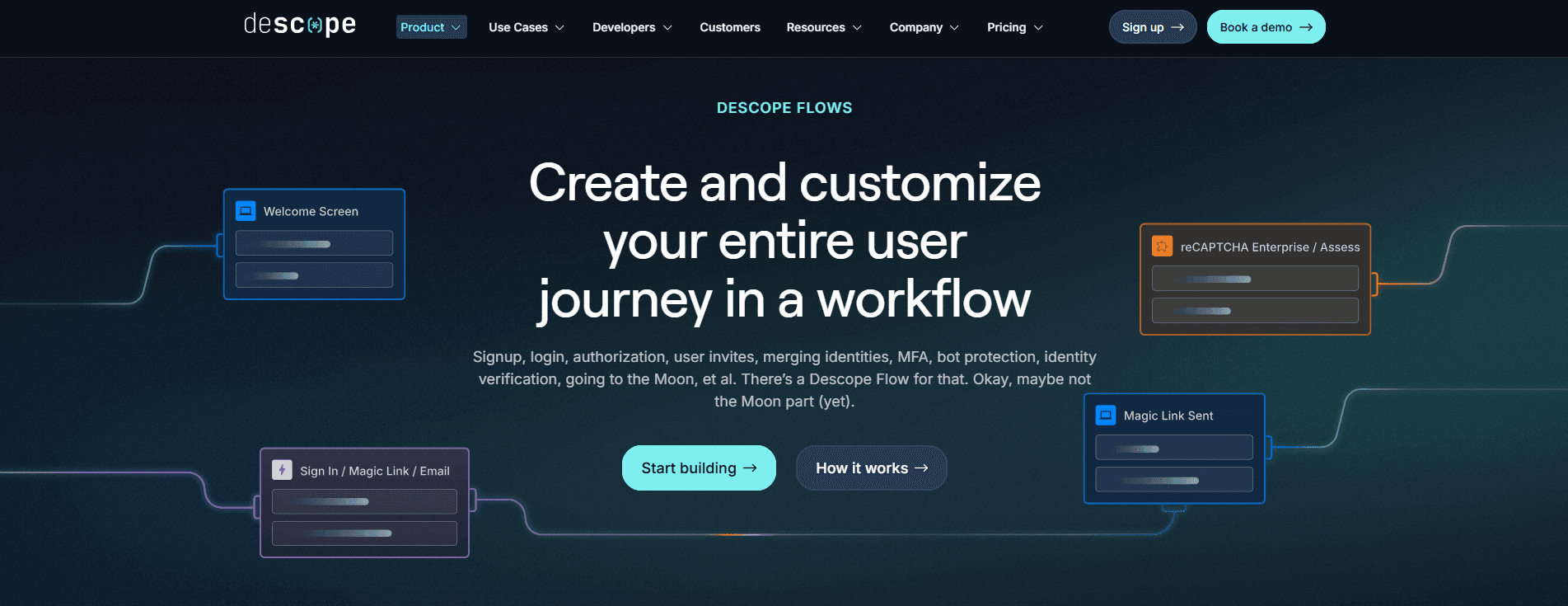
Descope is well suited for B2B SaaS applications requiring tenant-aware SSO, fine-grained authorization, and adaptable identity journeys. Its core differentiator is Flows, a no-code / low-code flow builder that lets teams visually design and evolve authentication, MFA, SSO, consent, and agent authentication flows without redeploying application code.
Key capabilities
End-to-end identity orchestration across authentication, authorization, risk, and fraud in one platform.
Visual workflow editor for login, signup, MFA, SSO, and consent flows.
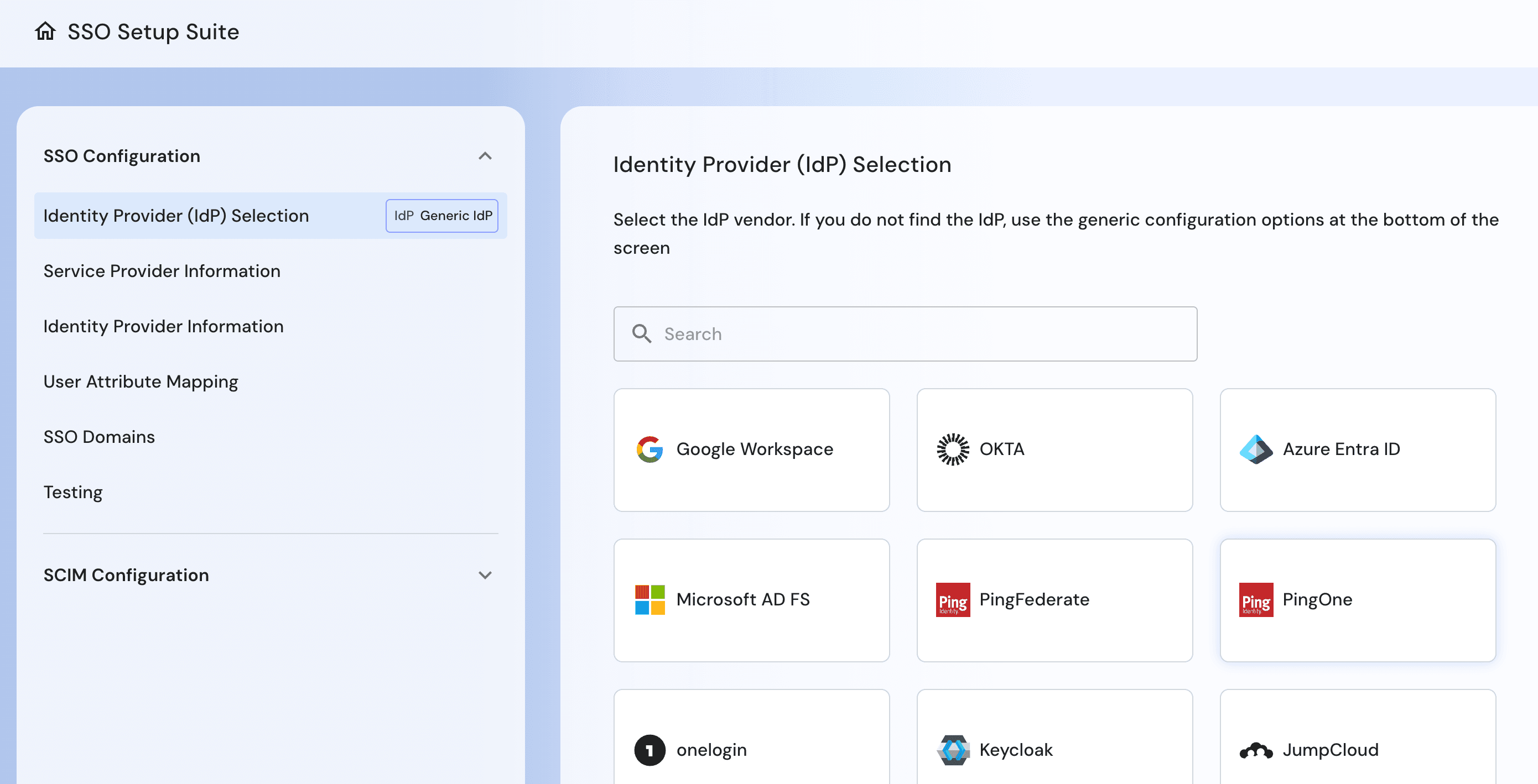
Enterprise SSO Setup Suite for guided SAML and SCIM onboarding and testing.
Adaptive MFA, session protection, and bot detection using native signals and third-party fraud integrations.
Plug-and-play connectors ecosystem with 50+ integrations for identity enrichment.
Support for passkeys, OTP, magic links, social login, and Google One Tap.
Embeddable user and admin UI components for self-service identity management.
15+ SDKs plus robust APIs for web, mobile, and backend integration.
Anonymous pre-auth user tracking for top-of-funnel visibility and conversion insights.
Agentic identity support for AI agents and MCP-based ecosystems.
Strengths
One platform instead of a product suite: Descope unifies authentication, authorization, orchestration, and user management so teams don't need to license, integrate, or maintain separate federation and orchestration products.
Fast time to value: Developers can launch production-ready authentication in days instead of months using SDKs, quickstarts, and prebuilt flows without professional services.
Visual workflows instead of complex configuration: Descope lets developers design complete authentication, MFA, SSO, and authorization journeys in a drag & drop editor.
Tenant-aware identity: Descope natively supports tenant-aware users, roles, permissions, and authentication policies, along with delegated admin through embeddable widgets.
Streamlined enterprise SSO: Descope simplifies enterprise onboarding with guided SAML, OIDC, and SCIM setup, self-service configuration, and workflow-based SSO journeys. Admins can configure connections, certificates, and attribute mapping themselves.
Predictable pricing and responsive support: Descope offers transparent usage-based pricing and consistently responsive support.
Passwordless by default: Descope supports passkeys, magic links, OTP, and social login as first-class methods added to any flow without custom engineering.
Adaptive and risk-based MFA: MFA can be enforced dynamically using native signals and third-party integrations.
Flexible UX: Descope supports hosted components and fully custom UIs, giving developers control over branding and experiences.
Multi-region data residency: Descope enables EU-region data storage and processing, helping organizations comply with GDPR and regional data localization requirements.
FedRAMP Marketplace listing: Descope is FedRAMP High Authorized and listed on the FedRAMP Marketplace, supporting procurement by federal agencies and software companies in regulated industries that serve government organizations.
AI agent ready: Descope supports secure authentication and access control for AI agents and MCP servers with its Agentic Identity Hub.
Ideal for
Descope is a strong choice for developers and product teams that want enterprise-grade customer identity without the implementation complexity, fragmented product portfolio, and professional services overhead that often come with Ping Identity.
Auth0
Overview
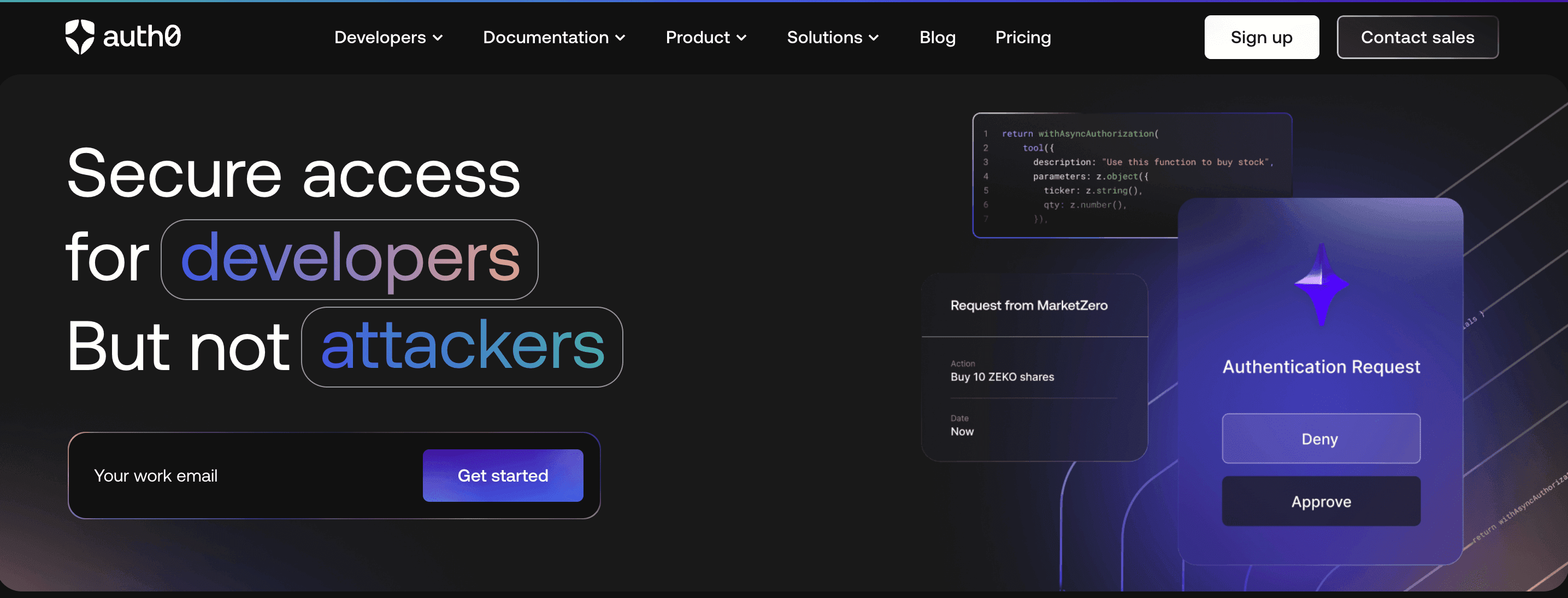
Auth0 (now part of Okta) is one of the most widely used developer-centric identity platforms. It provides hosted authentication, user management, and authorization for web, mobile, and API applications. It has a large integration catalog and an extensibility model based on Actions, custom code that can run at various points in the login flow.
Key capabilities
Universal Login hosted pages with branding and customization options.
Social, enterprise, and passwordless connections including SAML and OIDC.
Actions for custom logic in login, registration, and token flows.
Marketplace of prebuilt integrations, extensions, and partner tools.
Strengths
Mature platform: Extensive documentation, quickstarts, and community resources make it easy to find answers to common implementation questions.
Broad protocol and connection support: Supports a wide range of social and enterprise identity providers plus self-service SSO and SCIM for B2B.
Extensibility via Actions: Developers write Node.js code to customize the auth pipeline, such as enriching tokens or calling external APIs.
Ideal for
Teams that want a mature, managed platform with broad ecosystem coverage and are comfortable writing code to extend it. Evaluate costs carefully because advanced features, B2B add-ons, and higher MAU tiers can increase pricing significantly.
Amazon Cognito
Overview
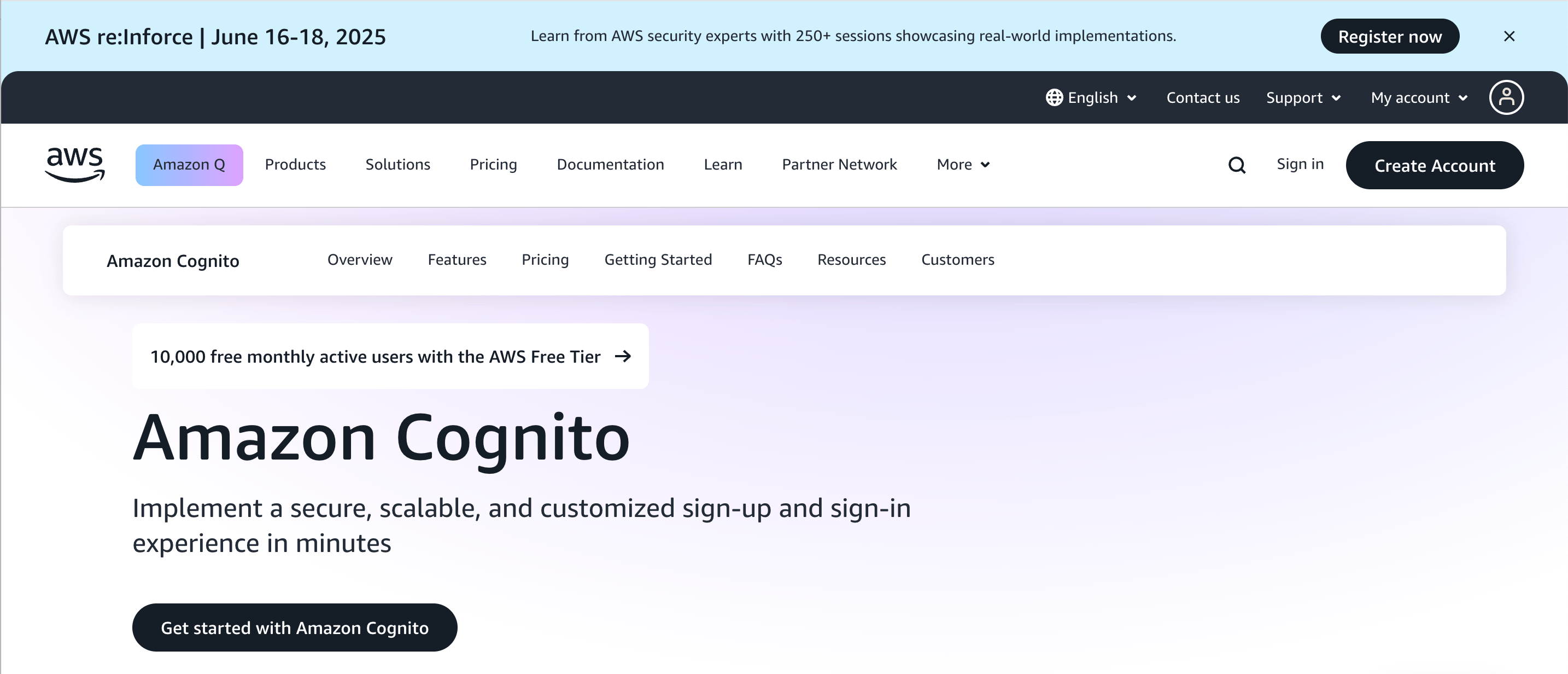
Amazon Cognito is AWS's native authentication and user management service for web and mobile applications. It lets developers create user pools, handle sign-ups and logins, and manage permissions without hosting an identity server. It integrates tightly with other AWS services, making Cognito a natural choice for teams already operating in the AWS ecosystem.
Key capabilities
User pools to manage, store, and authenticate application users.
Federated identity with SAML, OIDC, and social login providers.
Lambda triggers to customize authentication flows and user lifecycle events.
Built-in integration with API Gateway, AppSync, and other AWS services.
Strengths
Deep AWS integration: Works seamlessly with the broader AWS ecosystem, connecting authentication to services like API Gateway, IAM, and Lambda.
Managed scalability: As an AWS service, Cognito scales automatically, so teams do not need to provision or manage the underlying infrastructure.
Custom logic via Lambda triggers: Developers can insert custom behavior at different points in the authentication lifecycle using AWS Lambda functions.
Ideal for
Teams already committed to AWS and comfortable with its ecosystem. It is less ideal for teams needing flexible UIs, native B2B multi-tenancy, or the enterprise policy depth they may be used to with Ping.
Microsoft Entra External ID
Overview
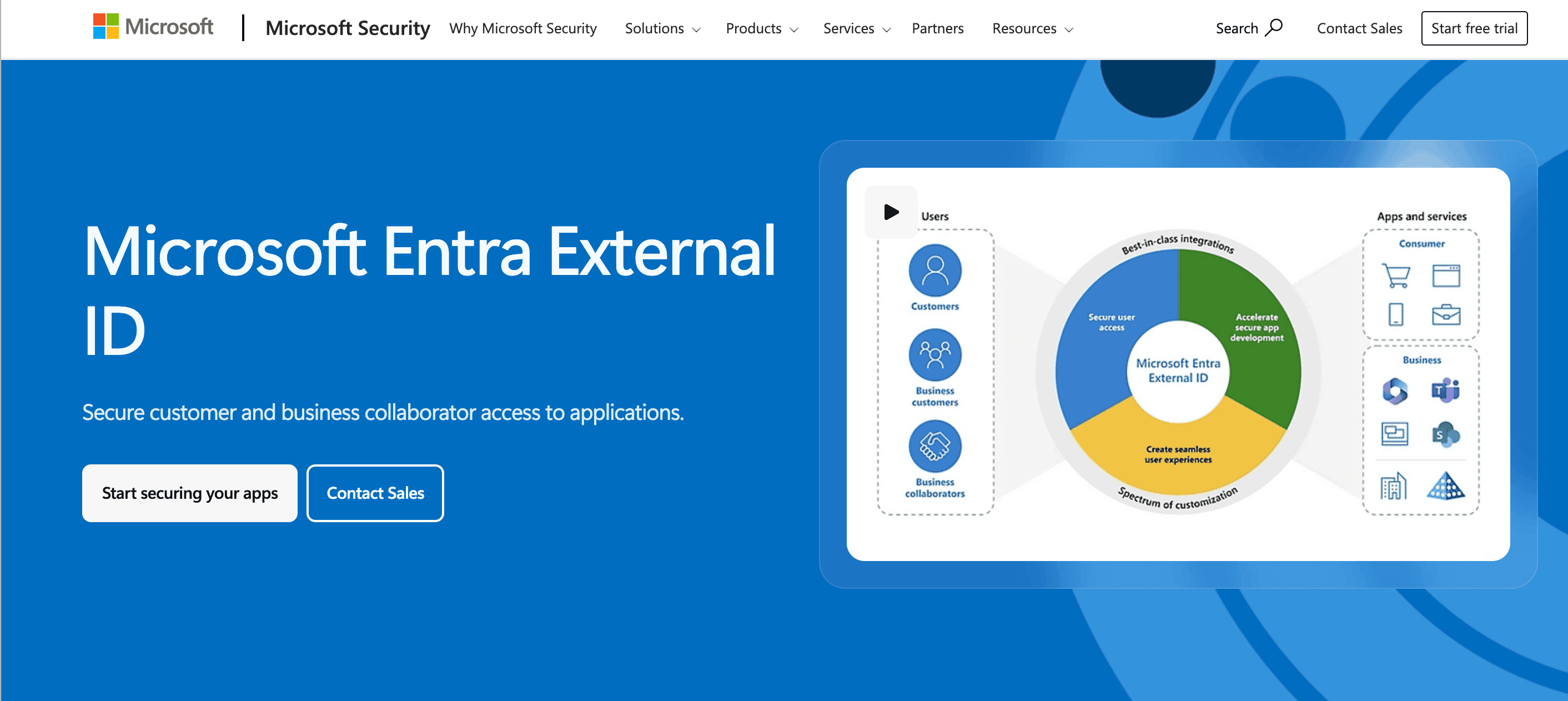
Microsoft Entra External ID is Microsoft's managed CIAM service and the successor to Azure AD B2C, which is no longer sold to new customers. It adds sign-up, sign-in, and profile management to customer-facing apps in a dedicated external tenant. Built on Microsoft Entra ID, it suits organizations already invested in Microsoft and Azure.
Key capabilities
Self-service registration and sign-in with social identities and enterprise identity providers.
Customizable, branded user journeys for customer- and partner-facing applications.
Built-in security controls including Conditional Access, MFA, and risk-based policies.
Identity lifecycle management with governance, access reviews, and expiration policies.
Strengths
Deep Microsoft ecosystem integration: Works closely with Azure, Entra ID, and Microsoft security tooling, simplifying identity for teams on the Microsoft stack.
Enterprise-grade security controls: Conditional Access and Entra MFA bring Microsoft's proven security policy engine to customer-facing web and mobile apps.
Familiar for enterprise IAM teams: Organizations moving from Ping's workforce and federation products may find Entra's enterprise-oriented model and admin experience familiar.
Ideal for
Organizations standardized on Microsoft and Azure that want managed customer identity with enterprise security controls. Teams needing flexible visual journey design or native B2B multi-tenancy for their own SaaS customers may require additional configuration and custom development.
Keycloak
Overview
Keycloak is an open-source identity and access management solution maintained under the Cloud Native Computing Foundation (CNCF) and backed by Red Hat. It provides single sign-on, identity brokering, and user federation for applications and services. Being free and self-hosted, Keycloak appeals to teams that want to avoid commercial licensing and retain full control over their identity infrastructure.
Key capabilities
Standards-based SSO with SAML 2.0, OpenID Connect, and OAuth 2.0.
Identity brokering with social and enterprise identity providers.
User federation with LDAP and Active Directory.
Realms, themes, and Service Provider Interfaces (SPIs) for customization and extensibility.
Strengths
No licensing costs: As open-source software, Keycloak removes per-user licensing fees, which can appeal to teams facing high enterprise IAM costs.
Full control: Teams can deploy Keycloak on their own infrastructure, in any cloud or on-premises, and customize it extensively.
Large community: A long-standing open-source project with broad adoption, community extensions, and plenty of implementation examples.
Ideal for
Engineering teams with the DevOps capacity to deploy, scale, upgrade, and secure their own identity server. Note that Keycloak shifts cost from licensing to operations, and features like visual journey orchestration, self-service SSO onboarding, and B2B multi-tenancy typically require custom development.
FusionAuth
Overview
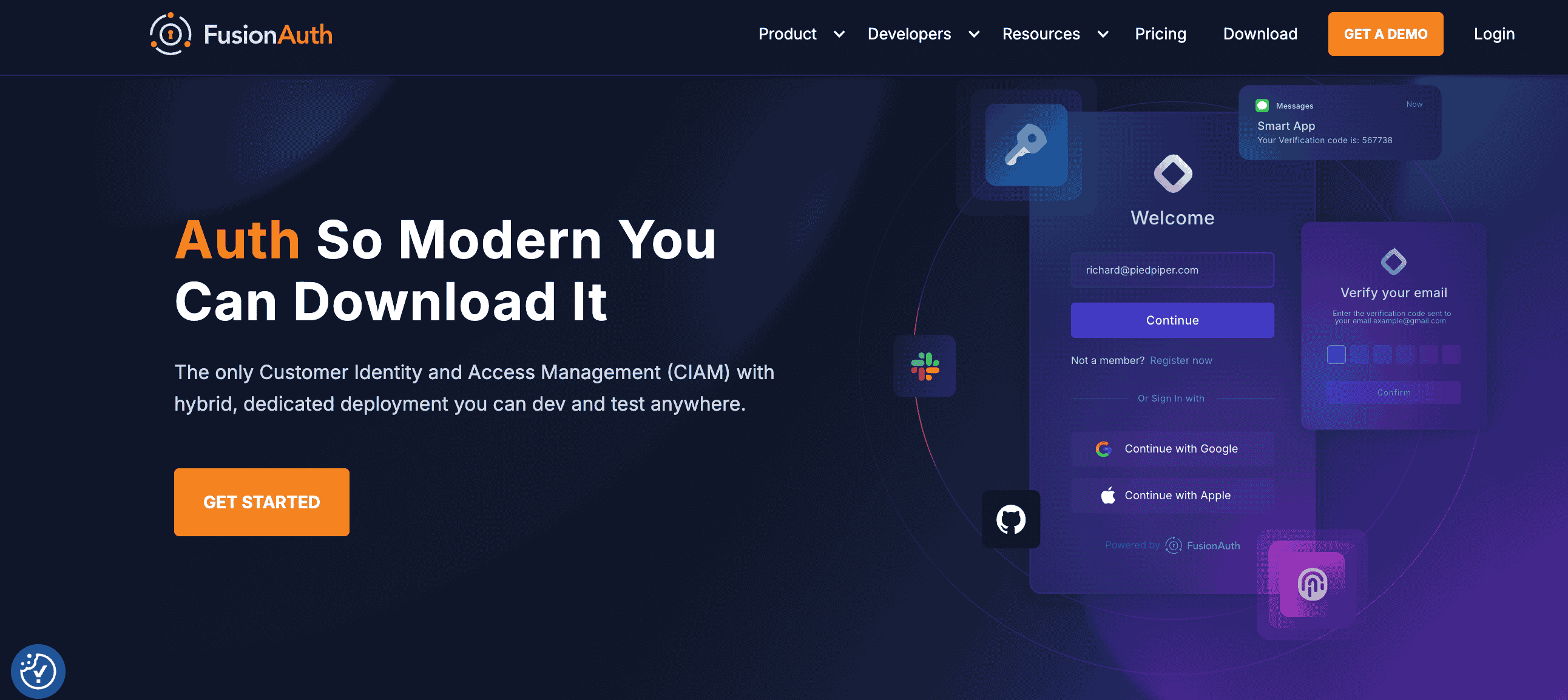
FusionAuth is a developer-focused CIAM platform that teams can self-host or run as a managed cloud deployment. It offers a broad set of authentication, user management, and authorization features with high configuration control, making it popular with organizations that want ownership over their identity stack without building from scratch.
Key capabilities
OAuth 2.0, OpenID Connect, and SAML support for login and federation.
Multi-tenant configuration with tenant-level settings and applications.
Customizable hosted login pages and themes.
Webhooks, lambdas, and APIs for extending user lifecycle events.
Strengths
Flexible deployment: Run FusionAuth on your own infrastructure, in containers, or in FusionAuth Cloud, depending on control and compliance needs.
Developer-friendly APIs: Comprehensive APIs and client libraries make it straightforward to integrate authentication into applications.
Configuration depth: Extensive settings give teams detailed control over authentication behavior and identity data.
Ideal for
Teams that want a full-featured CIAM platform with deployment flexibility. Teams moving away from Ping to reduce complexity should weigh the infrastructure and configuration effort self-hosting FusionAuth can introduce and note that some advanced features require paid licensing tiers.
Conclusion
Choosing the right Ping Identity alternative depends on your stack, scale, and goals. If your team wants enterprise-grade customer identity without combining multiple products, relying on professional services, or navigating post-merger roadmap uncertainty, a developer-first CIAM platform can reduce complexity and cost.
Descope stands out for its visual workflows, native B2B multi-tenancy, self-service enterprise SSO, and support for B2C, B2B, partner, and agentic AI use cases, but each option above serves different developer needs.
For more detailed information on Descope, check out our docs. If you'd like a demo, meet with our auth experts. If you want to try Descope yourself, sign up for a Free Forever Account and start dragging & dropping your auth today!