
Table of Contents
Don't have the time to read the entire post? Our human writers will be sad, but we understand. Summarize the post with your preferred LLM here instead.
Symantec SiteMinder is an access management solution used to protect web applications and enforce centralized authentication policies. Its reverse proxy architecture and deep integration with legacy infrastructure made it a foundational component of identity stacks built in the early 2000s. For organizations operating complex on-prem environments, SiteMinder has historically provided stable session management and policy enforcement at scale.
As digital architectures evolve, however, many teams discover that SiteMinder’s legacy design introduces friction in cloud-native, API-first, and customer-facing environments. Modern requirements such as adaptive MFA, fine-grained authorization, multi-tenant SaaS models, and low-code identity orchestration often require additional products or significant customization.
As organizations expand into B2B ecosystems, mobile applications, and distributed systems, the operational complexity and technical debt tied to proxy-based enforcement can grow, adding cost, slowing development, and complicating modernization efforts.
Below, we break down the top reasons developers look beyond SiteMinder, followed by a closer look at the leading alternatives available today.
The best SiteMinder alternative for your organization will depend on your industry, goals, needs, and budget.
Valuable features to seek out in a SiteMinder replacement include multi-tenancy, cloud-native architecture, adaptive MFA, and visual orchestration.
B2B SaaS companies and customer-facing organizations can benefit the most from upgrading to a Customer Identity and Access Management (CIAM) platform.
Why do teams want SiteMinder alternatives?
While SiteMinder has evolved alongside continued investment from Broadcom (SiteMinder’s current owner), its foundational architecture creates friction in modern environments. Additions like cloud capabilities, modern authentication methods, and risk-based policies often come through separate Broadcom products, layered integrations, and significant configuration overhead. Meanwhile, modern platforms natively deliver a unified, out-of-the-box experience.
With that in mind, many teams outgrow SiteMinder due to:
Legacy architecture constraints: SiteMinder’s reverse proxy and web-agent model was designed for traditional web applications. While effective for legacy systems, it can feel rigid in environments where distributed enforcement and application-layer control are required. Additionally, organizations that have run SiteMinder for 15–20+ years frequently accumulate extensive custom policies and proxy logic, making modernization more difficult.
Heavy operational overhead: Deployment and maintenance often require specialized IAM expertise, server-level configuration, and ongoing infrastructure management. As environments scale, the administrative burden and reliance on system integrators can increase total cost of ownership.
Modern feature gaps: Capabilities such as adaptive MFA, risk-based authentication, and dynamic step-up policies are not always native to the core platform. Teams frequently need additional Broadcom products or custom engineering to meet modern security expectations. Managing multiple products introduces licensing complexity, integration effort, and lifecycle coordination challenges.
Limited agility for CIAM and multi-tenant SaaS: Originally optimized for enterprise workforce access, SiteMinder can require directory-level customization or attribute-based policy workarounds to support customer identity, partner ecosystems, and tenant-aware SaaS applications. Even standards-based integrations such as SAML, OIDC, or JWT can involve non-trivial configuration. Without visual orchestration or low-code tooling, identity updates often become development initiatives rather than configuration changes.
Enterprise-centric cost structure: Infrastructure-heavy deployments and enterprise licensing models can feel misaligned with cloud-native, consumption-based identity platforms, especially as digital products scale. That misalignment has real consequences for prioritization: According to Descope's Customer Auth Stats, 46% of companies are currently delaying CIAM improvements due to competing pressures. This dynamic often stems from the perceived cost and complexity of modernizing legacy identity infrastructure.
Each alternative below addresses these gaps differently depending on your technical requirements, ecosystem, and growth stage.
How to choose a SiteMinder alternative: What to look for
With numerous SiteMinder alternatives available, teams should rank their priorities before shopping around for new solutions. While every organization will have different requirements, some of the most valuable attributes to look for include:
Cloud-native architecture – Today’s cloud-based infrastructure calls for a cloud-native access management solution. The best CIAM products leverage the scalability, flexibility, and decentralization of cloud computing.
Multi-tenancy capabilities – The need to offer consistent yet differentiated access to the same systems is growing, especially for B2B SaaS enterprises with customer-facing services. A multi-tenant solution allows internal orgs and external customer groups to utilize the same infrastructure without privacy concerns.
Seamless developer experiences – Although many SiteMinder alternatives are designed as plug-and-play solutions, industry-specific customization is an inevitable part of transitioning from SiteMinder. Developer teams benefit from platforms that reduce implementation time through visual workflow editors and low-code tooling, minimizing the need for custom code or server-level configuration.
Reduced total cost of ownership – Many CIAM solutions appeal to key decision-makers with low acquisition costs, then run up the tab with significant operating costs over the course of the product’s lifespan. The ideal solution offers a range of subscription tiers for upfront affordability, has reasonable fees for additional MAUs and tenants, and includes essentials like 24/7 support as a baseline feature.
Descope
Overview
Descope is a modern customer and external identity platform built for teams that are evaluating SiteMinder alternatives in an effort to modernize. It enables organizations to deliver secure, flexible authentication and authorization without relying on proxy-based enforcement or stitching together multiple identity products.
Rather than focusing solely on workforce access or centralized web gateways, Descope provides a unified, cloud-native platform that supports customer identity (CIAM), B2B SaaS, partner ecosystems, and emerging AI-driven use cases. Authentication, authorization, MFA, and orchestration are delivered within a single system designed for API-first architectures.
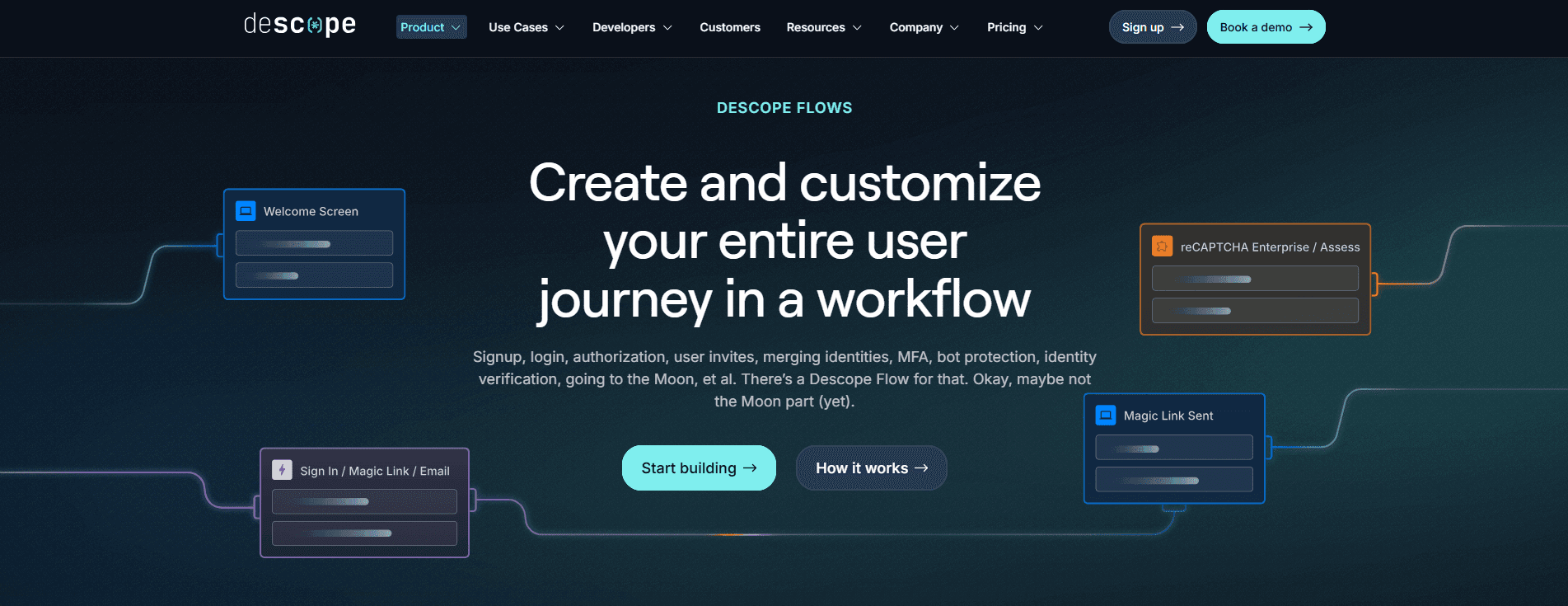
Descope is particularly well suited for multi-tenant SaaS platforms that require tenant-aware SSO, fine-grained authorization, and adaptable identity journeys. Its core differentiator is Descope Flows, a no-code / low-code orchestration layer that allows teams to visually design and evolve login, MFA, SSO, consent, and step-up authentication experiences without redeploying application code or managing complex proxy infrastructure.
Key capabilities
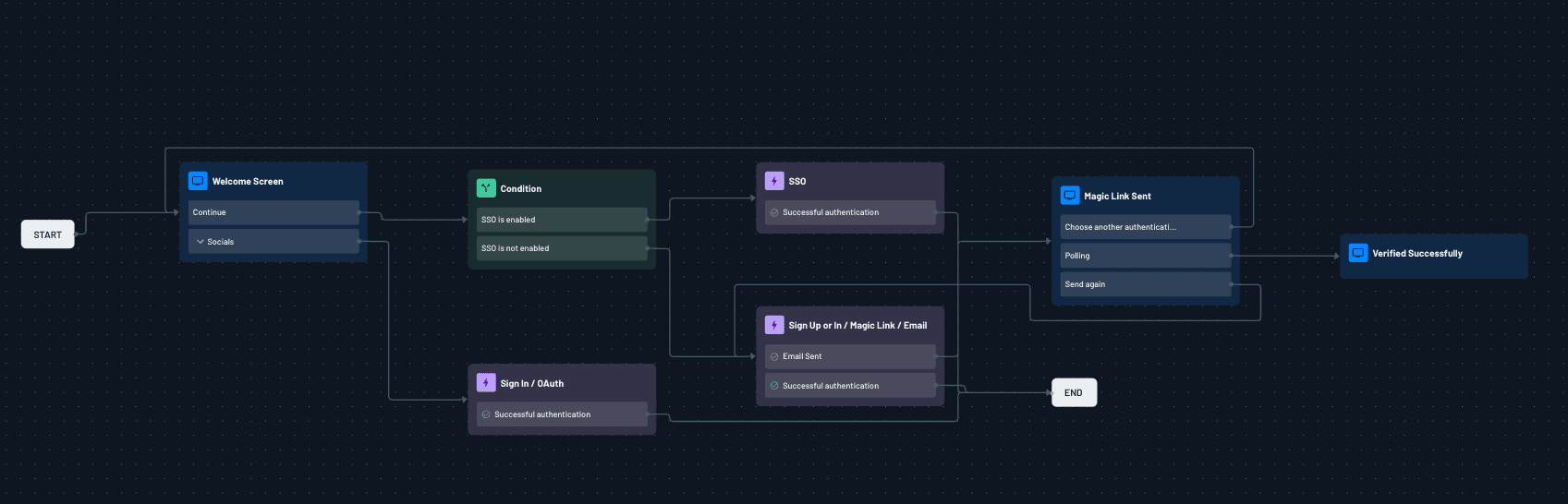
Visual workflow editor for login, signup, MFA, SSO, step-up, and consent flows, enabling rapid iteration without server-level configuration or custom proxy logic.
Cloud-native identity orchestration without proxy enforcement across authentication, authorization, MFA, risk, and fraud in a single platform, eliminating reliance on reverse proxy or web-agent architectures.
Native multi-tenant identity with built-in RBAC and FGA, purpose-built for SaaS and B2B ecosystems rather than directory-level workarounds.
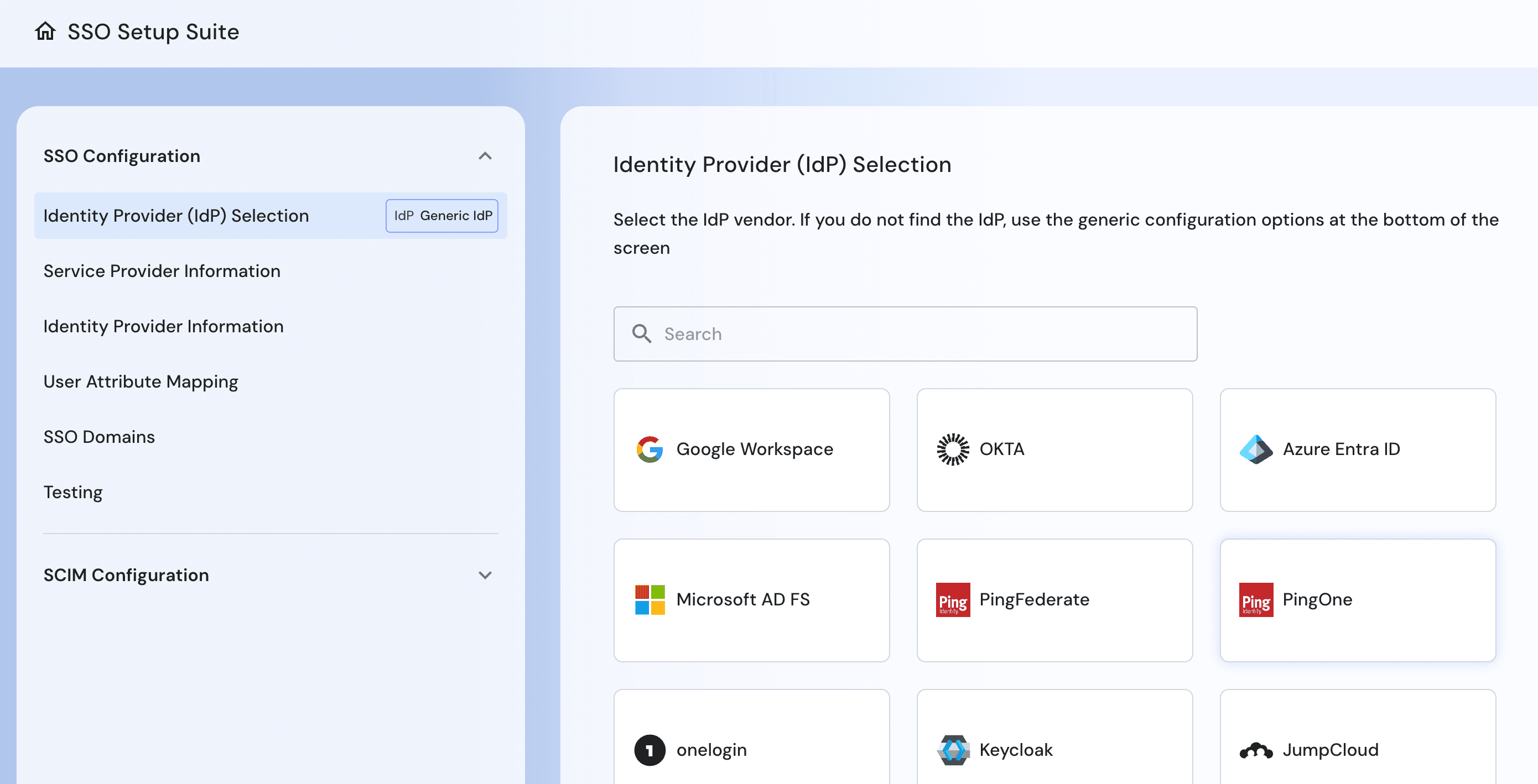
Enterprise SSO Setup Suite for guided SAML and SCIM onboarding, simplifying federation without complex manual configuration.
Adaptive MFA, session protection, and bot detection using native risk signals and third-party fraud integrations, without layering separate add-on products.
Support for passkeys, OTP, magic links, social login, and Google One Tap, delivering modern authentication methods out of the box.
Plug-and-play connectors ecosystem with 50+ integrations for enrichment, fraud, analytics, and lifecycle automation.
Embeddable user and admin UI components for self-service profile management, tenant administration, and delegated access control.
15+ SDKs and APIs for web, mobile, and backend services, designed for API-first and microservices architectures.
Anonymous pre-auth user tracking to improve top-of-funnel visibility and conversion optimization.
Agentic identity support for AI agents and MCP-based ecosystems, extending identity beyond human users.
Strengths
Modern architecture without proxy dependency: Descope is built for cloud-native and API-first environments, eliminating reliance on reverse proxies and web agents that can limit flexibility in distributed systems.
Visual orchestration instead of server configuration: Complete authentication, MFA, SSO, and authorization journeys can be designed and updated visually, avoiding file-based configuration and infrastructure-level policy management.
Unified platform instead of product sprawl: Authentication, authorization, MFA, and identity orchestration—all recognized as core CIAM capabilities in the Gartner 2025 Magic Quadrant—are delivered in a single platform, reducing the overhead of stitching together separate products.
Native multi-tenant identity: Tenant-aware users, roles, and fine-grained authorization are built in, removing the need for directory-level customization or attribute-based workarounds.
Streamlined enterprise SSO onboarding: Guided SAML and SCIM setup, self-service configuration, and workflow-based SSO journeys simplify federation compared to complex manual integration processes.
Adaptive and risk-based MFA built in: Dynamic step-up authentication can be enforced using native and third-party risk signals without requiring separate advanced authentication products.
Passwordless and modern authentication by default: Passkeys, magic links, OTP, and social login are first-class methods that can be added to any flow without custom engineering.
Reduced technical debt over time: Identity logic can evolve through configurable workflows rather than hard-coded proxy rules, lowering long-term maintenance overhead.
Built for modern SaaS and CIAM use cases: Designed to support customer identity, B2B SaaS, partner ecosystems, and AI-driven systems without the constraints of legacy enterprise access models.
Broad SDK and API support: Integrates cleanly across web, mobile, backend services, and agent-based architectures without becoming an infrastructure bottleneck.
Ideal for
Descope is a strong choice for organizations modernizing beyond legacy access management systems such as SiteMinder. It is well suited for teams that want to replace proxy-based enforcement and infrastructure-heavy deployments with a cloud-native, API-first identity platform.
It fits SaaS companies and digital enterprises that require tenant-aware authentication, self-service enterprise SSO onboarding, adaptive MFA, and flexible identity journeys that can evolve without rewriting backend systems.
Descope is also ideal for B2B, B2C, and hybrid platforms that need unified authentication and authorization, fine-grained access control, and orchestration across customers, partners, admins, and AI-driven systems within a single modern identity layer.
Auth0
Overview
Auth0, part of Okta, is a cloud-based customer identity platform frequently evaluated by organizations modernizing beyond legacy access management systems such as Symantec SiteMinder. Unlike proxy-based, infrastructure-heavy deployments, Auth0 delivers authentication, authorization, MFA, and federation as a managed service. It supports API-first architectures and customer-facing applications while maintaining enterprise SSO compatibility.
Teams replacing SiteMinder often consider Auth0 when they want to reduce on-prem complexity, adopt modern identity standards, and consolidate authentication and federation into a single cloud-native platform.
Key capabilities
Enterprise SSO with SAML, OIDC, and OAuth2 across a wide range of identity providers
Built-in MFA including WebAuthn, TOTP, SMS, email, and push
Extensible authentication logic using Rules and Actions
Hosted and customizable login experiences for web and mobile applications
Strengths
Broad identity coverage: Auth0 delivers authentication, MFA, authorization extensibility, and enterprise federation within a single managed platform rather than relying on proxy-based web access control.
Cloud-native architecture: Auth0 operates as a managed service, reducing infrastructure management and eliminating the need for reverse proxies or web agents.
Extensible integration ecosystem: Auth0 provides prebuilt enterprise identity provider integrations and customization through Rules and Actions, enabling protocol flexibility without server-level configuration.
Ideal for
Auth0 is well suited for organizations transitioning from on-prem access gateways to a managed, cloud-based identity platform. It fits teams that require enterprise federation, built-in MFA, and extensibility while reducing operational overhead associated with legacy proxy architectures.
Also Read: Why GoodRx Migrated Tens of Millions of Users From Auth0 to Descope
Microsoft Entra External ID
Overview
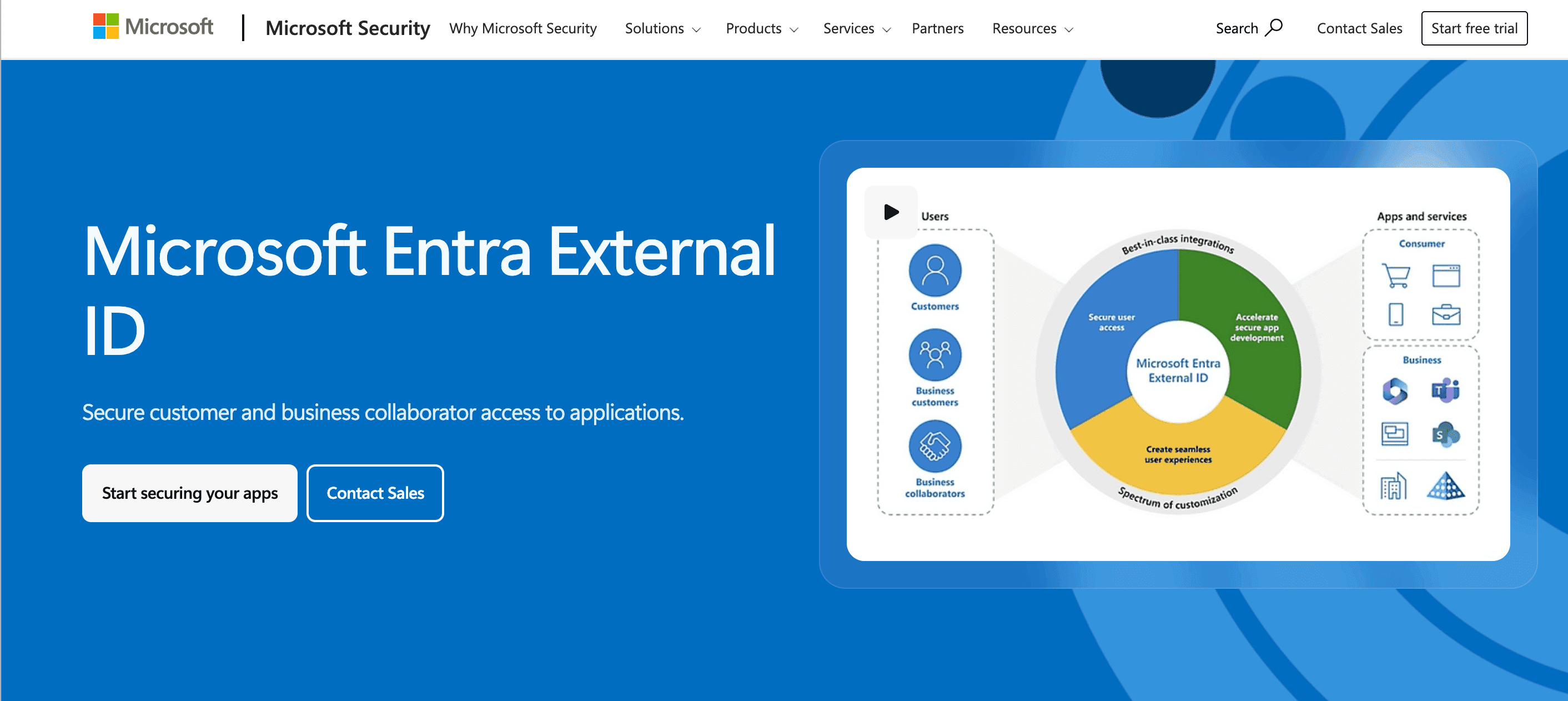
Microsoft Entra External ID is Microsoft’s external identity solution designed for customer and partner access. Organizations modernizing beyond legacy access management platforms such as SiteMinder often evaluate Entra External ID when they are standardized on Azure infrastructure.
Unlike proxy-based, on-prem deployments, Entra External ID operates as a cloud service and integrates natively with Microsoft’s broader identity and security ecosystem. It supports customer authentication, enterprise federation, and conditional access policies while aligning with Azure management, compliance, and governance models.
Key capabilities
Enterprise federation using SAML, OIDC, and OAuth2
Built-in MFA and conditional access policies
Integration with Microsoft Entra ID and Azure services
Customizable user journeys and branding for external users
Strengths
Microsoft ecosystem integration: Entra External ID connects directly with Azure services, Microsoft Entra ID, and Microsoft security tooling.
Centralized policy management: Conditional access and MFA policies are managed within Microsoft’s unified identity framework.
Cloud-based deployment model: Delivered as a managed service, reducing on-prem infrastructure and proxy maintenance requirements.
Ideal for
Microsoft Entra External ID is well suited for organizations heavily invested in Microsoft security services that want to replace legacy access gateways with a cloud-based identity solution aligned to their existing ecosystem.
Keycloak
Overview
Keycloak is an open-source identity and access management platform maintained by Red Hat. Organizations evaluating alternatives to SiteMinder often consider Keycloak when they want to move away from proprietary, proxy-based access gateways while retaining full control over deployment and configuration.
Keycloak provides authentication, federation, and authorization capabilities in a self-hosted model that supports modern standards. Unlike infrastructure-heavy reverse proxy systems, Keycloak operates as an application-layer identity provider that integrates directly with web, mobile, and API-driven architectures.
Key capabilities
Support for OIDC, OAuth2, and SAML-based SSO
Identity brokering and social login integration
LDAP and Active Directory federation
Built-in admin console and user self-service portal
Strengths
Open-source control: Keycloak provides full source code access and self-hosted deployment flexibility.
Standards-based federation: Native support for OIDC, OAuth2, and SAML enables compatibility with modern and legacy identity providers.
Integrated identity management: Authentication, federation, and user administration are delivered within a single platform without relying on reverse proxy enforcement.
Ideal for
Keycloak is well suited for organizations that want to replace legacy access gateways with an open-source identity provider while maintaining infrastructure control. It fits teams comfortable managing their own deployment in exchange for customization flexibility and standards-based federation support.
Also Read: Top 6 Keycloak Alternatives
Ory Kratos
Overview
Ory is an API-first, open-source identity platform composed of modular components including Kratos for authentication, Hydra for OAuth2, and Keto for authorization. Organizations evaluating alternatives to SiteMinder often consider Ory when moving away from monolithic, proxy-based access control toward service-oriented identity architectures.
Ory is designed for cloud-native and microservices environments where authentication and authorization are handled at the application layer rather than through centralized web gateways. It can be self-hosted or consumed as a managed service.
Key capabilities
API-driven authentication with Ory Kratos
OAuth2 and OpenID Connect server via Ory Hydra
Fine-grained authorization with Ory Keto
Self-hosted and managed cloud deployment options
Strengths
Modular architecture: Ory separates authentication, OAuth2, and authorization into independent components that can be deployed together or individually.
API-first design: Identity services integrate directly with microservices and APIs without requiring reverse proxy enforcement.
Open-source flexibility: Full source access and self-hosting support allow organizations to maintain infrastructure and compliance control.
Ideal for
Ory is well suited for engineering teams replacing legacy access gateways with a modular, service-based identity architecture. It fits organizations that want granular control over authentication and authorization components and are prepared to manage configuration and infrastructure directly.
Also Read: Why BalkanID Moved From Ory Kratos to Descope
FusionAuth
Overview
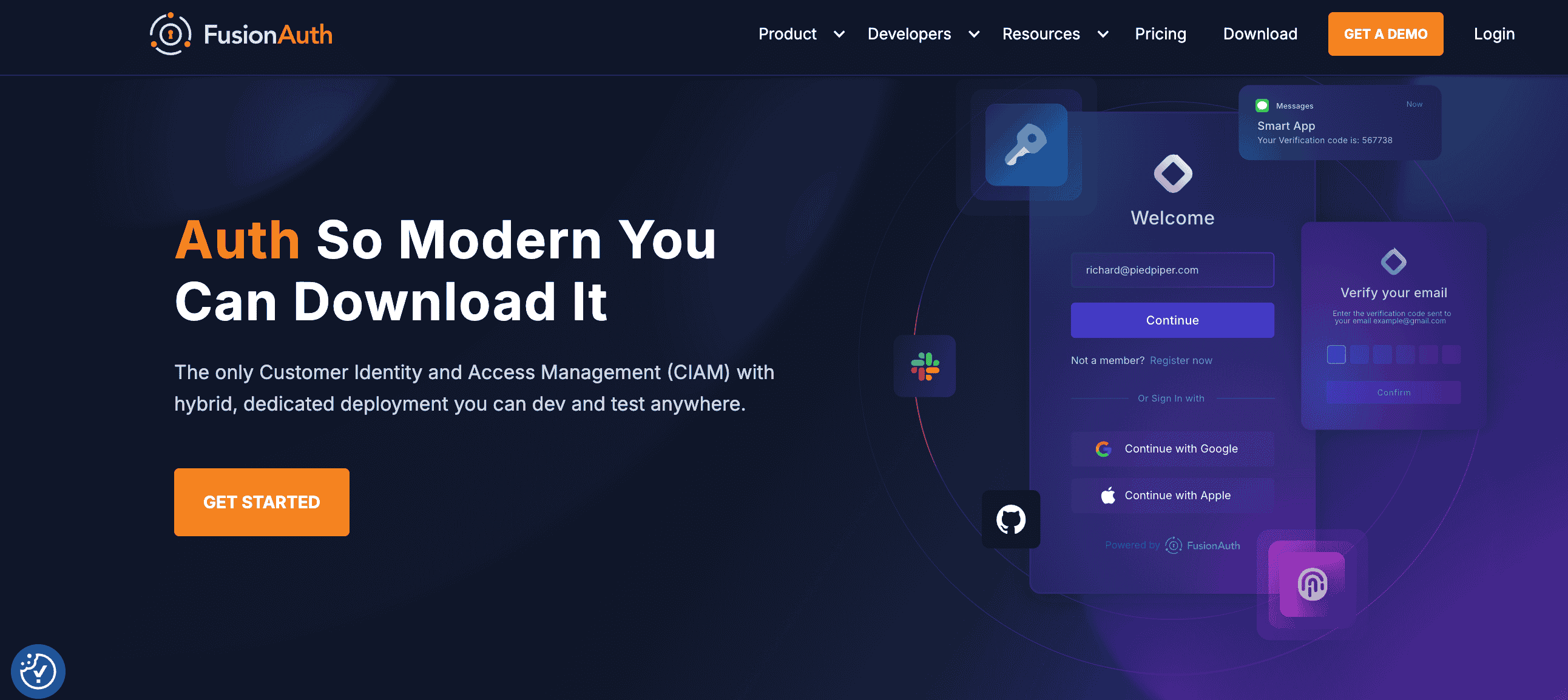
FusionAuth is a customer identity and access management platform that supports both managed cloud and self-hosted deployments. Organizations evaluating alternatives to Symantec SiteMinder often consider FusionAuth when moving away from reverse proxy-based access control toward an application-layer identity provider.
FusionAuth delivers authentication, authorization, MFA, and federation in a single system designed for web and API-driven environments. It supports modern identity standards while allowing infrastructure control for teams that require on-prem or hybrid deployment models.
Key capabilities
Support for OAuth2, OIDC, and SAML-based SSO
Built-in MFA including WebAuthn, TOTP, SMS, and email
Native multi-tenant user and application management
Event-driven extensibility using webhooks and server-side logic
Strengths
Flexible deployment options: FusionAuth supports both managed cloud and self-hosted installations, enabling infrastructure control where required.
Integrated identity services: Authentication, federation, and multi-tenancy are delivered within a single platform rather than through layered gateway products.
Standards-based compatibility: Native support for OAuth2, OIDC, and SAML enables interoperability with modern and legacy systems.
Ideal for
FusionAuth is well suited for organizations replacing legacy access gateways that want a full-featured identity provider with deployment flexibility. It fits teams that require multi-tenancy and standards-based federation while maintaining control over how identity infrastructure is hosted and managed.
SiteMinder alternatives comparison: Quick reference
| Deployment model | Visual orchestration? | Open source? | Best for |
|---|---|---|---|---|
Descope | SaaS (cloud-hosted) | Yes | No | Multi-tenant B2B SaaS |
Auth0 | SaaS (cloud-hosted) | Limited | No | Enterprise cloud IAM |
Microsoft Entra External ID | SaaS (Azure cloud) | Limited | No | Microsoft-centric experiences |
Keycloak | Self-hosted | No | Yes | Open-source self-hosting |
Ory Kratos | Self-hosted or managed cloud | No | Yes | Cloud-native engineering teams |
FusionAuth | Self-hosted or managed cloud | Limited | No (proprietary; free Community Edition) | Flexible deployment requirements |
Conclusion
SiteMinder has served as a foundational access management system for many large enterprises, particularly those built around legacy web architectures and on-prem infrastructure. However, as organizations modernize toward cloud-native applications, API-first development, and customer-facing digital platforms, its proxy-based model and layered product ecosystem can introduce operational complexity and slow innovation.
Among the alternatives, Descope stands out for teams that want a unified, cloud-native identity platform covering authentication, authorization, enterprise SSO, adaptive MFA, and orchestration in one system. By eliminating reverse proxy dependencies and reducing reliance on multiple add-on products, Descope helps organizations modernize identity without accumulating additional technical debt.
If you’re evaluating SiteMinder alternatives, the right choice depends on how much agility, architectural flexibility, and long-term modernization your platform requires.
For more detailed information on Descope, check out our docs. If you'd like a demo, meet with our auth experts. Also, if you want to try Descope yourself, sign up for a Free Forever Account and start dragging & dropping your auth today!