
Table of Contents
Don't have the time to read the entire post? Our human writers will be sad, but we understand. Summarize the post with your preferred LLM here instead.
As your B2B SaaS product grows, handling user identities gets more complicated.
In the beginning, authentication is simple. You might start with a hosted login page, set up basic roles, and add social login. This makes it easy to launch. But as you go after larger customers, their requirements get tougher.
Enterprise customers want features like SAML SSO, SCIM provisioning, tenant-level roles, delegated admin, and stronger security. Each one uses a different identity provider, needs a unique onboarding process, and has its own compliance rules. Getting ready for these needs is essential to closing deals.
To grow your B2B SaaS, your identity solution should focus on tenants, be flexible for each customer, empower end users and tenant admins to manage their own identities, and be easy to update as customer needs change.
This blog compares Descope and Auth0 with these needs in mind. If you want to reach more enterprise customers or grow your B2B business, keep reading to make sure your identity platform can keep up and support your growth.
Also Read: A Complete Comparison of Descope and Auth0
Auth and SSO requirements for B2B SaaS apps
As outlined in our enterprise readiness guidance, supporting B2B growth is not just about adding SAML. It is about building identity infrastructure that scales with enterprise complexity.
Tenant-first architecture - Enterprise readiness starts with true multi-tenancy. Each customer must operate in a logically isolated tenant with its own users, roles, policies, and SSO configurations. If tenancy is layered on later, scaling becomes operationally heavy and difficult to maintain.
Delegated administration - Enterprise customers expect to manage their own users, roles, and permissions without relying on your engineering or support teams. Delegated administration allows tenant admins to provision users, create roles, assign permissions, and control access within their organization while maintaining the boundaries defined by your platform.
Enterprise SSO built for scale - Winning larger customers requires seamless SAML and OIDC support per tenant. SSO should not require custom engineering for every new enterprise. It should be repeatable, configurable, and easy to manage as your customer base grows.
Self-service enterprise onboarding - Enterprise buyers expect autonomy. Providing tenant-level admin portals and self-service SSO setup reduces engineering involvement, accelerates onboarding, and shortens time to revenue.
Automated lifecycle management - SCIM provisioning and deprovisioning are table stakes for enterprise accounts. Manual user management does not scale and introduces security risk. Identity must stay synchronized automatically with the customer’s source of truth.
Tenant-aware authorization - Enterprise customers require flexible, context-aware access control. Users often belong to multiple organizations with different permissions. Your authorization model must reflect that reality cleanly and dynamically.
Configurable security posture per tenant - Enterprise readiness means supporting different security requirements across customers. Adaptive MFA, step-up authentication, and risk-based policies should be configurable at the tenant level without rewriting application logic.
When these capabilities are foundational rather than bolted on, enterprise expansion becomes predictable. Without them, identity quickly becomes a bottleneck to B2B growth.
Multi-tenancy: Designed in vs added later
Descope
Descope is built with a tenant-first approach to identity. Multi-tenancy is part of the core architecture, not something added later. This helps you scale from your first enterprise customer to many more without needing to redesign your identity model.
Multi-tenant by design from day one
Tenants are created and managed via console or Management SDK
Tenant-aware roles and permissions are built into the user model
SAML SSO and SCIM provisioning are configured per tenant
Clean separation of users, policies, and security controls across customers
Descope treats each customer as a first-class tenant, making enterprise expansion operationally predictable rather than engineering-heavy.
Auth0
Auth0 supports B2B use cases primarily through its Organizations feature. While this enables grouping users under enterprise accounts, the underlying architecture was not originally built for multi-tenant SaaS. As tenant complexity increases, customization often shifts into Actions and application code.
B2B is implemented through Organizations rather than a tenant-native architecture
Advanced tenant workflows typically require custom logic
Role management across multiple organizations becomes engineering-intensive
Complex onboarding and per-tenant customization can feel layered on top of each other
Auth0 can support multi-tenant B2B environments, but scaling beyond simple organizational grouping often requires additional development effort.
Bottom Line: Auth0 can handle B2B scenarios with enough configuration and code. Descope is architected for multi-tenancy from the start, making it easier to scale for enterprise customers without adding identity complexity.
Also Read: A Primer on B2B Authentication With Descope
Self-service SSO: Removing engineering from the loop
Descope
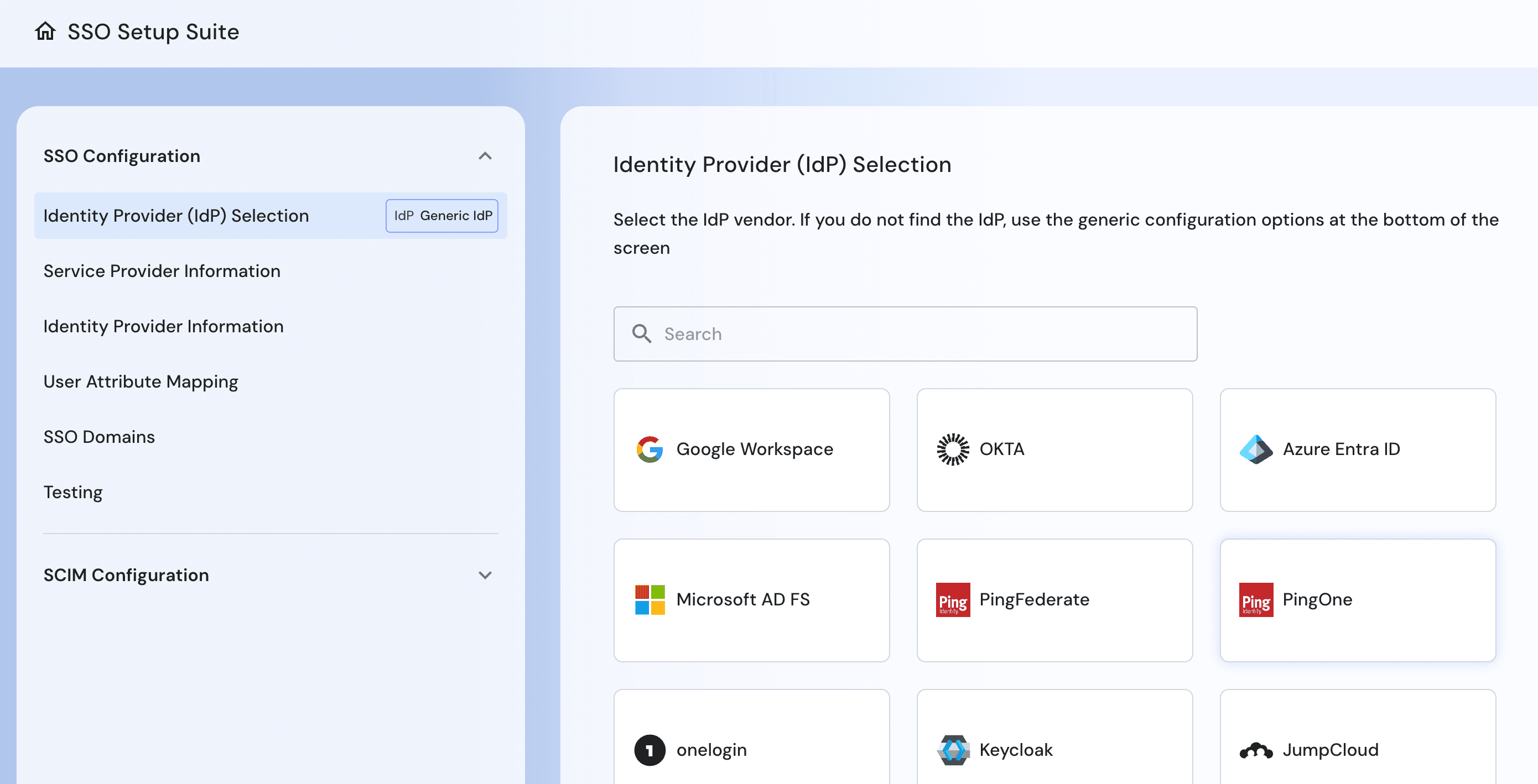
Descope is built to make enterprise SSO onboarding scalable and repeatable. Self-service SSO and SCIM configuration is part of the product experience, not something you need to build yourself. This allows you to onboard new enterprise customers quickly without involving engineering each time.
Built-in self-service SSO configuration flows
Customers upload and validate SAML or OIDC metadata directly
No custom SSO admin portal required
Works consistently across both SAML and OIDC
Descope turns enterprise SSO onboarding into a repeatable product capability, allowing you to scale enterprise customers without creating ongoing engineering dependencies.
Auth0
Auth0 supports enterprise SSO, but self-service onboarding is not fully productized. Enabling customers to configure their own SSO connections often requires adding additional platform logic. As your enterprise pipeline grows, this can create recurring engineering work.
Self-service SSO typically requires custom wrapper logic
Heavy reliance on Actions for advanced configuration
Enterprise onboarding often becomes engineering-dependent
Auth0 enables enterprise SSO, but making it truly self-service often requires custom development, which can slow onboarding as your B2B footprint expands.
Bottom Line: Descope turns enterprise SSO onboarding into a scalable product capability. With Auth0, self-service SSO often requires custom development.
Also Read: How Notch Achieved Enterprise SSO In One Day With Descope
User journeys: Workflow editor vs hard-coded logic
Descope
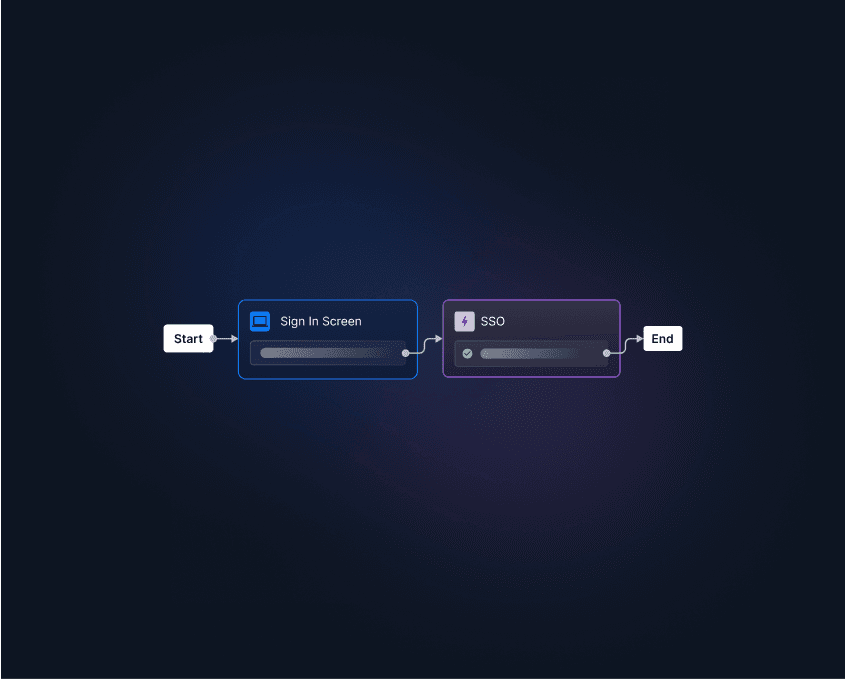
Descope approaches identity as configurable infrastructure. Its visual workflow editor allows teams to design and modify authentication, onboarding, and MFA logic without embedding that complexity into application code. This makes it easier to adapt as enterprise requirements evolve.
No-code visual workflows
Modify SSO, MFA, and onboarding without redeploying
Add branching logic and conditional paths easily
Connect third-party fraud and risk services directly into flow
Descope keeps identity logic configurable and adaptable, so evolving enterprise requirements do not translate into recurring engineering work.
Auth0
Auth0 enables customization through Universal Login and Actions, but advanced journey logic typically requires writing and maintaining code. As flows become more complex, identity logic can become tightly coupled to your backend. This increases maintenance as requirements change.
Universal Login customization limitations
Advanced flows require Actions and code
Significant changes often require redeployment
Complex logic becomes code-driven rather than configuration-driven
Auth0 supports customization, but as flows grow more complex, identity logic often becomes embedded in code and harder to evolve over time.
Bottom Line: Descope makes user journeys easier to configure and evolve. Auth0 often requires deeper engineering involvement as flows become more complex.
Risk-based MFA and adaptive authentication
Descope
Descope embeds adaptive MFA into its core workflow model. Risk signals can be evaluated and acted on dynamically, allowing you to enforce different security policies per tenant or scenario. This supports enterprise-grade security without hardcoding decision logic.
Native adaptive signals, such as new device, impossible traveler, and VPN detection
Workflow-based branching on risk conditions
Easy integration with third-party fraud connectors like Arkose Labs, Forter, and Fingerprint
Augmentation-friendly MFA without changing your primary user store
Descope allows you to enforce adaptive security policies through configuration rather than code, making it easier to adjust security posture per tenant as requirements change.
Also Read: How Navan Augmented Auth0 With Descope Magic Link MFA
Auth0
Auth0 provides adaptive MFA capabilities, but flexibility and availability vary by plan. Extending risk logic beyond default configurations often requires additional development work. As enterprise requirements grow, customization can increase operational complexity.
Risk-based MFA gated to higher tiers
Limited flexibility with external fraud logic
Advanced implementation typically requires code
Auth0 offers adaptive MFA, but extending and customizing risk logic often increases implementation effort as enterprise needs become more sophisticated.
Bottom Line: Descope integrates adaptive security directly into configurable workflows. With Auth0, advanced risk policies often depend on tier and custom implementation.
Authorization for B2B: Tenant-aware access control
Descope
Descope supports strong tenant-aware authorization. It checks roles and permissions based on each tenant, so a user can have different access levels in different organizations. This setup matches how B2B SaaS platforms organize their enterprise customers.
Tenant-aware RBAC is built into the user and tenant model.
Fine-grained authorization (FGA) models for complex access control
Dynamic role assignment through workflows
Custom JWT claims for enforcing permissions in applications.
Because authorization is linked directly to tenants, Descope makes it easy for access controls to grow as enterprise customer structures change.
Auth0
Auth0 also supports RBAC and offers FGA for more complex access control needs. These features help teams set up relationships and permissions that go beyond basic roles.
RBAC is supported for standard role-based access control
FGA available for relationship-based access models
Teams set up authorization logic using Actions or by writing application code.
Auth0 offers strong authorization features, but using them in a multi-tenant SaaS environment can require more planning and design.
Bottom Line: Both Descope and Auth0 support advanced authorization. The main difference is that Descope builds tenant-aware authorization right into its identity model.
SCIM provisioning and enterprise lifecycle management
Descope
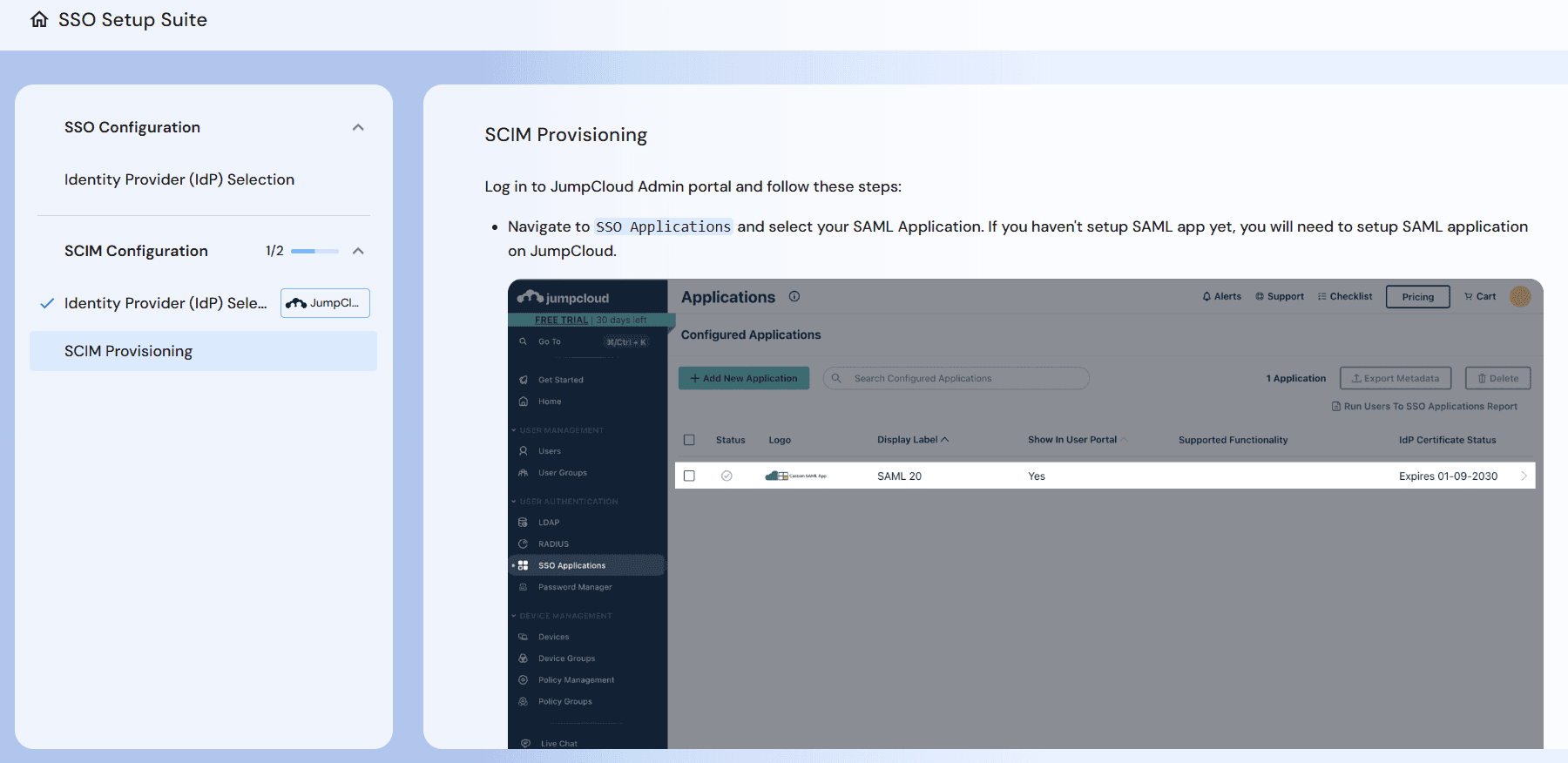
Descope integrates SCIM provisioning into its multi-tenant architecture. Each tenant can manage automated user lifecycle events in alignment with its own identity provider. This keeps user data synchronized and reduces operational burden as you scale enterprise accounts.
Automated provisioning and deprovisioning
Syncing of custom attributes
SCIM per tenant
Enterprise IAM integrations
Seamless alignment with tenant-first architecture
Descope aligns SCIM provisioning with its tenant-first architecture, making enterprise lifecycle management consistent and scalable across customers.
Auth0
Auth0 supports SCIM, but access and configuration depend on the plan tier. Implementing SCIM across multiple enterprise tenants can require additional setup and coordination. As your customer base expands, operational complexity can increase.
SCIM requires higher tiers
Significant configuration effort
Greater operational overhead
Auth0 supports SCIM, but implementing and scaling it across multiple enterprise tenants can require additional configuration and operational oversight.
Bottom Line: Descope aligns SCIM provisioning naturally with its tenant-first design. Auth0 supports lifecycle management, but scaling it across enterprise tenants can require more configuration and coordination.
Descope vs Auth0 for B2B SSO: At-a-glance
Capability | Descope | Auth0 |
|---|---|---|
Multi-tenancy | Tenant-first architecture designed for B2B SaaS. | B2B handled through Organizations layered onto the platform. |
Enterprise SSO onboarding | Built-in self-service SSO configuration flows for customers. | Often requires custom portals and engineering support. |
User journeys | Visual workflows to configure authentication, onboarding, and MFA without code. | Advanced flows rely on Actions and custom development. |
Adaptive MFA | Workflow-based adaptive MFA with native signals and external risk connectors. | Adaptive MFA available but customization can require code and higher tiers. |
Tenant-aware access control | Tenant-aware RBAC and FGA built into the identity model. | RBAC and FGA available and supported; cumbersome tenancy. |
SCIM provisioning | SCIM provisioning configured per tenant and aligned with multi-tenancy. | SCIM supported but requires additional configuration and higher-tier plans. |
Customer stories: B2B teams that switched from Auth0
Enterprise requirements are not theoretical. They show up in security reviews, customer onboarding workflows, and revenue conversations. Here are three B2B teams that chose Descope to support their enterprise growth.
Cequence Security
Cequence Security delivers enterprise-grade API security to some of the largest organizations in the world. Their customers expect strong tenant isolation, enterprise SSO, and flexible role management from day one.
As Cequence scaled, they needed an identity platform that could support multi-tenancy cleanly while enabling seamless SAML SSO per customer. Managing roles across different tenants had to be simple and predictable, not engineering-heavy.
With Descope’s tenant-first architecture and built-in SSO capabilities, Cequence streamlined enterprise onboarding and reduced SSO support tickets by 90%.
Read more: Cequence Security: Flexible Auth & AI-Ready Infrastructure
SmithRx
SmithRx, a leading Pharmacy Benefits Manager, operates in a highly regulated healthcare environment where security, compliance, and data protection are non-negotiable. As they expanded their B2B footprint, enterprise customers required SSO, granular access control, and strong authentication policies.
SmithRx needed flexible identity flows that could adapt to different customer requirements while maintaining strict security standards. Engineering time was better spent building healthcare innovation, not maintaining custom authentication logic.
Descope enabled SmithRx to implement secure, enterprise-ready authentication with tenant-aware controls and scalable SSO, helping them meet compliance expectations without slowing product velocity.
Read more: SmithRx: Enhanced Security, Seamless Access
Pieces
Pieces builds tools for developers, which means user experience and implementation speed matter deeply. As their product matured, they needed authentication that could evolve with enterprise customer demands without becoming a bottleneck.
Supporting SSO, flexible onboarding, and customizable flows was essential. At the same time, the team wanted to avoid hard-coding identity logic that would become difficult to maintain.
With Descope’s workflow-based approach, Pieces gained the ability to configure and modify authentication journeys without redeploying their application, allowing them to move fast while supporting enterprise-grade requirements.
Read more: Pieces Customer Story
Migration: Moving from Auth0 without disruption
Migrating auth and SSO infrastructure does not have to mean forcing every customer to reconnect their IdP or risking login outages. A well-planned transition focuses on continuity first, modernization second.
Descope supports both full replacement and phased augmentation. You can migrate entirely off Auth0, or introduce Descope incrementally for specific capabilities such as MFA or SSO while keeping existing integrations intact.
Replace Auth0 fully or augment selectively based on your roadmap
Use a dedicated Auth0 migration guide for full and hybrid migration walkthroughs
Seamlessly migrate existing SSO connections without reconfiguration
Use Session Migration to switch from Auth0 without disrupting logged in users
Use Descope as an OIDC Provider to augment Auth0 deployments
By using standards-based federation and controlled cutovers, you can avoid forcing enterprise customers to immediately reconfigure their IdPs. Sessions remain stable, connections stay intact, and onboarding continues without interruption.
Instead of a risky “big bang” migration, Descope enables a phased approach that protects user experience while positioning your identity architecture for long-term B2B scale.
Also Read: How GoodRx Migrated 50M+ Users From Auth0 to Descope
Descope is designed for enterprise B2B from day one
Auth0 works well for general authentication and basic needs. But as B2B SaaS companies grow and target larger customers, identity requirements become more complex and important for revenue.
Enterprise customers look for features like tenant isolation, self-service SSO, automated provisioning, flexible authorization, and adaptive security. If these features are added later instead of being built in, identity can slow down onboarding and create extra work for engineers.
Descope is built with a tenant-first approach. Multi-tenancy, enterprise SSO, workflow-driven user journeys, and tenant-aware authorization are built in from the start, not added later. This becomes even more important as B2B needs get more complex.
If you want to grow your enterprise business and reduce identity headaches, now is a good time to see if your current identity solution fits your product’s future needs. If you'd like a demo, meet with our auth experts. Also, if you want to try Descope yourself, sign up for a Free Forever Account and start building enterprise-ready SSO today!