
Table of Contents
Don't have the time to read the entire post? Our human writers will be sad, but we understand. Summarize the post with your preferred LLM here instead.
Today’s apps often need several types of authentication. For example, you might want easy consumer logins, enterprise SSO and SCIM for business clients, adaptive MFA to prevent account takeovers, and a simple way to manage each tenant’s users, roles, and policies. Managing all this can be a major challenge.
Okta is well known for workforce identity, so many teams choose Okta Customer Identity (CIS). Okta CIS, however, is a platform built on a workforce-focused architecture with customer identity features added later. Tenants are set up as groups, enterprise SSO onboarding is either manual or done through APIs, and features like MFA, adaptive MFA, and SCIM are extra add-ons. As your product grows, your team builds more custom code to handle the customer experience.
Descope takes a different approach. It is a purpose-built CIAM platform, and teams choose it over Okta CIS for the following reasons:
Low cost: set up and change CIAM flows in days or weeks using developer abstraction layers like visual workflows, SDKs, and an MCP server, instead of waiting months or quarters.
Flexibility: use workflows, SDKs, APIs, and standard methods to handle authentication for any app and add to your current CIAM systems.
Auth for your future: use passwordless options, embeddable widgets, fine-grained authorization controls, and agent identity without writing custom auth code.
Developer experience: developers can focus on building core product features instead of complex authentication protocols.
In this post, we’ll compare Descope and Okta CIS in the areas that matter most for serving both consumers and business clients. We’ll pay special attention to multi-tenancy and enterprise SSO, and we’ll share how Collectors, the parent company of PSA and PCGS, switched from Okta CIS to Descope.
Also Read: A Complete Comparison of Descope and Okta CIS
What to look for in a modern customer identity platform
No matter if your customers are individuals, businesses, or both, certain features make the difference between a platform that grows with you and one that creates extra work.
Real multi-tenancy for B2B - tenants as first-class objects with tenant-aware roles, self-service SSO and SCIM setup, and delegated admin, so enterprise customers can manage themselves.
Support different login form factors - embedded, hosted, and native mobile flows so login, signup, and MFA can match whatever experience your product requires.
No/low-code workflow orchestration - the ability to change login methods, MFA logic, and onboarding steps through configuration.
Full passkey support with fallback logic - day-one passkey support with graceful fallback for users or devices that don't support it, plus the ability to A/B test a rollout.
Adaptive, risk-based MFA - step-up authentication driven by real risk signals and pluggable fraud connectors.
Unified authorization - RBAC, ABAC, or ReBAC living in the same platform as authentication.
Predictable pricing - costs that don't spike as MAU, SSO connections, or MFA usage scale, with essentials like MFA and SCIM included.
Agentic and MCP-ready identity - a purpose-built way to authenticate and authorize AI agents and MCP servers.
Platforms that check these boxes let you spend more engineering time on your product. Here's how Descope and Okta CIS stack up against each one.
Multi-tenancy: Native architecture vs. group-based workarounds
Descope
Descope is multi-tenant by design, with tenant management built into the core platform architecture. This foundation gives it the flexibility to support complex B2B2X tenant relationships—such as nested hierarchies and white-label reseller scenarios—as standard capabilities.
Create and manage tenants directly from the console or the Management SDK
Set session management, password policies, and permission controls at the tenant level
Native support for MSSP and white-label reseller models with tenant-isolated users
Also Read: Tenant User Isolation in Descope
Okta CIS
Okta's identity structure was designed for the workforce, so multi-tenancy in Okta CIS has to be implemented manually through groups, a setup that adds complexity and administrative overhead with every new enterprise customer.
Tenants are modeled as groups rather than first-class objects
Tenant-specific session policies, password controls, and auth flows are hard to maintain with logical separation alone
Adding, managing, or deleting tenants relies on scripts and API calls
Bottom line: Okta CIS can approximate tenants with groups, but every new enterprise customer adds manual work. Descope treats multi-tenancy, including per-tenant policies and reseller models, as core to the platform rather than a workaround.
Enterprise SSO & federation: Tenant-centric vs. workforce-centric
Descope
Nearly every platform supports SAML and OIDC. What matters is how SSO maps to your customers. With Descope, each connection belongs to a tenant, and the same flows handle federation across brands, partners, and internal admins.
Standards-based SAML and OIDC SSO, with multiple identity providers per tenant
Flexible role mapping, group handling, and support for attributes like NameID
Identity federation across sub-brands and partner IdPs from one orchestration layer
Okta CIS
Okta has deep SSO roots in workforce identity. In a customer-facing B2B app, however, each enterprise connection has to be fit into a group-based model that wasn't built for many separate customer organizations.
SSO connections are tied to a workforce-style group model
Group-based roles make B2B role mapping more complex
Multi-brand and multi-party federation requires workarounds
Bottom line: Okta CIS supports the protocols but fits SSO into a workforce model. Descope ties every connection to a tenant and runs consumer, partner, and admin federation through the same flows.
SSO & SCIM provisioning: Self-service setup vs. manual onboarding
Descope
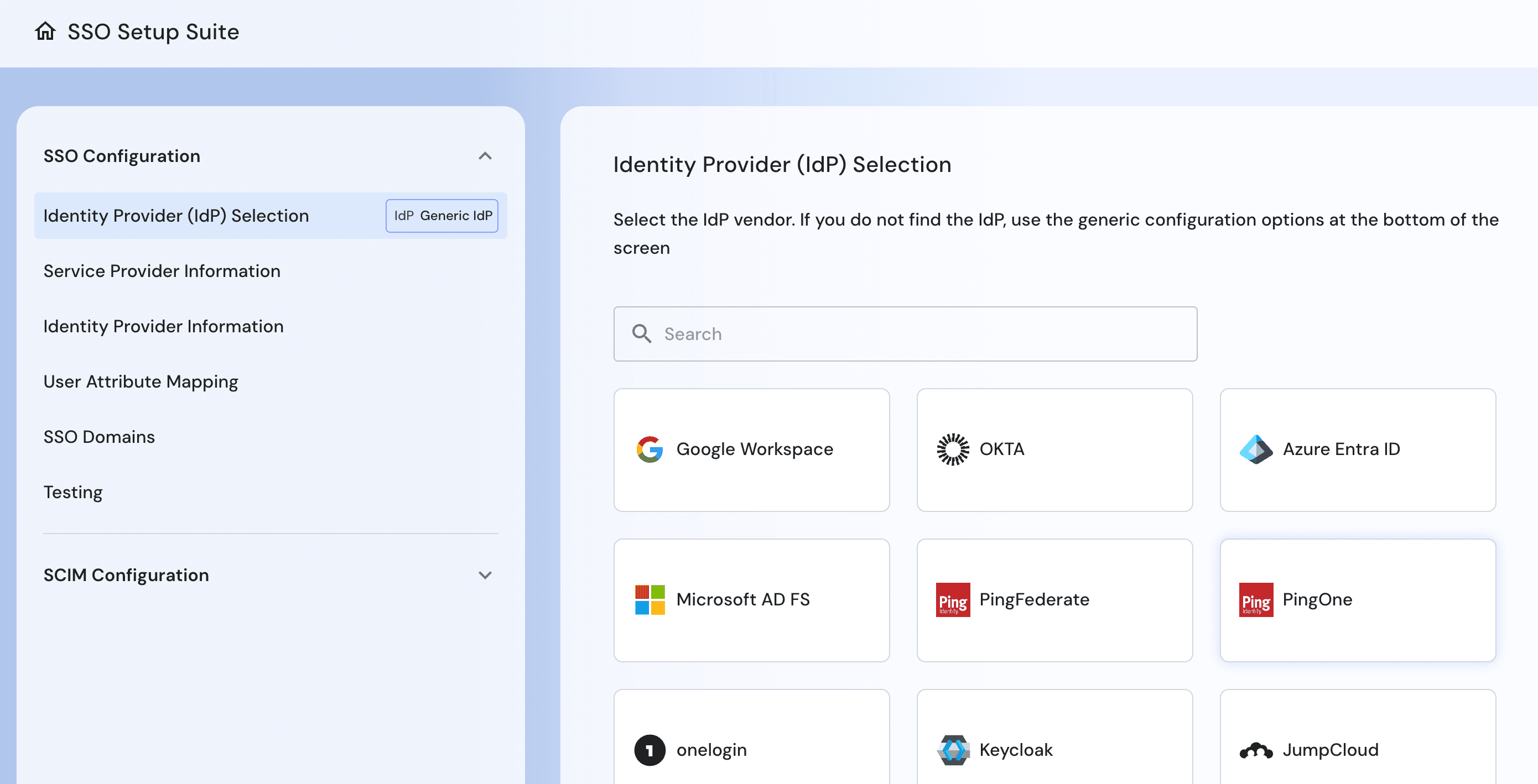
For SSO and SCIM, the key difference is who does the configuration. With Descope's SSO Setup Suite, enterprise customers set up and test their own connections, so onboarding a new tenant never lands on your engineering backlog.
Self-service portals for IdP selection, attribute mapping, and end-to-end testing
SCIM provisioning configured alongside SSO
Automated or on-demand provisioning and deprovisioning
Okta CIS
Okta CIS doesn't offer self-service SSO setup for B2B tenant admins, so every new enterprise customer turns into a coordination exercise between their IT team and yours.
SSO setup is either manual or a complicated API-based workaround
SCIM is an add-on that isn't included in the standard Enterprise package
No self-service SCIM setup for tenant admins
Bottom line: With Okta CIS, every enterprise deal adds tickets to your queue and SCIM adds a line to your invoice. Descope turns SSO and SCIM onboarding into something your customer's admin handles directly.
Delegated administration: Self-service widgets vs. custom-built admin UIs
Descope
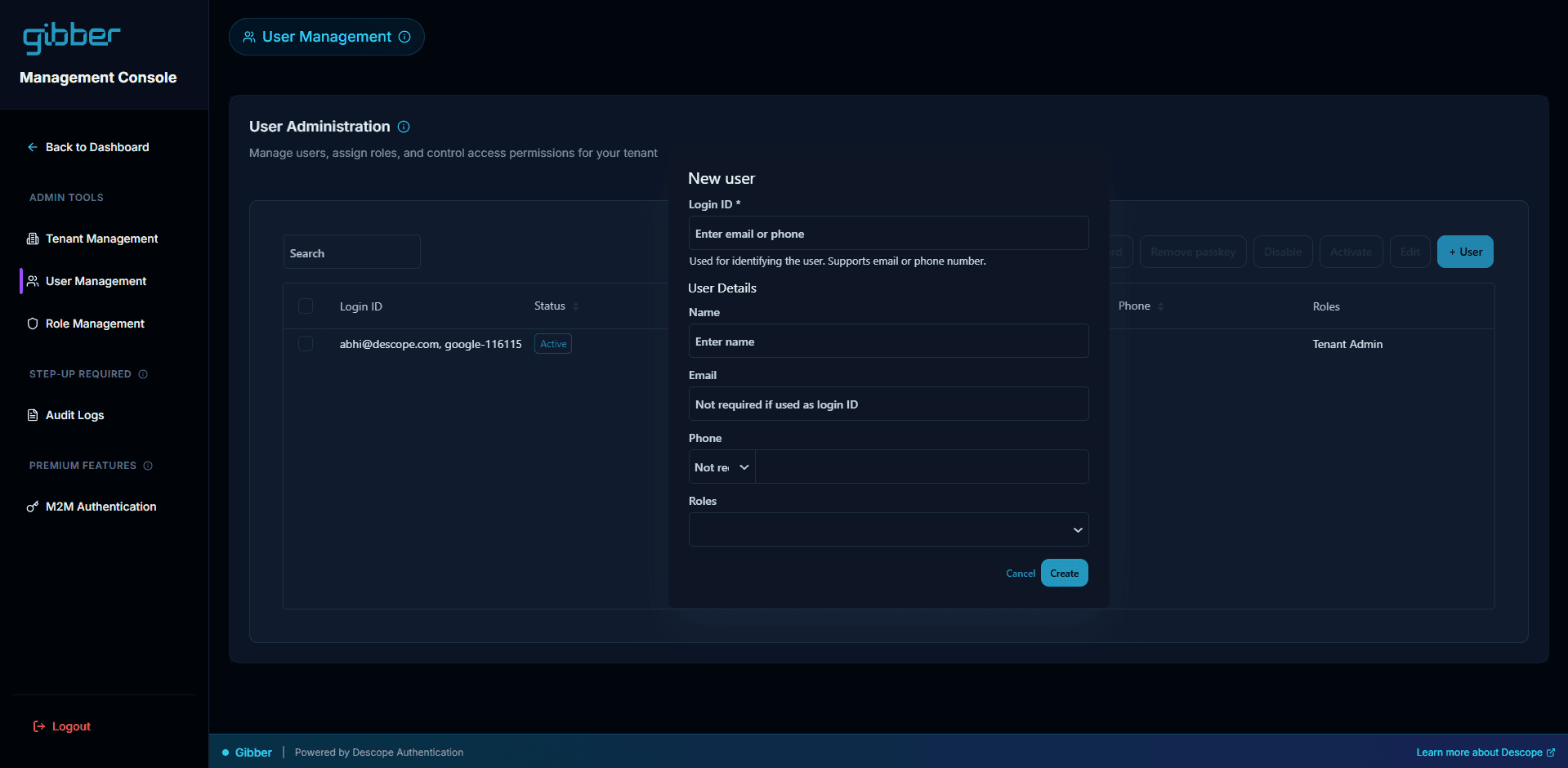
Once a tenant is live, its admins need to manage their own users and access without calling your support team. Descope provides that out of the box with embeddable widgets and a hosted Admin Portal.
Embeddable widgets for user management, roles, access keys, audit trails, and profiles
Widgets automatically respect tenant boundaries
Fully customizable to match your product's look and feel
A hosted Admin Portal that can contain a combination of widgets for end user and admin identity management
Also Read: Introducing the Descope Admin Portal
Okta CIS
Okta CIS doesn't provide embeddable widgets for delegated administration, so teams must design, build, and maintain those interfaces on top of Okta's APIs.
No embeddable delegated-admin components
Developers write and maintain custom code for user and role management screens
Every new admin capability becomes a frontend and backend project
Bottom line: Delegated admin is table stakes for enterprise B2B. Descope ships it as drop-in widgets; with Okta CIS, it's an internal product your team has to build and own.
User experience & mobile: Flexible options vs. redirect-only
Descope
Descope embeds user journey screens directly in your app, so users stay on your domain without redirects, and a hosted option is available when you want one. On mobile, Native Mobile Flows deliver a near-native experience without giving up security features.
Options to have both redirect-based and native flows
Mobile SDKs for Kotlin, Swift, Flutter, and React Native
Native Google One Tap and nOTP WhatsApp authentication
One flow powers both web and mobile for a consistent experience
Also Read: Embedded vs Hosted Login in Descope
Okta CIS
Okta CIS forces a trade-off on mobile, where features like bot protection and risk-based MFA only work through a redirect-based flow that interrupts the user experience.
Native mobile flows don't support bot protection or risk-based MFA
A rigid mobile methodology limits how teams design their own journeys
No native Google One Tap support; custom code is required
Bottom line: On Okta CIS, a native mobile experience and full security controls are an either/or choice. Descope delivers both in the same flow.
User journeys & workflows: No/low-code orchestration vs. custom code
Descope
You notice the real difference the first time you need to change an auth flow. With Descope's visual Flows builder, consumer and B2B journeys—such as sign-up and MFA, user invites, and step-up auth—are easily configurable.
Add conditional branching based on user, device, tenant, or risk context
A/B test auth methods and onboarding paths against each other
Push a workflow change live without redeploying your application
Okta CIS
In Okta CIS, journey logic beyond the basics lives in your codebase, and the workflow tooling Okta does offer was built primarily for workforce identity.
Custom code is required for journey logic, and it has to be maintained in-house
Okta Workflows is largely built for workforce use cases
Okta Workflows becomes an expensive add-on after 5 free workflows
Bottom line: In Okta CIS, every journey change is an engineering task. Descope's workflow builder turns the same change into configuration.
Passkeys: Flexible rollout vs. all-or-nothing
Descope
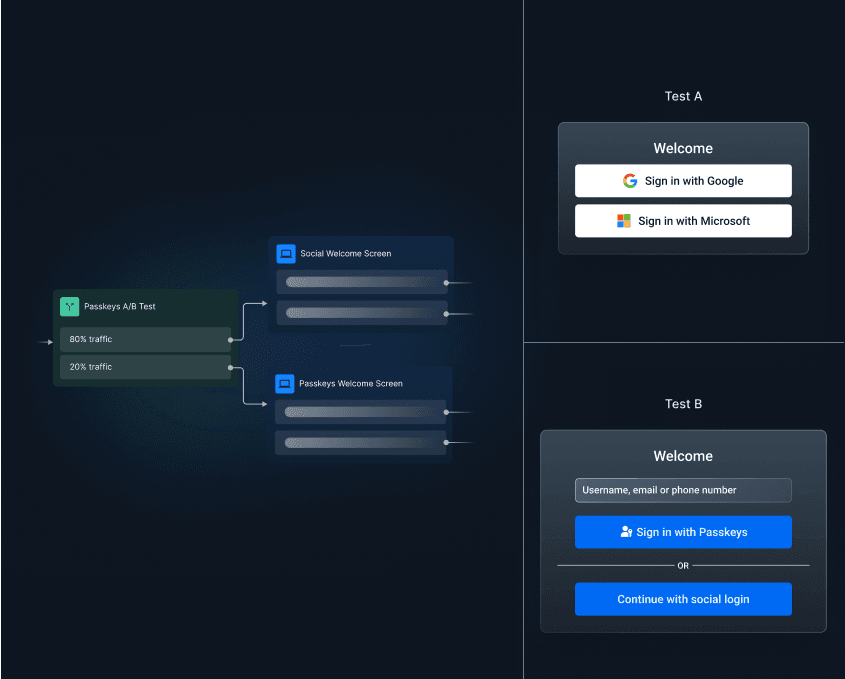
Most platforms now support passkeys, but the difference is how you roll them out and what happens when they fail. Descope builds A/B testing and fallback logic directly into the passkey flow.
Device-bound and cross-device passkeys, as a first or second factor
A/B test passkey rollout to measure adoption before a full switch
Automatic fallback when a user's device isn't passkey-compatible
Okta CIS
Okta CIS supports passkeys, but its rollout options leave organizations with little room to test adoption before committing their entire user base.
No A/B testing out of the box, forcing an all-or-nothing rollout
Teams have to check user WebAuthn compatibility themselves
Fallback handling is left to the development team
Bottom line: Descope treats rollout testing and fallback as first-class features. With Okta CIS, you flip the switch for everyone and build the safety net yourself.
Also Read: How Branch Insurance reduced auth-related support tickets by 50% with Descope passkeys
MFA & fraud prevention: Adaptive and included vs. paid add-ons
Descope
Every Descope plan includes MFA, with phishing-resistant options like passkeys and magic links. Adaptive MFA combines native risk signals with third-party fraud connectors, all managed in the same workflow builder used for the rest of the journey.
Native risk signals like new device, impossible traveler, and VPN checks
Fraud connectors including reCAPTCHA Enterprise, Forter, AbuseIPDB, and Telesign
Bot protection that works in native mobile flows
Okta CIS
Okta CIS splits the protections most customer-facing apps need across separate SKUs, and its default approach to MFA is rigid and workforce-oriented, much like firewall rules.
Only TOTP is included in the base license; MFA and risk-based MFA are add-ons
No out-of-the-box bot protection; only hCAPTCHA and reCAPTCHA v2 are supported
Third-party risk signal ingestion isn't supported out of the box
Bottom line: Account takeover protection is a baseline requirement for any app. Descope includes it and keeps it tunable; Okta CIS sells it in pieces.
Authorization: Unified, tenant-aware models vs. group-based roles
Descope
Descope's main advantage in authorization is that RBAC, ABAC, and ReBAC live on the same platform as authentication. You can assign roles or check permissions within the workflow that handles login, without a separate service.
Define custom roles per B2B tenant
Use custom JWT claims to carry access decisions into your app
Assign roles and permissions dynamically based on workflow conditions
Full support for fine-grained authorization, with an FGA Cache to enable low-latency operations
Okta CIS
Okta CIS covers standard access control, but its group-based concept of roles reflects its workforce origins and complicates B2B CIAM scenarios.
RBAC and ABAC only, with no native relationship-based authorization
Roles are group-based, a workforce paradigm
Integrating OpenFGA through webhooks is time-consuming and hard to scale
Bottom line: Okta CIS gives you group-based roles. Descope ties fine-grained, tenant-aware authorization directly into the same workflows that handle login and provisioning.
Pricing & support: Transparent vs. add-on driven
Descope
Predictable costs and responsive support matter as much as features once you're in production. Descope pairs transparent pricing with support channels built for customers of every size.
Fully featured Free Forever tier with all auth methods, RBAC, and any number of projects
Sub-linear, transparent price increases on paid tiers
Slack community, dedicated onboarding, and "Best Support" on G2
Okta CIS
Okta CIS's pricing and support model reflects a platform built for large workforce deployments, where essential customer identity features cost extra.
SCIM, MFA, and adaptive MFA are add-ons, with steep price jumps
Customer identity docs and SDKs are sporadically updated
Support is mainly ticket-based, especially for midmarket customers
Bottom line: With Okta CIS, the cost of a complete CIAM stack grows with every add-on. Descope includes the essentials and backs them with support that moves at your pace.
Descope vs Okta CIS: At-a-glance
Capability | Descope | Okta CIS |
|---|---|---|
Multi-tenancy | Multi-tenant by design; per-tenant policies; MSSP/white-label support | Workforce structure; tenants modeled manually as groups |
Enterprise SSO & federation | Per-tenant SAML/OIDC SSO, multiple IdPs per tenant, multi-brand and partner federation | SAML/OIDC supported; group-based model; complex federation needs workarounds |
SSO & SCIM provisioning | Self-service via the SSO Setup Suite | No self-service SSO; SCIM is an add-on with no self-service setup |
Delegated administration | Embeddable widgets for users, roles, access keys, and audit | No widgets; custom code for admin interfaces |
User experience & mobile | Embedded, redirect-free journeys + hosted login support; Native Mobile Flows; Google One Tap | Redirects required for bot protection and risk-based MFA; no native One Tap |
User journeys | No-code visual workflows + A/B testing | Custom code; Okta Workflows is workforce-focused and paid after 5 |
Passkeys | Cross-device support, fallback logic, A/B rollout | No A/B testing; all-or-nothing rollout |
MFA & fraud | Adaptive MFA + fraud connectors, all plans | TOTP only in base; MFA and adaptive MFA are add-ons |
Authorization | Unified RBAC/ABAC/ReBAC, tenant-aware | RBAC + ABAC, group-based; no native ReBAC |
Pricing & support | Free Forever tier; transparent pricing; G2 Best Support | Add-on pricing with steep jumps; mainly ticket-based support |
Customer story: Why Collectors moved from Okta CIS to Descope
Collectors is the global leader in grading and authentication for high-value collectibles and the parent company of PSA, PCGS, SGC, and Beckett. With more than a quarter million monthly active users and millions of machine-to-machine credential exchanges each month, identity sits at the center of a business where. As CTO Dan Van Tran puts it, "trust is the entire brand."
On Okta CIS, Collectors' consumer, partner, and admin logins had grown up as separate environments for a lean identity team to maintain. To consolidate them, Collectors needed a platform that could handle three things at once:
Multi-brand federation, with sub-brands like PSA and PCGS routing to a central, Collectors-branded login
Partner federation, where partner users sign in through their own identity provider via OAuth
Corporate SSO for internal admin access, without giving up existing JWT claim and scope patterns
Collectors now run all three use cases through Descope Flows on a single orchestration layer. Admin SAML SSO went live first, partner federation is handled as configuration rather than custom code, and machine-to-machine access runs through inbound apps with per-client scope control. Connectors for Twilio, Mimecast, AWS S3, and webhooks tie identity into the rest of their stack.
The migration from Okta CIS was designed to be invisible to users. Bulk import and just-in-time password sync meant there were no forced password resets at cutover, with MFA enrollment also being carried over intact.
The result, in Van Tran's words, "Identity used to be three separate engineering efforts for us, and now it's one."
Read the full story: Collectors Customer Story
Conclusion
Okta CIS is a reasonable choice for organizations already standardized on Okta for workforce identity, with straightforward customer login needs and budget for add-ons.
But as products grow to serve both consumers and enterprise tenants, the gaps start to show. Tenants live in groups, SSO onboarding runs through your team, SCIM and adaptive MFA cost extra, and every journey change becomes custom code. Collectors felt this firsthand, running three separate login experiences on Okta CIS before consolidating them.
Descope is built to handle all of it from one platform: multi-tenancy as a first-class primitive, self-service SSO and SCIM, embeddable delegated admin, and the same no/low-code workflow engine for every consumer and business journey.
If you're evaluating Okta CIS or running into its limits, now's a good time to take a look at Descope. Book a demo with our auth experts, or sign up for a Free Forever account and start building today.